Explore our top-tier certified weather-resistant entrance door systems. Built for structural resilience, energy efficiency, and security.
An authoritative evaluation of architectural weather sealing, envelope physics, and direct manufacturing advantages from China's leading door hub.
In modern architectural engineering, the main entry door serves as the primary defense boundary of the building envelope. Unlike interior doors, exterior entrance systems are continuously exposed to intense environmental stressors: driving rain driven by high-velocity wind pressures, severe temperature differentials between interior conditioned air and exterior ambient climate, solar ultraviolet (UV) radiation degrading surface coatings, and corrosive atmospheric salt ions in coastal zones.
Standard entry doors constructed from solid wood, un-insulated steel sheets, or basic non-thermal aluminum profiles rapidly succumb to performance degradation. Moisture penetration causes wooden structures to warp, swell, rot, and jam against frame jambs. Unprotected steel skins oxidize, leading to internal structural compromise, while simple aluminum profiles act as direct thermal bridges—transferring exterior heat or arctic cold straight into building interiors, causing severe surface condensation, perimeter mold proliferation, and massive HVAC energy loss.
To eliminate these critical vulnerabilities, DERCHI Doors & Windows engineers weather-resistant entry doors around four structural pillars: mechanical load resistance, hermetic perimeter seal containment, thermal barrier continuous continuity, and electrochemical surface protection. Through advanced multi-chamber extrusion geometries and automotive-grade synthetic EPDM gaskets, DERCHI weather-resistant entry doors maintain airtight and watertight seals even when subjected to extreme atmospheric conditions.
Foshan, Guangdong, stands as the global epicentre for high-end aluminum extrusion, metallurgical engineering, and architectural fenestration manufacturing. Choosing a direct Foshan manufacturer like DERCHI provides international B2B buyers, architectural firms, and project developers with decisive technical and economic advantages:
24mm to 34mm polyamide thermal struts reinforced with 25% glass fiber prevent energy conduction, reducing door U-factors down to 1.6 W/(m²·K).
Continuous vulcanized EPDM gaskets engineered with cellular foam cores maintain elasticity from -40°C to +120°C, blocking draft and driven rain.
Concealed internal weep channels equalize air pressure inside the profile chamber, allowing water to drain outward automatically without reverse siphonage.
German-engineered multi-point hardware engages stainless steel hook bolts into the frame at top, middle, and bottom, creating uniform sealing compression.
Super-durable fluorocarbon surface coatings protect against solar radiation, salt spray corrosion, and chemical degradation in extreme littoral zones.
Double or triple insulated tempered glass with SGP (SentryGlas®) structural interlayers withstand high-velocity debris impact during hurricanes.
Empirical test benchmarks derived from laboratory trials under ASTM, AS2047, and EN standards for DERCHI door platforms.
| Door Material Platform | Wind Load (ASTM E330) | Water Tightness (ASTM E331) | Air Infiltration (ASTM E283) | Thermal U-Factor (NFRC) | Corrosion Class (Salt Spray) |
|---|---|---|---|---|---|
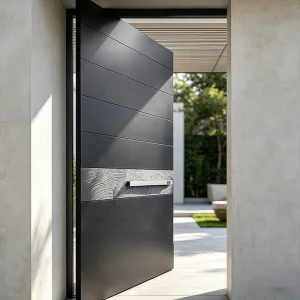
| Thermally Broken Aluminum Pivot | 5,000 Pa (Pass) Extreme | 700 Pa (No Leakage) | <0.05 L/s·m² | 1.6 – 1.9 W/(m²·K) | Class 5 (10,000 Hours PVDF) |
| Cast Aluminum Solid Core Door | 4,500 Pa (Pass) High | 600 Pa (No Leakage) | <0.08 L/s·m² | 1.8 – 2.2 W/(m²·K) | Class 5 (Hand-Patina PVDF) |
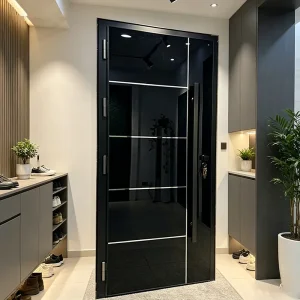
| SUS316 Armored Security Door | 6,000 Pa (Pass) Extreme | 750 Pa (No Leakage) | <0.03 L/s·m² | 2.0 – 2.4 W/(m²·K) | Marine Grade (SUS316 Electro-passivated) |
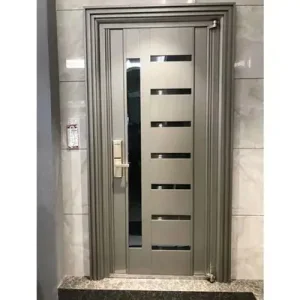
| Architectural Glass Entry System | 4,000 Pa (Pass) Standard | 500 Pa (No Leakage) | <0.10 L/s·m² | 1.4 – 1.7 W/(m²·K) | Class 4 (Anodized / PVDF) |
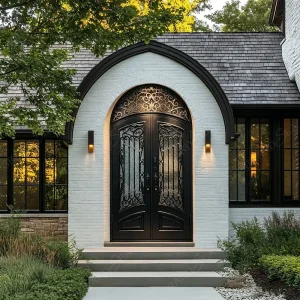
| Wrought Iron Insulated Glass Door | 3,500 Pa (Pass) Standard | 450 Pa (No Leakage) | <0.12 L/s·m² | 2.2 – 2.6 W/(m²·K) | Class 3 (Hot-Dip Galvanized + E-Coat) |
Tailored envelope solutions built to withstand specific micro-climates and architectural demands across international markets.
In tropical cyclone belts, entry doors face devastating wind pressures combined with horizontal rain impact and corrosive marine salt air. DERCHI specifies heavy-wall 6061-T6 aluminum profiles integrated with SGP laminated impact glass (capable of resisting Missile Level D impacts under TAS 201/203 protocols). High-density EPDM gaskets prevent sea water siphonage, while 3-coat fluorocarbon PVDF finishes stop salt-spray oxidation entirely.
Sub-zero environments require absolute thermal break insulation to eliminate perimeter frost formation, interior condensation mold, and thermal bowing. DERCHI equips cold-climate entry doors with multi-chamber PA66-GF25 thermal insulation profiles filled with expanded polyisocyanurate (PIR) foam cores. Warm-edge glass spacers and argon gas filling preserve interior radiant heat, reducing heating expenses dramatically.
Extreme thermal radiation causes standard door materials to warp while solar ultraviolet destroys surface paints. DERCHI utilizes specialized heat-reflective surface powder coatings and heavy cast aluminum skins that remain structurally stable under ambient temperatures exceeding +50°C. Multi-layered heat-blocking Low-E glazing blocks 99% of damaging UV rays and reduces Solar Heat Gain Coefficients (SHGC) down to 0.22.
Combining architectural majesty with anti-burglary defense, DERCHI heavy-duty pivot doors and armored stainless steel doors feature solid steel frame inserts, anti-pry lock strike plates, bullet-resistant glass options, and seamless integration with smart biometric access controls (facial recognition, fingerprint scanners, encrypted RFID, and smart home IoT protocols).
How global builders, commercial procurement directors, and architectural specifiers mitigate risk through direct factory partnerships.
Procuring exterior weather-resistant entry doors for international commercial developments or residential communities requires strict alignment with local building codes. Overseas buyers look beyond aesthetic appeal to mandate total compliance documentation:
The architectural door industry is undergoing a massive transformation driven by thermal performance standards and smart automation. Key trends reshaping procurement include:
Answers to essential technical, engineering, and logistics questions from architectural buyers and contractors.
Every DERCHI weather-resistant entry door design undergoes laboratory testing inside specialized pressure chambers conforming to ASTM E331 (water penetration) and ASTM E283 (air infiltration). We subject the door to continuous water sprays at 4 liters per minute per square meter while increasing static air pressure up to 700 Pa. To pass, zero water droplets may breach the interior side of the frame seal during the test duration.
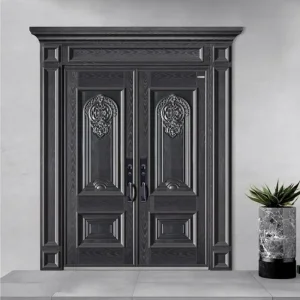
Extruded aluminum entry doors use hollow multi-chamber profiles ideal for clean modern aesthetics, light structural weight, and optimized thermal breaks. Cast aluminum entry doors utilize solid molten aluminum sand-casted into dense panels 6mm to 12mm thick. Cast aluminum offers unmatched impact strength, three-dimensional decorative relief textures, and absolute immunity to denting, making it ideal for classical villa main gates and high-security luxury entrances.
Yes. Standard single doors swing on edge hinges, whereas pivot doors rotate on top and bottom axis points. DERCHI engineers oversized pivot doors up to 2,000mm wide and 4,000mm high by integrating continuous vertical steel frame reinforcements, heavy-duty floor pivots rated for 500 kg, and perimeter brush-and-EPDM drop-down automatic seals that seal flush when closed.
All export doors are wrapped in PE protective film, wrapped with thick shock-absorbing EPE foam corner guards, sealed inside 5-layer corrugated cartons, and fully enclosed within ISPM 15 compliant fumigation-free plywood crates. Crate interiors contain moisture-absorbing desiccant packs to prevent condensation rust during long ocean voyages.
DERCHI provides a comprehensive 10-year warranty covering aluminum profile structural integrity and PVDF surface coating adhesion, a 10-year warranty against insulated glass seal failure, and a 5-year warranty on mechanical hardware and smart locks. Full warranty documentation and replacement parts are supplied directly by our factory technical service team.
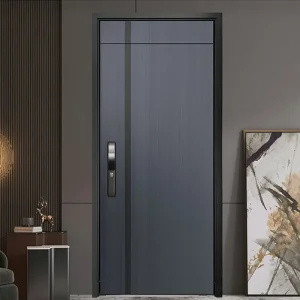
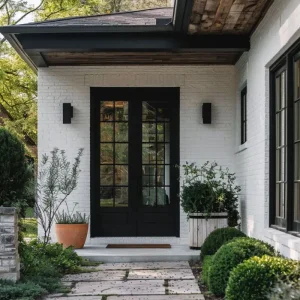
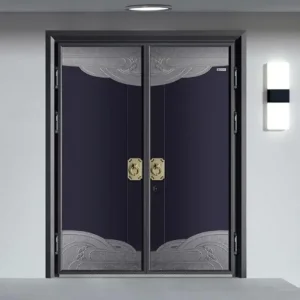
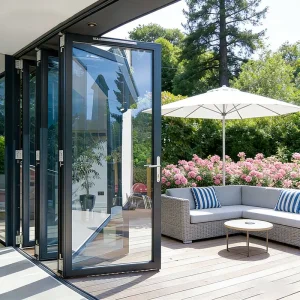
Versatile architectural configurations: stainless steel, French grid entry systems, bi-fold glass walls, and armored security gates.