Precision-engineered structural aluminum, cast aluminum, and security glass entrance configurations manufactured to global structural code standards.
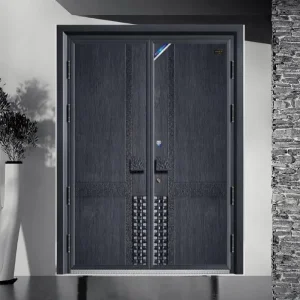
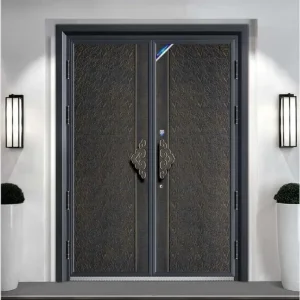
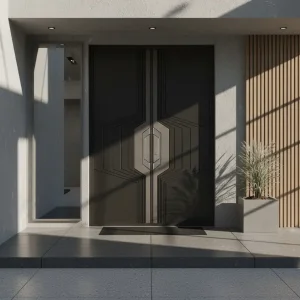
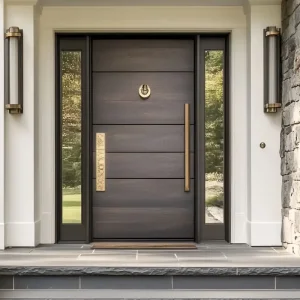
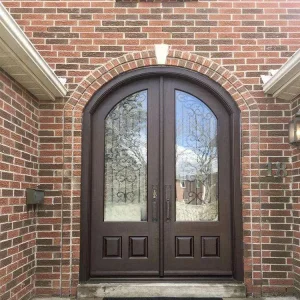
In modern high-end architectural design, the arch has transitioned from a classical load-bearing masonry element to a premier statement of fluid, biophilic geometry. The demand for Arched Glass Doors in commercial headquarters, luxury hospitality, and ultra-high-net-worth (UHNW) residential estates has grown exponentially at a compound annual growth rate (CAGR) of 8.4% globally.
Achieving flawless radial geometry with high-transmittance insulated glass requires eliminating the traditional stress-concentration points common in rectangular fenestration. DERCHI’s advanced extrusion bending technologies allow architects to specify expansive parabolic, semi-circular, and gothic arch profiles without compromising structural stiffness or thermal envelop integrity.
Global energy mandates—such as Europe’s EPBD directive, North America’s ASHRAE 90.1, and Australia’s NCC Section J—have forced Fenestration OEMs to re-engineer curved frame profiles. Historically, arched glass units were notorious for thermal bridging, air leakage along radial gaskets, and structural deflection under high wind loads.
DERCHI addresses these systemic industry vulnerabilities by implementing multi-chambered, thermally broken 6063-T6 aluminum alloys fitted with continuous polyamide barrier strips (PA66GF25). This whitepaper details how precision manufacturing eliminates radial seal failures while maintaining U-factors as low as 1.2 W/m²K.
Unlike traditional manual stretch-bending that distorts internal extrusion chambers, DERCHI utilizes servo-driven 3D multi-roll CNC stretch benders. Profile cross-sections are supported internally by custom-machined flexible mandrels, eliminating profile buckling or wall thinning during radius formation.
Achieving optical clarity on curved glass requires digitally controlled gravity-annealing and hot-bending kilns. Glass panes (Double or Triple Low-E configurations) undergo matching thermal cycles to ensure zero visual distortion or double-refraction anomalies across the arch sweep.
Standard straight gaskets buckle when forced into an arch channel, introducing micro-gaps. DERCHI molds seamless, continuous vulcanized EPDM radial gaskets engineered specifically to the radius of each custom opening, ensuring air infiltration ratings below 0.05 L/s·m².
| Performance Parameter | DERCHI Arched Glass Systems | Standard Market Suppliers | Engineering Benefit |
|---|---|---|---|
| Profile Aluminum Alloy | Primary 6063-T6 / T5 (1.8mm–3.0mm wall) | Recycled Low-Grade Aluminum (< 1.4mm) | Superior wind-load resistance up to 4500 Pa |
| Thermal Separation | Polyamide PA66GF25 Insulating Strip | PVC / Non-Thermal Broken Aluminum | Prevents condensation & reduces HVAC loads |
| Glass Configuration | 6mm Low-E + 12A/16A Argon + 6mm Tempered Laminated | Single Monolithic / Non-Argon Double Glass | Acoustic attenuation (STC 42dB) & U-Value ≤ 1.4 |
| Radius Curvature Tolerance | ± 0.5 mm via 3D CNC Bending | ± 3.0 mm to 5.0 mm manual bending | Eliminates site installation fitting friction |
| Surface Coating | AkzoNobel Powder Coat / Fluorocarbon PVDF | Standard Anodized / Low-grade spray | 30-Year Salt-Spray & UV Fade Warranty |
In regions subject to severe cyclonic events such as Florida’s High Velocity Hurricane Zone (HVHZ), arched entrance systems face extreme cyclical wind pressure and wind-borne debris. DERCHI integrates SentryGlas® (SGP) laminated interlayers between heavy-gauge tempered glass units paired with heavy-duty multi-point stainless steel locking systems. Tested to meet NFRC thermal standards and ASTM E1886/E1996 missile impact protocols.
European projects prioritize high thermal efficiency and airtightness. DERCHI arched glass systems engineered for the EU market utilize triple-pane Low-E insulated glazing units with Warm-Edge Swiss spacers and argon gas fill. Fully compliant with EN 14351-1, these doors achieve ultra-low air permeability (Class 4) and watertightness under heavy driving rain (Class 9A).
Compliance with AS2047 demands rigorous deflection, air infiltration, and water penetration resistance testing. DERCHI’s specialized structural pivot hinges and arched French doors are certified for Australian housing codes up to N6 / C4 cyclonic wind classifications, guaranteeing structurally sound operation under 4500 Pa ultimate wind loading.
In desert climates where surface temperatures exceed 70°C, thermal expansion management is critical. DERCHI’s high-performance PVDF finish coatings protect against severe UV degradation, while dual-durometer weatherstripping isolates internal living space from micro-particulate dust and severe heat radiation.
Upon receipt of project floor plans, DERCHI engineers output 3D BIM/Revit models and perform Finite Element Analysis (FEA) to verify radial stress points, wind deflection, and anchor loads prior to profile extrusion.
Extrusions are CNC stretch-bent, corner-crimped with cast aluminum corner keys, and injected with structural two-component epoxy resin to ensure frame rigidity under heavy thermal strain.
100% of custom arched doors undergo pre-shipment assembly inside our 180,000 m² factory. Hinge rotation torque, multi-point lock latching, and laser radius integrity are verified and logged.
Engineered for high-traffic villa entrances, expansive patio openings, and extreme weather resilience.
DERCHI is pioneering smart-tinting electrochromic insulated units for curved openings. Controlled via smart home automation or ambient lux sensors, these glass panels adjust light transmittance from 60% to 1% in seconds, reducing solar heat gain without requiring motorized interior shades on non-rectangular geometries.
Modern oversized arched pivot doors demand invisible automation. Our technical team integrates concealed electro-mechanical floor-pivot drives combined with facial recognition, Bluetooth LE, and fingerprint access, offering touchless hands-free passage for luxury estates.
In our Foshan smart factory, optical AI laser scanners measure every curved frame extrusion immediately after CNC rolling. Any micro-deviation exceeding ±0.3mm triggers automated recalibration, ensuring flawless installation alignment for global project deliveries.