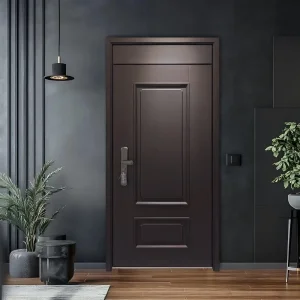
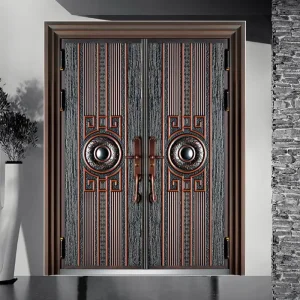
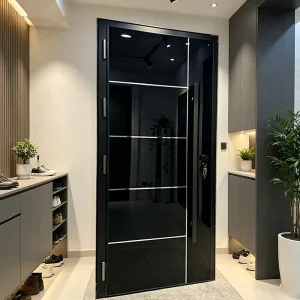
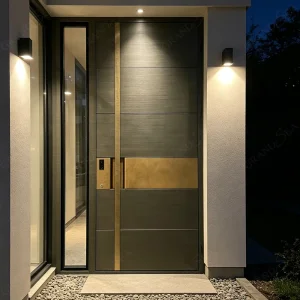
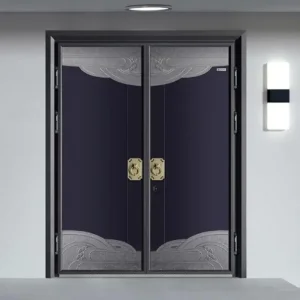
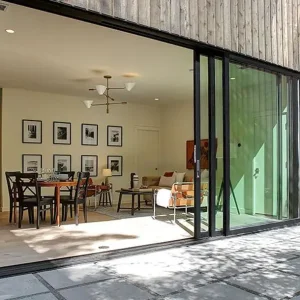
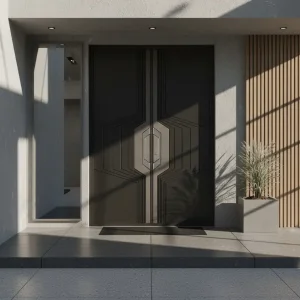
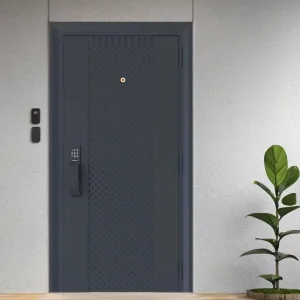
Explore DERCHI's proprietary thermally isolated entrances, high-load structural pivot assemblies, and hurricane impact-resistant glazed doors configured for high-specification global procurement.
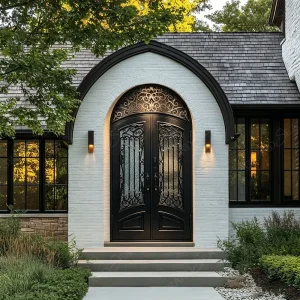
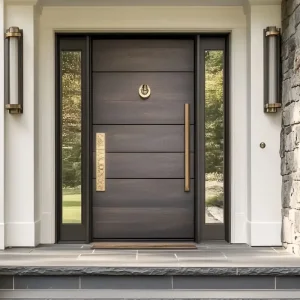
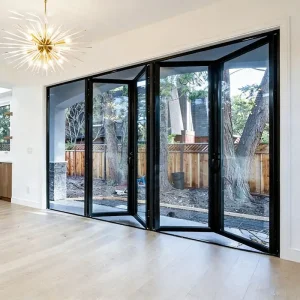
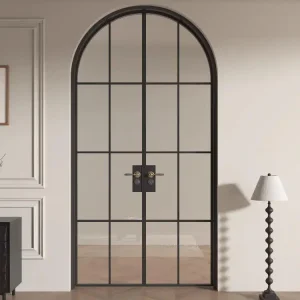
Stringent global building codes (ASHRAE 90.1, California Title 24, European EPBD Recast, and Australian NCC 2022) have turned the exterior door from an aesthetic threshold into a critical thermal boundary.
Building envelope regulations worldwide demand overall fenestration U-factors lower than 1.4 W/(m²·K). Traditional monolithic aluminum profiles conduct heat at 160 W/(m·K), triggering severe condensation and convective heat losses. DERCHI's polyamide-isolated matrices decouple inner and outer extrusions, guaranteeing full structural rigidity while bringing frame conductance down to under 1.8 W/(m²·K).
We utilize precision PA66GF25 (polyamide 6.6 reinforced with 25% longitudinal glass fiber) thermal break bars featuring identical thermal expansion coefficients (2.4 × 10⁻⁵ K⁻¹) to architectural grade 6063-T6 aluminum alloys. This mechanical synchronization eliminates bimetallic shear failures, delamination, and frame curvature under extreme summer/winter thermal shocks from -40°C to +80°C.
Modern oversized architectural entrances must withstand cyclonic wind pressures exceeding 4,500 Pa (AS2047 N6 and ASTM E1300 standards). Through multi-chamber internal webs, structural shear-pin crimping, and triple-sealed EPDM co-extruded automotive weatherstripping, our door systems maintain exceptional air infiltration rates (<0.1 m³/(h·m²)) and sound insulation indices up to Rw 42 dB.
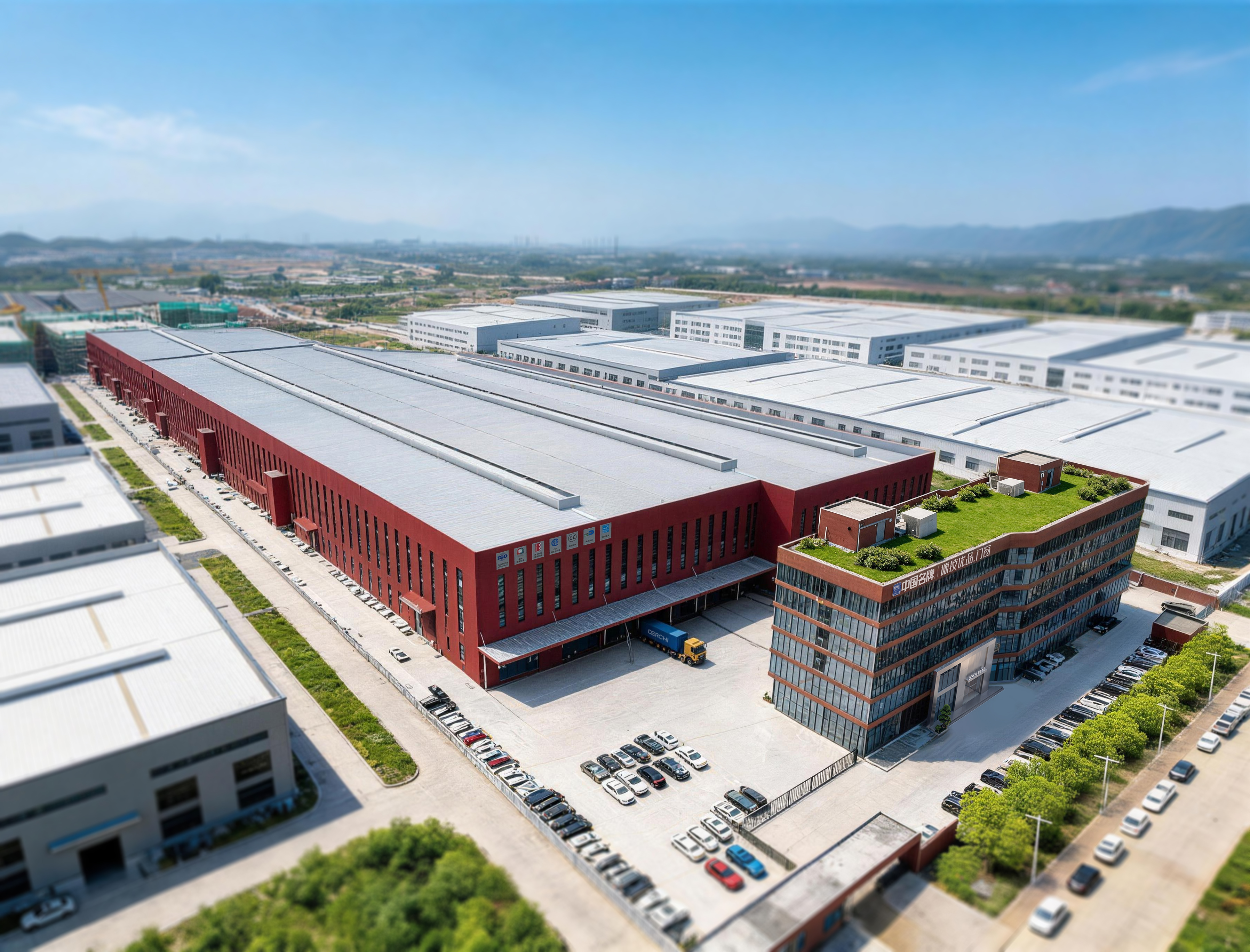
DERCHI (Guangdong Deji Youpin Doors and Windows) operates a complete end-to-end industrial chain in Foshan, eliminating third-party markups, scheduling delays, and fragmented accountability.
Comprehensive engineering specifications comparing DERCHI's four material systems against international thermal, structural, and acoustic benchmarks.
| System Architecture | Core Composite Matrix | Thermal U-Factor | Wind Load / Water Resistance | Target Fenestration Application | Preservation Protocols |
|---|---|---|---|---|---|
| Thermally Broken Aluminum Multi-chamber 6063-T6 frame | PA66GF25 isolation bar (24mm–34mm) with aerogel foam infill and PU perimeter cores | 1.4 – 1.8 W/(m²·K) (NFRC certified ranges) | Wind: Up to 4,500 Pa (AS2047 N6) Water: 700 Pa static pressure |
Passive houses, high-end oceanfront villas, modern cantilevered pivot openings | Biannual freshwater rinse and silicone seal validation |
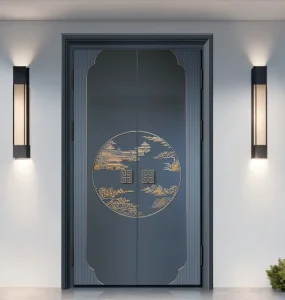
| Sand-Cast Solid Aluminum High-relief monolithic panel | 6–12mm solid sand-cast relief skin fused to double-broken internal sub-chassis | 1.9 – 2.4 W/(m²·K) | Wind: 3,000 Pa structural design Impact: Large missile level D |
Palatial estate gateways, classical embassy entrances, heritage architecture | Hand-rubbed fluorocarbon wax refreshment every 24–36 months |
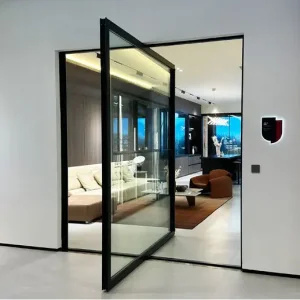
| Structural Glazed Pivot Ultra-slim perimeter sash | Triple Low-E laminated IGUs (e.g. 6+16Ar+6+1.52PVB+6) with warm-edge spacers | 1.1 – 1.6 W/(m²·K) Rw 40 dB Acoustic index |
Wind: 3,500 Pa cyclic test Air: <0.05 m³/(h·m²) |
Five-star hospitality lobbies, gallery façades, panoramic open-plan villas | Annual floor-spring hydraulic calibration and torque inspection |
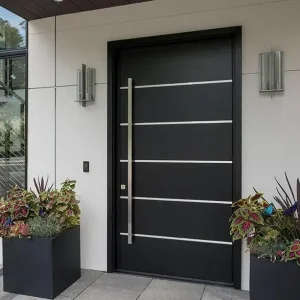
| Armored Stainless Steel Composite Reinforced security entry | 1.5–2.0mm SUS304/SUS316 skins over high-density acoustic rockwool & anti-drill manganese plates | 1.8 – 2.2 W/(m²·K) EN 1627 RC3/RC4 Security |
Wind: 4,000 Pa design load Prying force resistance >10,000 N |
High-security residential bastions, coastal extreme-corrosion zones, luxury bank vaults | Neutral pH surface cleaning; avoid chloride and abrasives |
Exporting to over 60 countries demands rigorous alignment with disparate regional testing protocols. DERCHI delivers turnkey documentation packages stamped by accredited third-party laboratories.
Tested in full accordance with NFRC 100/200/500 for thermal transmittance (U-factor), Solar Heat Gain Coefficient (SHGC), and condensation resistance. Conforms to AAMA/WDMA/CSA 101/I.S.2/A440 fenestration performance criteria and Florida DBPR High Velocity Hurricane Zone (HVHZ) requirements with Miami-Dade missile impact compatibility.
Certified for AS2047 N6 cyclonic envelope rating (deflection, air infiltration, water penetration, and ultimate strength at 4,500 Pa positive/negative design load). All architectural glazing complies strictly with AS1288 safety glass and human impact criteria, accompanied by factory Form 15/16 compliance certs.
Full CE Factory Production Control (FPC) verified under ISO 9001 quality management systems. Tested under EN 14351-1 for load-bearing capacity of safety devices, air permeability (Class 4), watertightness (Class 9A), and thermal simulation in THERM/WINDOW FEM software.
From parametric architectural detailing to ocean-ready steel-framed crate logistics, our engineering pipeline eliminates costly site alterations and structural variance.
Deep-dive review of architect CAD/BIM models, structural wind loads, wall interface conditions (drywall, timber buck, or concrete revel), and thermal targets within 24 hours.
Generation of 1:1 scale elevation and cross-sectional drawings detailing polyamide barrier continuity, anchor bolts, sub-cill weepage, and hardware cutouts for municipal stamping.
Automated cutting, laser mortising, and corner crimping with two-component structural polyurethane adhesive. Extrusion anodizing or powder coating according to RAL palettes.
100% pre-assembly in the factory. Calibrated testing of floor pivot return rates, electromagnetic latch engagement, laser flatness check, and chambered water spray simulations.
Five-layer corner protection, vacuum shrink wrapping, and fumigation-free reinforced plywood crating numbered per door schedule, accompanied by engineer installation manuals.
Custom thermally broken doors must resolve distinct physical stresses depending on microclimate, structural elevation, and human traffic density.
Salty sea spray corrodes unprotected fasteners and frames within months. DERCHI delivers marine-grade anodized profiles (25μm film thickness) or Qualicoat Class 2 finishes paired with A4 (316) stainless steel pivot pins, weep-hole anti-backdraft baffles, and laminated storm-impact glass preventing pressure equalization ruptures.
In sub-zero climates (Canada, Scandinavia, Northern US), temperature deltas (ΔT > 50°C) cause standard doors to sweat, freeze shut, or bend outwards. Our triple-chambered thermal barriers with aerogel insulation cores stabilize internal sash temperatures, eliminating interior condensation and frost bridging.
High-cycle commercial entrances require continuous structural equilibrium. Our commercial pivot systems incorporate concealed German dormakaba or Geze floor-spring dampers rated for 1,000,000 opening cycles, seamless access-control electric strike integration, and anti-finger trap perimeter profiles.
DERCHI R&D is pioneering the next decade of fenestration engineering, integrating electrochromic daylight control, vacuum thermal barriers, and mechatronic access ecosystems.
By replacing traditional 24mm argon IGUs with 8.3mm tempered vacuum insulating glass units achieving Ug values of 0.45 W/(m²·K), our upcoming 2026 door chassis reduces overall leaf mass by 38% while matching the insulating power of solid masonry walls.
Seamlessly hidden inside the frame reveal, our motorized multi-point locks communicate with Crestron, Control4, and Apple HomeKit protocols via encrypted Matter over Thread, providing deadbolt status telemetry, motorized auto-closure, and biometric palm-vein verification.
Collaborating with tier-one solar thin-film innovators, DERCHI incorporates micro-perforated photovoltaic glazing within high-transmittance sidelights and door panels, enabling self-powered automated smart actuators and localized auxiliary battery storage.
Direct technical responses addressing common sourcing friction, compliance auditing, physical structural thresholds, and custom ODM production parameters.
Explore DERCHI's heavy cast aluminum portals, high-security stainless steel security entries, and certified balcony sliding arrays designed for demanding environmental exposures.