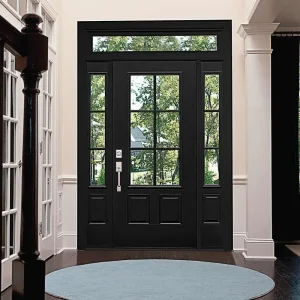
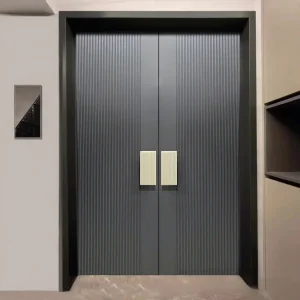
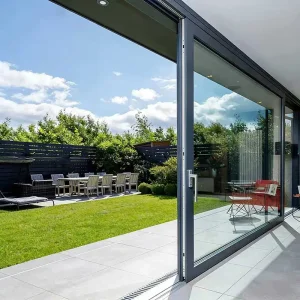
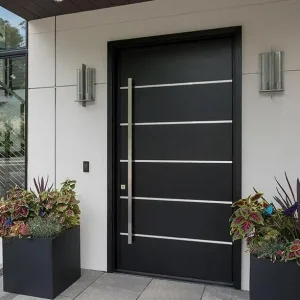
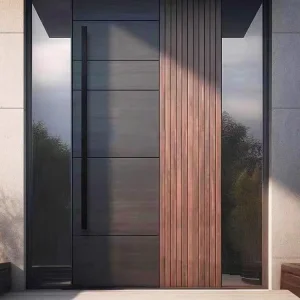
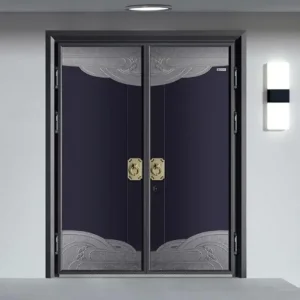
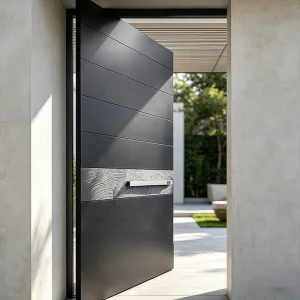
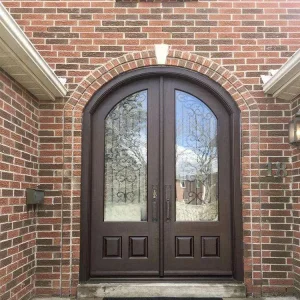
Precision-engineered high-security pivot, cast, thermal-break aluminium, and stainless steel door assemblies manufactured to international building standards.
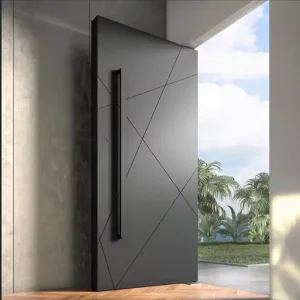
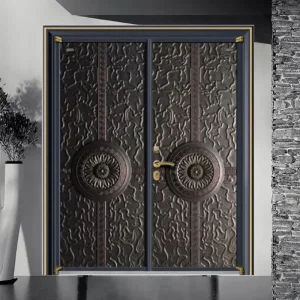
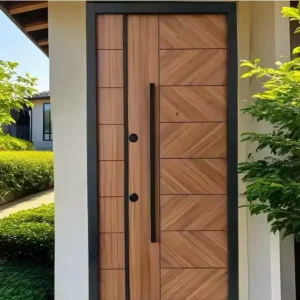
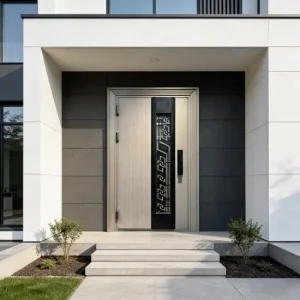
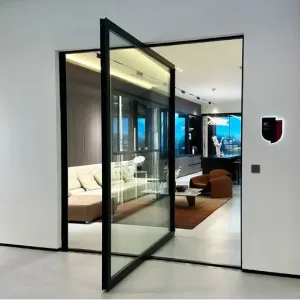
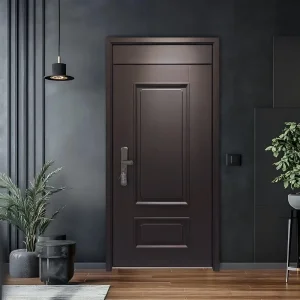
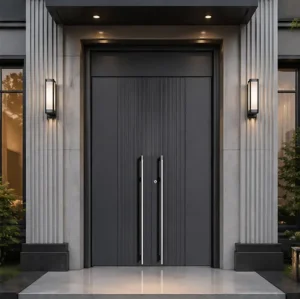
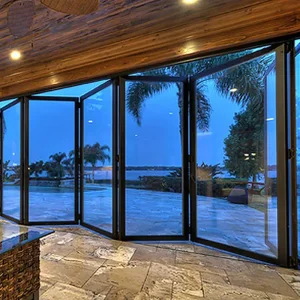
Analyzing the global paradigm shift from traditional wrought iron to high-strength architectural aluminium alloy perimeter barriers across luxury residential, commercial, and industrial domains.
Over the past decade, the architectural gate sector has witnessed a structural transition. Civil engineers, estate developers, and high-end residential contractors are systematically migrating away from traditional wrought iron and fabricated carbon steel toward extruded 6063-T5/T6 and cast aluminium alloys. The driver behind this global shift is the total life-cycle cost equation.
While carbon steel exhibits high initial tensile strength, it suffers from rapid electrochemical oxidation (rust) when exposed to ambient moisture, de-icing salts, and coastal atmospheric salinity. Maintenance over a 15-year lifecycle—including repainting, structural scraping, and motor replacement driven by excessive gate leaf mass—exceeds the original procurement cost by up to 220%. Custom aluminium driveway gates offer complete immunity to red rust, a 65% reduction in dead weight, and zero structural degradation under severe atmospheric exposures.
Modern driveway gates are no longer simple static physical boundaries; they serve as active, digitized physical-security nodes within building management systems (BMS) and smart home ecosystems. Industrial and luxury villa buyers require seamless integration with brushless DC (BLDC) motor actuators, optical encoders, IoT gateway controllers, and biometric access technology.
Aluminium’s superior strength-to-weight ratio minimizes moment of inertia during rapid motor acceleration and deceleration cycles. This reduces mechanical fatigue on hydraulic arms, underground swing operators, and cantilever sliding tracks, enabling continuous-duty cycles (100% duty cycle rating) required for commercial logistics parks, gated communities, and high-security diplomatic compounds.
Verifiable metrics from our 180,000 square meter automated manufacturing base in Foshan, China.
An in-depth examination of profile wall thicknesses, FEA stress computation, welding integrity, and fluorocarbon surface protection technologies.
DERCHI utilizes high-purity primary aluminium billets extruding 6063-T5/T6 structural profiles. With magnesium (0.45–0.9%) and silicon (0.2–0.6%) as primary alloying elements, the material undergoes artificial aging to achieve a tensile strength exceeding 205 MPa and a yield strength over 170 MPa, delivering optimal wind-shear resistance for wide-span driveway openings up to 12 meters.
For classical architectural gates, solid cast aluminium panels (6mm to 12mm thickness) are produced via precision resin-sand moulding. Unlike stamped hollow sheet metal, sand-cast panels provide dynamic three-dimensional relief patterns with full structural density, avoiding internal voiding or atmospheric resonance during high-wind events.
Surface finishing complies with Qualicoat Class 2 and Class 3 standards. Our automated 7-stage chemical pretreatment line applies a chrome-free zirconium conversion layer followed by dual-layer PVDF (Fluorocarbon polymer) coating, guaranteeing 25+ years of color retention and resistance to chalking, salt spray, and extreme UV solar radiation.
Quantitative benchmarking of structural materials for driveway barriers, security perimeter gates, and residential estate entrances.
| Material Platform | Structural Weight Ratio | Corrosion Resistance (C5-M Coastal) | Cycle Life Expectancy | Automation Strain | Lifecycle Maintenance Cost |
|---|---|---|---|---|---|
| DERCHI Extruded Aluminium (6063-T6) | 1.0 (Optimal Baseline) | Excellent (Zero Rust) | 30+ Years | Minimal (Low Inertia) | Near Zero (< 2% of Initial Cost) |
| Sand-Cast Aluminium Panels | 1.4 (High Mass Density) | Excellent (Zero Rust) | 35+ Years | Low-Moderate | Near Zero (Occasional Waxing) |
| Wrought Iron / Fabricated Steel | 2.8 (Extremely Heavy) | Poor (High Red Rust Risk) | 8-12 Years (Before Refurbishment) | High (Causes Motor Burnout) | High (> 180% of Initial Cost) |
| SUS 304 / 316 Stainless Steel | 2.6 (Heavy) | Good (Pitting Risk at Welds) | 20+ Years | Moderate-High | Moderate (Periodic Cleaning) |
Tailored structural adjustments meeting North American, European, Middle Eastern, and Australasian environmental demands.
In hurricane-prone coastal regions like Florida, Texas, and the Carolinas, driveway gates must withstand extreme wind-shear pressures. DERCHI custom aluminium gates are designed with internal steel-reinforcement sleeves and engineered to meet TAS 202 (Criteria for Testing Impact and Non-Impact Transparent or Opaque Assemblies) and ASTM E1300 structural load calculations, withstanding gusts exceeding 160 mph (71 m/s).
European Union and United Kingdom deployments prioritize anti-crushing safety and dynamic force measurement. DERCHI driveway gate automation packages conform to EN 12453 safety standards, featuring dual-channel optical safety edges, active infrared photobeams, and emergency physical disconnects to prevent harm to pedestrians or vehicles during opening and closing cycles.
In the Gulf Cooperation Council (Saudi Arabia, UAE, Qatar), driveway gates encounter ambient temperatures exceeding 50°C and relentless sand abrasion. DERCHI applies high-durability thermosetting architectural coatings certified under Qualicoat Class 3, paired with IP67-sealed electronics and dust-proof bearing hinges to eliminate mechanical seizing caused by airborne particulate matter.
Oceanic installations require high resistance to marine corrosion and compliance with Australian standard AS2047. Utilizing anodized sub-coatings prior to powder deposition, DERCHI gates achieve a marine-grade corrosion rating capable of resisting over 3,000 hours of continuous neutral salt spray (NSS) testing per ISO 9227.
From initial BIM/CAD architectural shop drawings to final ocean-freight crate packing.
Parametric shop drawings and structural FEA wind-load calculations generated within 24 hours.
5-axis CNC extrusion cutting, laser joint profiling, and robotic TIG/MIG seam welding.
7-stage chemical washing and Qualicoat 3 PVDF / Powder coating curing at 220°C.
100% factory pre-erection, motor calibration, dynamic balance checks, and laser alignment.
EPE foam wrapping, corner armoring, and fumigation-free plywood box enclosure.
Authoritative guidance on technical engineering, shipping parameters, hardware customization, and quality compliance from the DERCHI technical engineering division.
For residential swing and sliding gates up to 4 meters per leaf, DERCHI utilizes structural 6063-T5 aluminium extrusions with a minimum wall thickness of 3.0mm to 4.5mm. For heavy commercial or industrial cantilever sliding gates spanning up to 12 meters, internal structural ribbing is increased to 6.0mm, supplemented by internal galvanized steel core inserts at critical stress nodes to restrict wind deflection below L/175 under maximum specified velocity pressures.
Aluminium has a coefficient of thermal expansion (CTE) of approximately 23 × 10⁻⁶ /K. On a dark-finished 6-meter gate exposed to high solar radiation, total linear expansion can reach 6-8mm across extreme seasonal temperature swings. DERCHI mitigates this by integrating floating slip-joints within the horizontal louvers/panels, slotted mounting brackets, and expansion-tolerant bearing hinges that allow free thermal movement without inducing frame twisting or motor binding.
Yes. DERCHI operates a fully equipped custom engineering division capable of translating client CAD, DWG, PDF, or BIM models into production-ready shop drawings. Our 5-axis CNC machining centers can replicate intricate architectural fretwork, laser-cut panel inserts, arched headers, and customized cast aluminium emblems while maintaining strict dimensional tolerances within ±0.5mm.
DERCHI gate frames are engineered to seamlessly interface with all industry-standard automation platforms, including CAME, FAAC, Nice, Roger Technology, and LiftMaster. We provide pre-milled mounting plates, internal wiring conduits, and reinforced mounting posts for underground swing operators, linear ram actuators, or heavy-duty sliding rack-and-pinion drives.
Every production batch undergoes mandatory factory acceptance testing (FAT), including 100% pre-erection inspection, coating thickness verification via magnetic gauge (minimum 60–80 microns for powder coating, 30+ microns for PVDF), cross-hatch adhesion testing (ISO 2409 Class 0), and dynamic imbalance checks. Complete mill test reports (MTRs), Qualicoat certificates, and ISO 9001 quality documentation are bundled with each shipment.
Sample units or single-gate project orders have no MOQ constraint. Production lead time is typically 15–20 days for standard powder-coated models and 25–30 days for complex cast panel assemblies or custom wood-grain sublimations. Products are encased in protective PE film, heavy corner guards, 5-layer corrugated carton wrap, and packed inside fully sealed, fumigation-free plywood crates tailored for LCL or FCL ocean transport.
Discover our broader architectural door catalog engineered for luxury villas, coastal estates, and high-occupancy commercial developments.