Explore our certified export-grade entrance door systems manufactured in Foshan, China. Built to comply with international structural, acoustic, and thermal insulation standards.
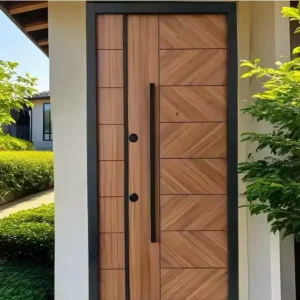
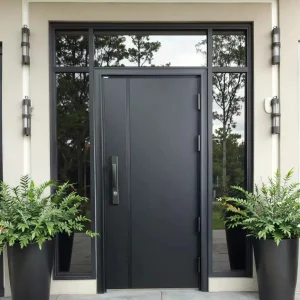
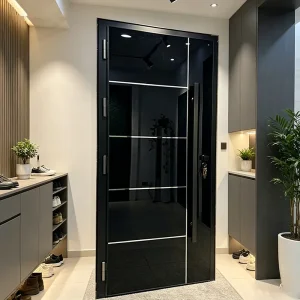
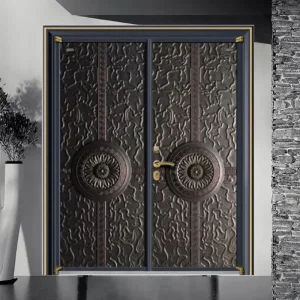
An authoritative breakdown of architectural glass door specification shifts across North America, Europe, Australia, and the Middle East.
In contemporary architectural design, the primary entry point is no longer treated as a simple barrier; it is an engineered structural facade element that sets the tone for a building's thermal envelope, visual identity, and security profile. The global market for modern glass entry doors has experienced an accelerating transition toward large-format glazed openings, ultra-slim profile sightlines, and heavy-duty structural pivot mechanisms. Architectural trends favor floor-to-ceiling glass assemblies that maximize natural daylighting while maintaining stringent energy ratings demanded by modern green building codes such as LEED v4, NFRC standards, California Title 24, and Europe's Passive House performance thresholds.
Commercial developers, luxury residential contractors, and institutional project managers face a dual challenge: procuring entrance doors that deliver visual transparency and aesthetic impact without compromising structural integrity under extreme wind pressures, thermal stress, or forced entry risks. Modern glass entry door assemblies must integrate high-strength 6063-T5/T6 extrusions, advanced thermal break polyamides (PA66-GF25), and structural laminated insulating glass units (IGUs). As global demand scales, international buyers increasingly look to established Chinese manufacturing hubs—specifically Foshan—where vertically integrated supply chains permit custom structural fabrication at unprecedented cost efficiencies and technical precision.
Strict energy conservation codes require entrance assemblies to achieve U-values under 1.6 W/(m²·K). Thermally broken aluminum glass entry doors utilize multi-cavity insulation zones to meet NFRC and Energy Star benchmarks seamlessly.
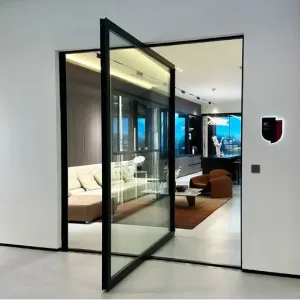
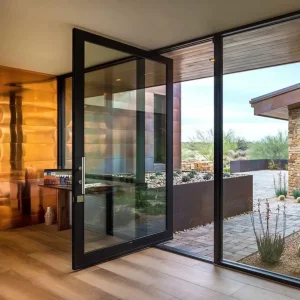
Architects demand single-leaf pivot doors exceeding 2,000mm in width and 4,000mm in height. Engineered glass systems incorporate SentryGlas (SGP) interlayers to maintain structural stiffness against gust loads exceeding 3,000 Pa.
Modern commercial and residential procurement demands concealed multi-point motorized locking mechanisms, biometric access readers, and anti-burglary glass tested under European RC2/RC3 or UL security classifications.
How China's leading architectural glass entry door factories deliver unmatched precision, scale, and custom engineering capabilities.
The manufacturing of premium architectural glass entry doors requires deep industrial convergence: high-precision aluminum profile extrusion, advanced raw glass thermal processing, automated anodizing and powder coating line control, and hardware precision machining. Foshan, Guangdong serves as the epicenter of this industrial ecosystem, housing world-class raw aluminum refineries, tempering facilities, and hardware testing hubs within a 50-kilometer radius. This geographic integration eliminates supply chain lag and allows manufacturers like DERCHI to execute custom architectural specifications within turnaround times that overseas competitors cannot match.
China's factory advantages extend beyond raw material proximity. Advanced investment in multi-axis CNC machining centers enables profile milling tolerances within ±0.1mm. Automated insulating glass production lines execute continuous robotized silicone extrusion, argon gas filling, and dual-seal butyl application under cleanroom conditions. Consequently, high-performance glass doors manufactured in premier Chinese plants eliminate the risk of internal condensation, sealant desiccation, or optical distortion over decades of field service.
From aluminum ingot smelting and profile extrusion to CNC milling, glass tempering, and final assembly under a single ISO 9001 quality management framework.
Computer-controlled double-head cutting saws and 5-axis CNC machining centers guarantee perimeter framing tolerances within ±0.5mm, vital for smooth pivot rotation.
Fluoropolymer PVDF spray coating (AkzoNobel / PPG) and hard anodizing treatments (up to 25 microns) ensure salt spray resistance exceeding 3,000 hours without oxidation.
Direct factory procurement reduces intermediary markups by 30%–45%, allowing developers to upgrade to triple-pane IGUs and hydraulic floor pivots within standard budget constraints.
Empirical proof of manufacturing scale, thermal compliance, and structural performance.
A comprehensive physical and mechanical performance benchmarking table for project engineering teams.
| Door System Platform | Structural Glass Specification | Thermal U-Value Range | Acoustic STC Rating | Max Single Leaf Dimension | Hardware Bearing Capacity |
|---|---|---|---|---|---|
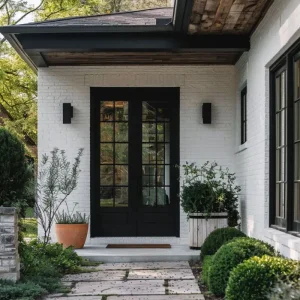
| Thermally Broken Glass Pivot Door | 6mm Low-E + 12A + 6mm Tempered / SGP Laminated | 1.2 – 1.6 W/(m²·K) | 38 – 42 dB | 2,000 mm × 4,000 mm | Heavy-Duty Floor Pivot up to 800 kg |
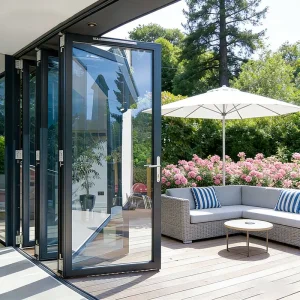
| Ultra-Slim Frame Swing Glass Door | 8mm Low-E + 16Ar + 8mm Extra Clear Tempered | 1.4 – 1.8 W/(m²·K) | 35 – 39 dB | 1,400 mm × 3,000 mm | Concealed 3D Adjustable Hinges (200 kg) |
| Hurricane Impact Glass Entry Door | 6mm Tempered + 1.52 SGP + 6mm Low-E + 12A + 6mm | 1.5 – 1.9 W/(m²·K) | 40 – 45 dB | 1,600 mm × 3,500 mm | Multi-Point Hook Latch + Reinforced Frame |
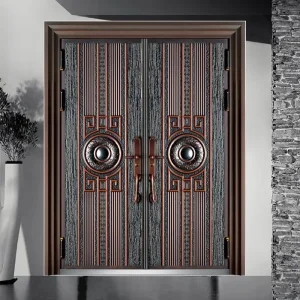
| Cast Aluminum & Glass Combination | 8mm High-Tension Tempered Double Glazed Unit | 1.8 – 2.2 W/(m²·K) | 36 – 40 dB | 1,800 mm × 3,200 mm | Heavy-Duty Bearing Hinges (400 kg) |
| Stainless Steel Frame Glass Entry Door | SUS304/316 Sheathed + 10mm Laminated Double Glazed | 2.0 – 2.4 W/(m²·K) | 37 – 41 dB | 1,500 mm × 3,000 mm | Anti-Prying Security Deadbolts (500 kg) |
Customized glass entrance configurations tailored to specific environmental and architectural demands.
Challenge: Salt spray oxidation, high humidity, and coastal hurricane pressure spikes.
Engineered Solution: 6063-T6 aluminum frame treated with 25-micron PVDF coating, paired with SentryGlas (SGP) structural laminated Low-E glass units. Fitted with 316 stainless steel friction stay pivots and multi-point sealing gaskets preventing water ingress at test pressures up to 600 Pa (AS2047 / ASTM E331).
Challenge: Continuous physical cycle wear, ADA accessibility compliance, and thermal loss during peak foot traffic.
Engineered Solution: Heavy-duty commercial glass pivot doors with German-engineered Dormakaba or GEZE floor springs rated for 1,000,000 operating cycles. Integrated with automated sensor actuators, low-energy push buttons, and concealed electromagnetic multi-point lock integration.
Challenge: Severe sub-zero temperatures causing thermal bridging, interior frost, and massive HVAC heat loss.
Engineered Solution: Multi-chamber aluminum extrusions with 34mm Technoform polyamide thermal breaks, housing triple-pane Low-E glass filled with 95% Argon gas. EPDM continuous co-extruded gaskets guarantee air tightness below 0.5 m³/(h·m²), meeting European Passive House standards.
Next-generation material science and digital manufacturing redefining modern building entrances.
The architectural opening sector is undergoing rapid technological evolution. As buildings transition into smart, dynamic envelopes, modern glass entry doors are incorporating electrochromic switchable glass technology, allowing occupants to alter glass opacity from crystal clear to complete privacy via smart home controllers or integrated motion sensors. Furthermore, Vacuum Insulated Glass (VIG) technology is emerging as a game-changer, achieving U-values as low as 0.40 W/(m²·K) within a ultra-thin 10mm profile envelope—delivering triple-pane thermal insulation without adding excessive mass to giant pivot leaves.
From a structural hardware perspective, magnetic levitation pivot bearings and motorized multi-point latches are replacing conventional hydraulic springs. These systems eliminate mechanical wear, provide whisper-quiet operation, and allow seamless integration with face-recognition access controls and IoT security management software. Factory production is similarly shifting toward digital twin BIM workflows, where 3D Revit models directly generate G-code for automated CNC fabrication lines, removing human error in custom architectural fabrication.
How DERCHI safeguards overseas orders from structural miscalculations, transit damage, and compliance delays.
Prior to manufacturing, our engineering team issues detailed 2D/3D CAD shop drawings containing precise rough opening (RO) dimensions, glass thickness callouts, wind-load deflection calculations, and hardware mounting schedules for architect approval.
Large-format glass entry doors are protected with protective corner guards, wrapped in moisture-resistant vapor barrier films, and fully encased in heavy-duty, reinforced plywood crates designed for fork-lift handling and ocean container shipping.
Sample units from production batches undergo air infiltration (ASTM E283), static water penetration (ASTM E331), structural wind loading (ASTM E330), and continuous hardware torque verification before export documentation is released.
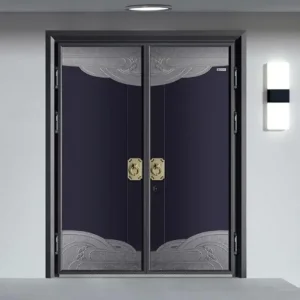
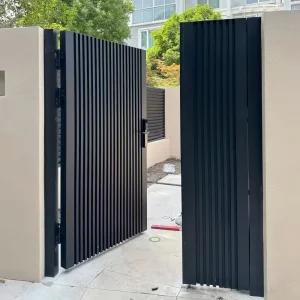
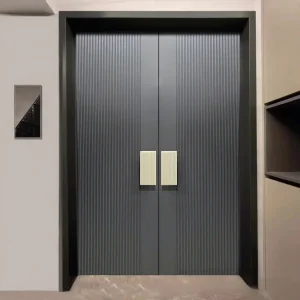
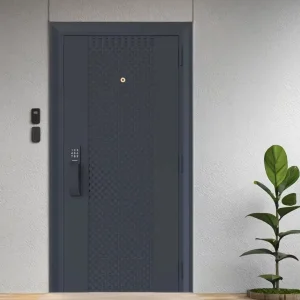
Architectural cast aluminum gates, heavy pivot structures, and fire-rated stainless steel entrance doors.
In-depth answers from our engineering team regarding glass specs, custom manufacturing, lead times, and global shipping.
Connect directly with DERCHI's technical sales engineers in Foshan. Receive detailed shop drawings, structural wind-load analysis, and direct factory pricing within 24 hours.
Request Technical Quote & CAD Package