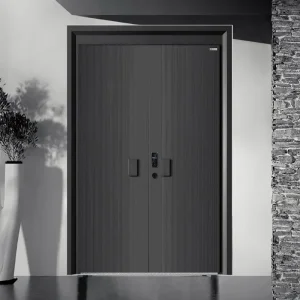
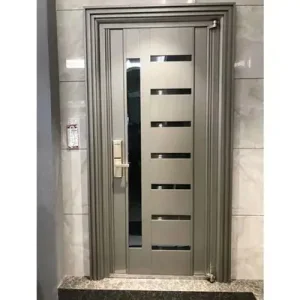
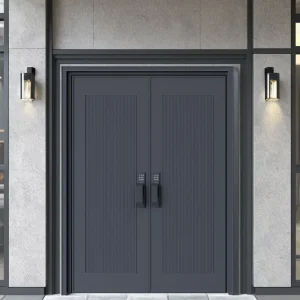
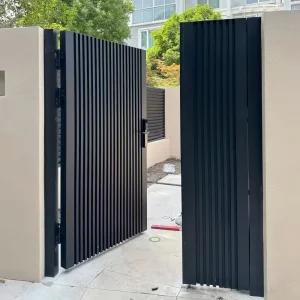
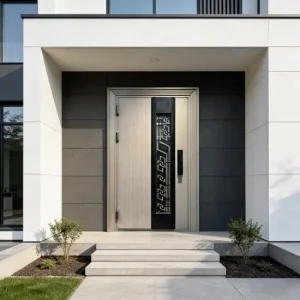
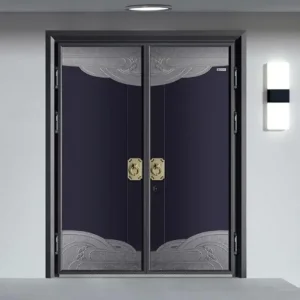
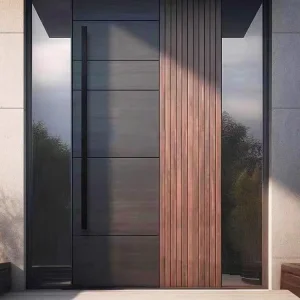
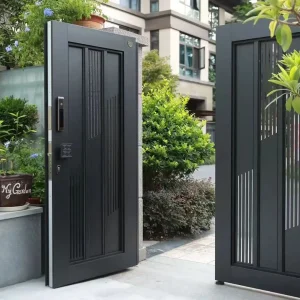
In modern commercial and high-end residential building envelope design, the entrance door has evolved from a simple physical barrier to a highly sophisticated thermal and security barrier system. Modern architecture demands thermal insulation efficiency, structural durability, structural air-tightness, and bespoke visual grandeur. As strict energy performance frameworks like Net-Zero Energy Buildings (NZEB), Passive House standards, and updated building envelope codes take effect across Europe, North America, and Australia, standard non-thermal aluminum or traditional wood doors are increasingly falling short.
Aluminum alloy natively offers exceptional structural rigidity, lightweight operation, resistance to oxidation, and flexibility for architectural extrusions. However, aluminum's naturally high thermal conductivity ($k \approx 200 \text{ W/m}\cdot\text{K}$) historically created thermal bridges, leading to heat gain in tropical climates, severe energy loss in sub-zero environments, and internal surface condensation. The innovation of Insulated Aluminum Front Doors—engineered around multi-cavity thermal break profiles, polyethene or polyurethane cores, high-density structural foams, and multi-seal EPDM gaskets—has transformed the global building envelope industry.
Integrated Polyamide PA66-GF25 glass fiber reinforced thermal break strips reduce profile thermal conductivity, yielding system U-values as low as 0.85 to 1.2 W/m²K for Passive House applications.
Constructed with high-tensile 6063-T5/T6 aviation-grade aluminum profiles, multi-point lock mechanisms, and armored interior steel reinforcements, complying with European RC2/RC3 anti-burglary ratings.
Continuous triple EPDM weatherstripping coupled with high-density polyurethane insulation cores delivers up to 45 dB acoustic attenuation and Class 9A water tightness under extreme wind pressure.
China’s architectural aluminum ecosystem—centered in Foshan, Guangdong—represents a mature, vertically integrated industrial cluster. Global B2B buyers, main contractors, real estate developers, and architectural hardware importers leverage China’s OEM capabilities for several structural reasons:
Chinese manufacturing bases like DERCHI operate fully integrated production cycles under one roof: from primary aluminum billet smelting, high-precision extrusion, automated anodizing, PVDF fluorocarbon spraying, and wood-grain thermal transfer, to CNC 5-axis machining, insulating infill injection, double/triple glazing assembly, and final testing. This eliminates multi-tier middleman markups, reduces lead times to 25–35 days, and maintains tight quality control across all production stages.
Equipped with German and Italian 5-axis CNC machining centers, OEM factories process structural door leaves and heavy-duty frame profiles to tolerances within $\pm 0.5\text{ mm}$. This level of precision is crucial for large-scale pivot doors (handling leaf dimensions up to $2000 \times 4000\text{ mm}$ and weights up to 500 kg) and intricate hidden hinge mechanisms that require exact alignment.
Unlike rigid Western manufacturing lines with limited modular options, Chinese OEM manufacturers excel at low-MOQ, highly customized project orders. Architects and builders can specify customized frame depths (80mm to 120mm), variable leaf skin thicknesses (1.5mm to 3.0mm aluminum skins, cast aluminum panels up to 12mm), custom architectural hardware integration, smart biometric locks, and specialized acoustic/bulletproof glass configurations.
Premier Chinese OEM factories design and test their insulated aluminum front doors specifically for target export markets. Door systems carry certified performance reports for North American AAMA/WDMA/CSA standards, European CE mark (EN 14351-1), Australian AS2047 N6 wind and water pressure ratings, and Florida Hurricane Impact specifications—delivering 35% to 50% cost savings compared to Western counterparts without compromising performance.
Evaluating the right material platform and thermal insulation system requires an understanding of core technical specifications. Below is an engineering overview comparing DERCHI’s primary insulated door construction platforms manufactured for OEM clients.
| Performance Parameters | Thermally Broken Aluminum Door | Cast Aluminum Heavy Villa Door | Glass & Aluminum Pivot Entry Door | Armored Steel-Aluminum Hybrid Door |
|---|---|---|---|---|
| Primary Material | Extruded 6063-T5 / T6 Aluminum | Sand-Cast Solid Aluminum (6–12mm) | Reinforced Aluminum + Tempered Glass | SUS304 Core + Extruded Outer Aluminum |
| Thermal Core Infill | Polyurethane (PU) Foam / Rockwool | High-Density Polyisocyanurate (PIR) | Argon-Filled Low-E Triple Glazing | Honeycomb Steel + Polyurethane Core |
| Thermal U-Value Range | 0.95 – 1.4 W/(m²·K) | 1.8 – 2.2 W/(m²·K) | 1.1 – 1.6 W/(m²·K) | 1.5 – 2.0 W/(m²·K) |
| Acoustic Insulation (Rw) | 38 dB – 42 dB | 40 dB – 45 dB | 35 dB – 40 dB | 42 dB – 48 dB |
| Wind Pressure Rating | Up to AS2047 N6 (4500 Pa) | Up to 3500 Pa | Up to 3000 Pa | Up to 5000 Pa (Severe Storm Rated) |
| Burglary Resistance Class | EN 1627 RC2 / RC3 | EN 1627 RC3 / RC4 | EN 1627 RC2 | EN 1627 RC4 / Bulletproof Class |
| Surface Finish Options | AkzoNobel Powder / PVDF Coating | Hand-Artisan Painted Antique Patina | Anodized / Metallic Fluorocarbon | Wood-Grain Transfer / PVD Stainless |
| Max Leaf Dimension (W×H) | 1400 × 3000 mm | 1600 × 3200 mm | 2000 × 4000 mm | 1500 × 3000 mm |
As the global fenestration industry evolves, technical innovation in entrance doors focuses on smart system integration, material sustainability, advanced thermal breaks, and extreme weather resilience.
Modern insulated aluminum entry doors are shifting from standalone mechanical doors to fully integrated IoT smart access nodes. High-end OEM requests now feature built-in 3D facial recognition sensors, biometric fingerprint readers embedded within vertical pull handles, hidden motorized multi-point lock actuators (such as GU, Siegenia, or Winkhaus systems), dynamic LED status illumination, and seamless integration into smart home platforms (KNX, Zigbee, Control4).
To meet strict net-zero standard requirements without inflating door leaf thickness beyond practical limits ($50\text{mm}$–$80\text{mm}$), leading OEM factories are implementing Vacuum Insulation Panels (VIP) combined with Aerogel infills. This breakthrough enables ultra-thin door panels to achieve thermal resistance values equivalent to traditional 150mm thick insulation walls, keeping door weights manageable while maintaining sleek profiles.
ESG directives in North America and Western Europe require verifiable embodied carbon documentation. Forward-thinking Chinese OEM factories are transitioning to low-carbon billet sourcing (using hydro-powered aluminum smelting) and post-consumer recycled aluminum alloys ($>75\%$ recycled content). Combined with solvent-free VOC-free powder coatings and chrome-free pretreatment lines, green manufacturing credentials have become a core procurement selection factor.
Climate volatility has heightened demand for windstorm-rated entrance systems. Modern insulated aluminum doors engineered in China feature heavy-gauge internal steel reinforcements, laminated storm glass with SentryGlas® interlayers, and heavy-duty floor pivot systems. These allow large entrance doors to withstand hurricane-force winds up to 250 mph and high-velocity debris impact without structural failure.
Entrance doors must perform reliably across diverse environmental micro-climates and architectural typologies. DERCHI’s OEM engineering solutions address environmental stressors through specialized material engineering:
Environmental Challenge: Severe salt spray corrosion, high humidity, intense UV exposure, and coastal wind storms (e.g., Caribbean, Florida, Mediterranean, Southeast Asian coasts).
OEM Engineering Solution: Architectural Grade PVDF (Qualicoat Class 2 / Class 3) fluorocarbon surface treatments with 316-grade marine stainless steel hardware. Thermal breaks feature expanded polyurethane infills with anti-corrosion sealed EPDM perimeter gaskets to prevent internal oxidation.
Environmental Challenge: Severe winter cold (down to $-40^\circ\text{C}$), extreme indoor-outdoor thermal gradients, freeze-thaw condensation risks (e.g., Canada, Nordic Europe, Northern US).
OEM Engineering Solution: Quadruple-sealed thermal break frame profiles utilizing 34mm wide PA66-GF25 thermal strips, warm-edge spacer technology, triple/quadruple low-E glass panels, and insulated thermal threshold sill bars to eliminate thermal bridging and interior frost buildup.
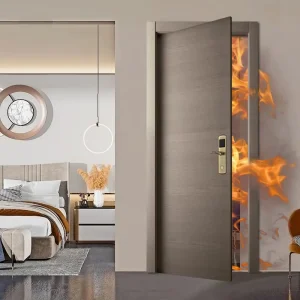
Environmental Challenge: Constant daily operation, physical wear-and-tear, high security demands, and strict fire rating compliance (e.g., Luxury Boutique Hotels, Corporate Headquarters).
OEM Engineering Solution: Heavy-duty hydraulic floor pivot hardware rated for 1,000,000 continuous cycle operations, concealed automatic drop-down door bottom seals, UL/CE certified fire-resistant core infills, and electromagnetic smart access controls.
To mitigate risk in cross-border door procurement, global procurement teams, architects, and importers should evaluate Chinese OEM manufacturers against six core operational criteria:
Ensure the factory uses virgin 6063-T5/T6 aluminum extrusion billets rather than scrap-recycled alloy mix for structural framing. Request mill test reports (MTR) confirming tensile strength ($\ge 190 \text{ MPa}$) and yield strength ($\ge 150 \text{ MPa}$). Verify that polyamide thermal strips are genuine PA66-GF25 (not cheap PVC substitutes).
A tier-one OEM factory must maintain an in-house test chamber for four key parameters: Air Infiltration (ASTM E283 / EN 12207), Water Penetration Resistance (ASTM E331 / EN 12208), Structural Wind Load Performance (ASTM E330 / EN 12210), and Mechanical Cycle Testing. Third-party testing reports from labs like Intertek, SGS, or TÜV should validate these internal benchmarks.
Verify that the OEM manufacturer maintains a dedicated technical drafting team capable of converting architectural specifications into fabrication shop drawings, DWG/DXF cross-sections, and Revit BIM models within 48 hours. Proper clear-opening tolerances, structural anchor calculations, and hardware cutout prep must be locked in before extrusion cuts begin.
International transit demands rigid protective packaging to prevent scratching, corner impact, and moisture exposure. High-standard OEM protocols require: protective blue anti-scratch film on aluminum surfaces, molded EPE foam corner guards, vacuum plastic wrap, double-wall corrugated cartons, and non-fumigation plywood crates with internal steel banding.
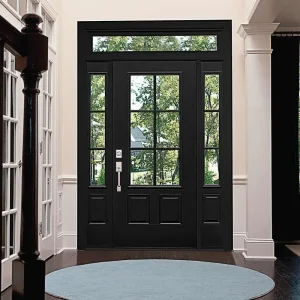
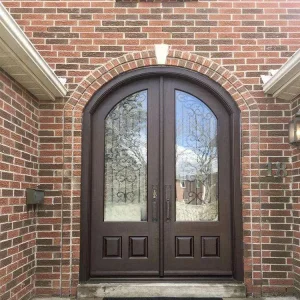
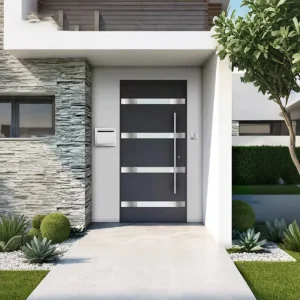
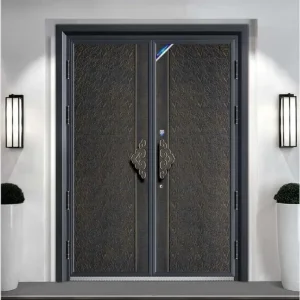
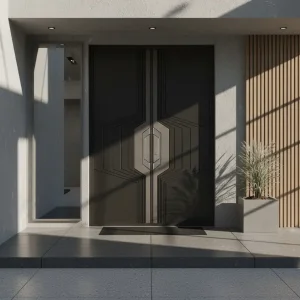
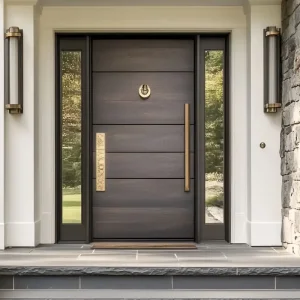
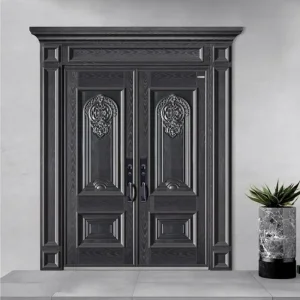
Whether you are seeking custom-engineered insulated front doors for a luxury villa project, high-volume residential developments, or technical white-label manufacturing partnership, DERCHI’s Foshan engineering facility stands ready. Contact our senior technical team for CAD drafting, material samples, and factory direct quotations.
