Direct factory export configurations engineered for severe thermal efficiency, acoustic insulation, and high-impact structural security.
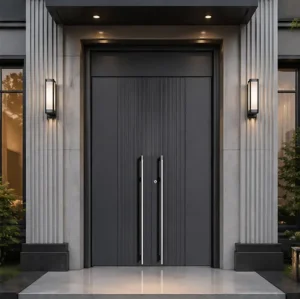
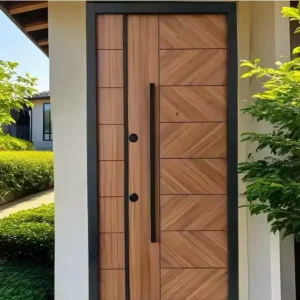
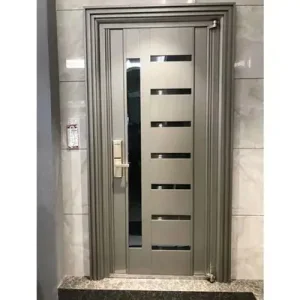
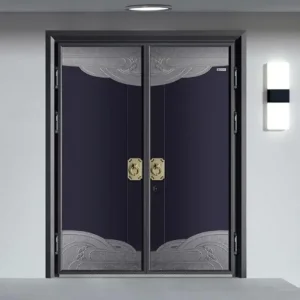
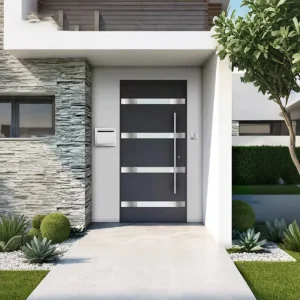
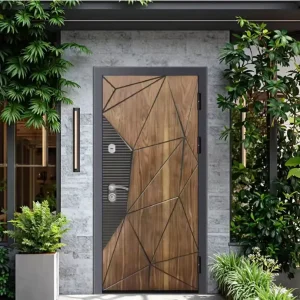
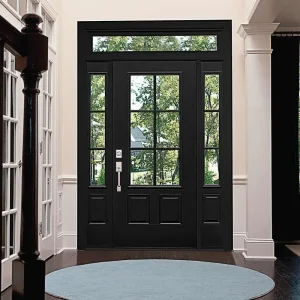
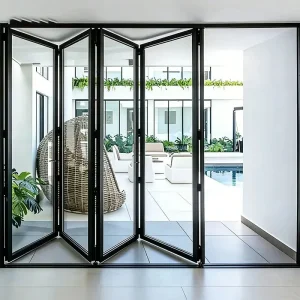
The global architectural facade landscape is undergoing a paradigm shift. Driven by rigorous net-zero building regulations, fluctuating energy costs, and escalating demands for high-security smart infrastructure, the standard front door has evolved from a basic entry barrier into a complex, thermal-engineered envelope system.
Regulatory frameworks such as the EU Energy Performance of Buildings Directive (EPBD), US Title 24, and Australian NCC climate zones mandate strict overall U-factors for exterior building envelopes. Insulated aluminum front doors featuring multi-cavity polyamide (PA66-GF25) thermal breaks and polyurethane structural foam cores achieve U-values under 1.2 W/(m²·K), dramatically reducing thermal bridging and HVAC energy consumption for luxury residential and commercial structures.
Modern procurement specifications increasingly mandate seamless integration with smart home automation ecosystems. High-end aluminum front entry doors now incorporate concealed motorized multi-point locking systems, 3D facial recognition, biometric fingerprint sensors, and encrypted RFID access panels, while preserving weather-tight gasket integrity and operational cycle reliability exceeding 200,000 operations.
With severe weather events becoming more frequent, global architectural developers prioritize impact resistance against cyclonic winds, high salinity corrosion, and extreme temperature deltas (-30°C freeze to +60°C sun exposure). Advanced fluorocarbon (PVDF) surface treatments combined with T5/T6 structural aluminum alloys ensure zero warp, zero rust, and superior hurricane impact performance (AS2047 N6 rating).
Information gain breakdown: Understanding profile physics, multi-layer thermal barriers, structural alloy selection, and acoustic damping mechanisms.
Standard uninsulated aluminum profile systems exhibit thermal conductivity rates of approximately 200 W/(m·K), leading to extreme heat gain or loss. DERCHI’s engineered front door systems utilize high-grade 6063-T5 architectural aluminum alloys integrated with precision-extruded PA66-GF25 (25% Glass Fiber Reinforced Polyamide) thermal barrier strips.
Thermal insulation goes hand-in-hand with acoustic comfort. DERCHI front entrance doors employ a triple-seal system using continuous EPDM (Ethylene Propylene Diene Monomer) synthetic rubber gaskets combined with magnetic drop-down bottom seals.
Why global architects, wholesale distributors, and real estate developers source custom insulated aluminum front doors directly from Foshan, China’s industrial window & door epicenter.
DERCHI operates multi-axis CNC machining centers imported from Germany and Italy. Precision corner-milling, lock-mortise slotting, and hinge recessing are executed with tolerances within ±0.1mm. This eliminates human error, guarantees structural joint squareness, and enables perfect fitment for massive oversized pivot doors up to 2,000mm x 4,000mm.
Located in Foshan, Guangdong, DERCHI controls every stage of production: aluminum ingot casting, profile extrusion, surface anodizing/fluorocarbon powder coating, insulated glass unit (IGU) assembly, hardware integration, and pre-shipment bench testing. This vertical consolidation reduces lead times to 25-35 days while delivering 30-40% cost advantages over European assemblers.
International transit demands robust packaging. Every door panel undergoes a 5-layer packaging procedure: PE protective scratch film → custom EPE foam corner armor → 5-ply corrugated carton encapsulation → fully sealed fumigation-free plywood crates with internal timber bracing. Transit damage rates are strictly controlled under 0.3% across global shipping routes.
Compare structural properties, thermal performance ranges, and climate suitability across DERCHI’s primary entrance door platforms.
| Door System Platform | Core Structural Build-Up | Thermal U-Factor | Wind Load / Water Resistance | Acoustic Damping (STC) | Optimal Project Application |
|---|---|---|---|---|---|
| Thermally Broken Aluminum Entry Door | 6063-T5 alloy frame + 34mm PA66-GF25 thermal break + rigid PU foam panel | 1.4 – 1.8 W/(m²·K) | Up to AS2047 N6 (3,000 Pa wind / 600 Pa water) | 38 – 42 dB | Modern coastal villas, net-zero residential buildings, high-humidity zones |
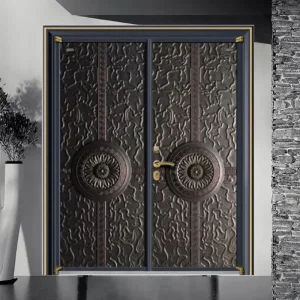
| Heavy Cast Aluminum Armour Door | 6-12mm solid sand-cast relief plate + heavy aluminum structural skeleton | 2.0 – 2.4 W/(m²·K) | Up to 2,800 Pa wind pressure resistance | 35 – 38 dB | Luxury estate gates, classical Mediterranean/European villa entrances |
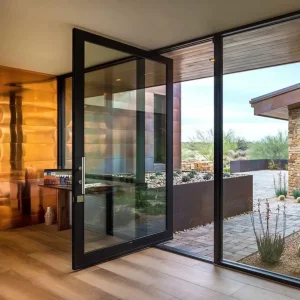
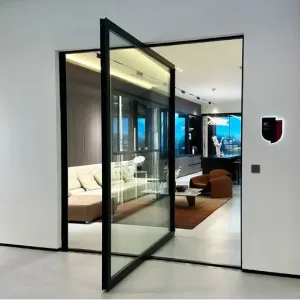
| Structural Glazed Pivot Entry Door | Offset/Center floor-pivot system + 28-42mm Low-E double/triple toughened glass | 1.6 – 2.0 W/(m²·K) | Up to 2,500 Pa structural wind load | 36 – 40 dB | Architectural grand foyers, hotel lobbies, modern daylight-focused entrances |
| SUS304 / SUS316 Stainless Steel Door | 1.5-2.0mm brushed/titanium stainless steel skin + rock wool / aluminum honeycomb | 2.2 – 2.6 W/(m²·K) | Highest anti-prying & forced entry rating (Class 3 Security) | 34 – 37 dB | High-security residential entrances, bank vaults, commercial service cores |
Tailored front entrance engineering meeting regional building codes from North America to the Middle East and Australia.
For coastal Florida and the Caribbean, DERCHI custom engineers doors with SGP (SentryGlas®) interlayers and reinforced heavy-duty pivot hardware to meet Miami-Dade missile impact standards. For Northern US and Canadian projects, triple-glazed Low-E insulated glass filled with 90% Argon gas ensures minimal thermal transfer during sub-zero winters.
Tested to Australian Standard AS2047 N6 structural ratings, our insulated aluminum doors withstand intense cyclonic wind pressures and wind-driven rain penetration. Custom weather-sealing configurations and non-combustible metal cores fulfill Bushfire Attack Level BAL-29 to BAL-40 fire safety requirements.
In desert environments with exterior ambient temperatures exceeding 50°C and aggressive coastal marine air, standard painted doors degrade rapidly. DERCHI applies Qualicoat Class 2 Fluorocarbon (PVDF) 3-coat powder finishes with a salt-spray resistance rating exceeding 3,000 hours, keeping surface temps manageable and stopping UV color fading.
High-traffic commercial entrances require structural durability paired with effortless motion. DERCHI floor-spring pivot hinges support door leaves weighing up to 500 kg while maintaining fingertip push-pull operation forces under 15 Newtons, fully complying with ADA accessibility guidelines.
Direct answers from our senior engineering team covering technical specs, testing, ordering processes, and customization capabilities.
Depending on profile depth (ranging from 80mm to 120mm) and glazing configuration, our thermally broken aluminum front entry doors achieve overall U-factors between 1.2 W/(m²·K) and 1.8 W/(m²·K) (or 0.21 to 0.31 BTU/h·ft²·°F). Using triple-pane Low-E insulated glass units (IGUs) filled with Argon gas and warm-edge spacers, we meet strict US NFRC, European Passivhaus, and Australian Energy Rating (WERS) criteria.
Large aluminum doors exposed to strong sunlight can suffer thermal deflection due to temperature differentials between outer and inner surfaces. DERCHI solves this using anti-bi-metal thermal break strips (sliding mechanical keys inside the PA66 profile) combined with internal high-tensile steel tie-rod reinforcement. This allows micro-expansion without structural bowing, ensuring smooth locking operation even on 4-meter tall custom pivot panels.
Every production batch is compliant with ISO 9001 quality management procedures. Quotation packages include comprehensive third-party test reports for CE marking (EN 14351-1), AS2047 N6 structural/water pressure certification, NFRC thermal performance ratings, and UL/EN fire resistance reports where specified. Factory inspection videos and CAD/BIM shop drawings are issued free of charge prior to manufacturing.
We provide Qualicoat-certified electrostatic powder coating, 3-coat PVDF (Fluorocarbon) liquid coatings, anodized architectural finishes, and Italian vacuum heat-transfer wood-grain finishes. For harsh coastal environments, our hyper-durable PVDF fluorocarbon finish offers extreme resistance against salt spray, atmospheric oxidation, and intense UV degradation, backed by up to 20 years surface warranty.
Sample door fabrication takes approximately 12 to 18 business days following finalized CAD shop drawing approval. Full container project orders (20GP / 40HQ) are produced within 25 to 35 calendar days. DERCHI has no strict container MOQ for commercial or high-end villa projects; single-unit custom doors are welcome for mock-up testing and showroom display.
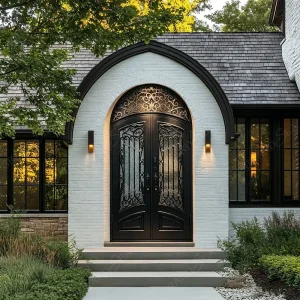
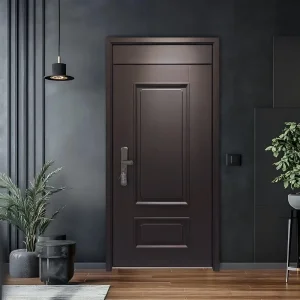
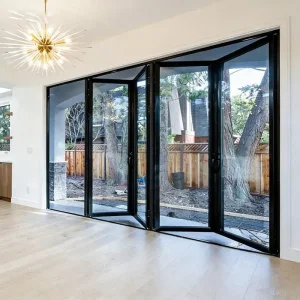
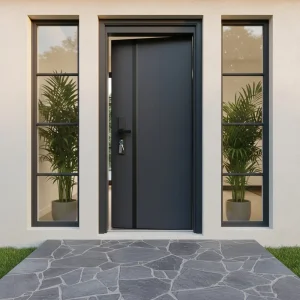
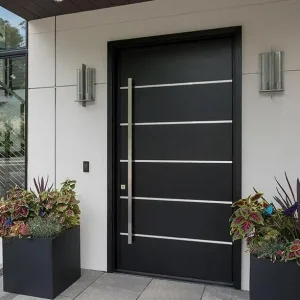
Explore our expanded range of cast aluminum, stainless steel security, hurricane impact, and double-glazed bi-fold systems.
Submit your project schedules, opening elevations, or custom design specifications. Our technical engineering team will issue a comprehensive feasibility evaluation, CAD shop drawings, and competitive direct-factory pricing within 24 hours.
