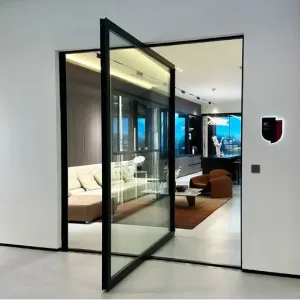
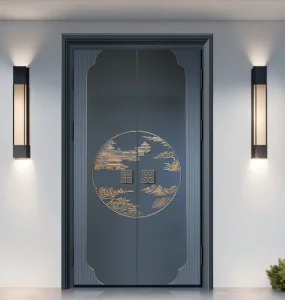
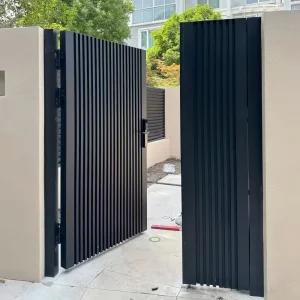
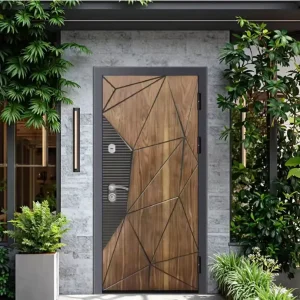
Explore our flagship structural pivot doors, cast aluminum gates, and contemporary entrance systems engineered for global weather resilience and anti-theft security.
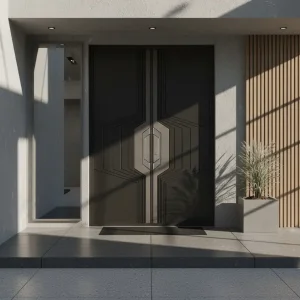
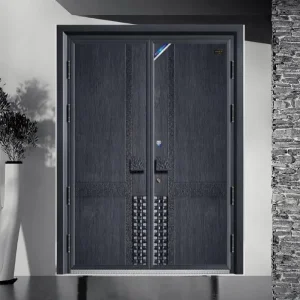
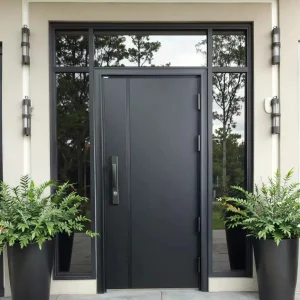
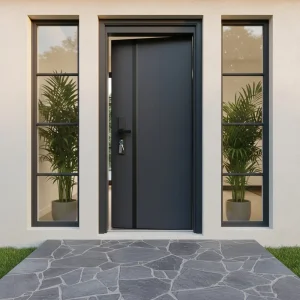
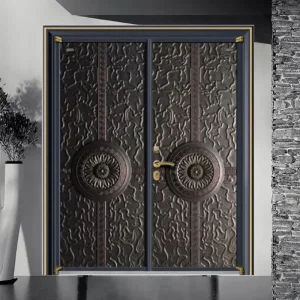
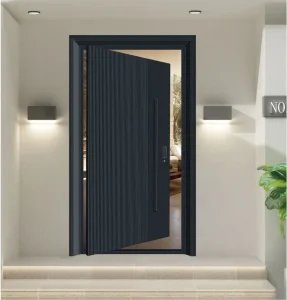
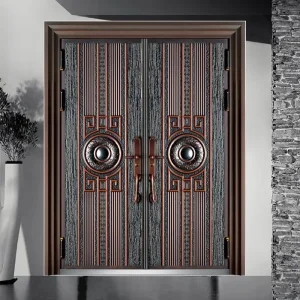
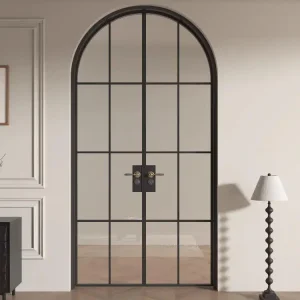
Analyzing the shift from traditional timber and hollow-core steel toward structural SMC fiberglass door skins in modern residential and commercial architecture.
Contemporary fiberglass entry doors engineered by leading China suppliers represent a paradigm shift in exterior building envelope technology. Built around High-Density Compression Molded Sheet Molding Compounds (SMC), these composite structures overcome the fundamental thermodynamic liabilities of timber (rot, expansion, checking) and steel (thermal bridging, localized denting, coastal rust). By integrating closed-cell polyurethane cores (density 45–50 kg/m³), modern composite doors achieve U-values as low as 0.19 BTU/h·ft²·°F (U ≈ 1.08 W/m²K), exceeding energy performance metrics set by ENERGY STAR® 7.0 and European Passive House Institute protocols.
China's Pearl River Delta ecosystem—specifically centered in Foshan—hosts the world's most vertically integrated composite entrance manufacturing hub. Premier manufacturers integrate automated 3,000-to-5,000-ton hydraulic compression presses, 5-axis CNC machining centers, and multi-stage continuous automated UV coating lines. This scale allows Tier-1 China suppliers to maintain precise dimensional tolerances (±0.5 mm) while driving procurement cost efficiency 35% to 50% below North American and Western European domestic OEM fabricators without compromising performance credentials.
Deconstructing the multi-layer composite matrix engineered to withstand extreme environmental stress, mechanical forced entry, and long-term UV exposure.
Formulated with continuous strand glass fibers suspended in thermosetting polyester resin. High-pressure compression moulding creates a 2.5mm to 3.5mm thick high-impact outer shell that will not warp, dent, split, or delaminate under ambient temperature fluctuations spanning -40°C to +80°C.
High-density, 100% CFC-free polyurethane foam core is injected under vacuum pressure, completely bonding with internal face skins. This monolithic structure creates exceptional sound insulation (STC 32–36 dB) and superior thermal isolation, turning the entrance into a thermal barrier.
Eliminating perimeter wood decay, engineered fiberglass composite stiles combined with Laminated Veneer Lumber (LVL) and embedded galvanized steel square tubes prevent hinge sag and lock-latch misalignment, providing robust anchorage for smart multi-point hardware.
A persistent failure mode in low-tier entry doors installed in sun-drenched coastal or desert climates is bow deflection caused by uneven solar thermal expansion between outer and inner skins. Leading Chinese OEM suppliers mitigate this through Dual-Stile Steel-Reinforced Core Matrices combined with heat-reflective inorganic PVDF nano-pigment surface coatings. This reduces skin absorption temperatures by up to 18°C compared to standard oil-based paint systems.
| Engineering Parameter | China Contemporary Fiberglass Standard | Traditional Solid Hardwood | Standard Hollow Steel Door | Testing & Compliance Standard |
|---|---|---|---|---|
| Thermal Transmittance (U-Value) | 0.85 – 1.20 W/m²K | 2.10 – 2.80 W/m²K | 1.90 – 2.40 W/m²K | ASTM C1363 / NFRC 100 |
| Design Pressure (Wind & Water) | DP 50 to DP 70 | DP 30 to DP 40 | DP 40 to DP 50 | ASTM E330 / TAS 202 (Florida Building Code) |
| Forced Entry Security Rating | Grade 40 (Multi-Point Lock) | Grade 20 | Grade 30 | ASTM F476 / EN 1627 RC3 |
| Moisture Absorption Rate | < 0.5% (Hydrophobic) | 12% – 20% (Hygroscopic) | 0% (Corrosion Risk) | ASTM D570 Water Absorption Test |
| Acoustic Attenuation (STC) | STC 34 – 38 dB | STC 28 – 30 dB | STC 26 – 28 dB | ASTM E90 / ISO 10140-2 |
| Surface Finish Lifespan | 25+ Years (Fluorocarbon/PVDF) | 3 – 5 Years (Requires Resealing) | 7 – 10 Years (Chipping/Rusting) | AAMA 2605 Accelerated Weathering |
How customized composite entrance systems fulfill demanding structural building codes across North America, Europe, Australia, and the Middle East.
Projects across Florida, Texas, and the Atlantic seaboard require compliance with High-Velocity Hurricane Zone (HVHZ) building codes. China suppliers customize fiberglass doors with laminated impact-resistant glass (PVB/SGP interlayers), heavy-duty stainless steel continuous hinges, and multi-point deadbolt latching that withstand projectile impact testing (ASTM E1996 / TAS 201) and wind pressure up to +70/-70 PSF.
For low-energy single-family homes and urban residential developments in Germany, Scandinavia, and the UK, thermal insulation is paramount. Doors are specified with 80mm to 100mm frame depths, triple-gasket perimeter compression seals, and argon-filled Low-E triple glazing, achieving thermal insulation targets that comply with EnEV and NZEB (Nearly Zero Energy Buildings) standards.
In GCC region villa projects (GCC/UAE/Saudi Arabia), extreme heat cycles and wind-borne abrasive silica ruin standard finishes. China factory solutions employ aliphatic polyurethane topcoats combined with automated 3D heat-transfer wood grain technology, offering anti-yellowing performance (Delta E < 1.0 after 3,000 hours QUV exposure) and dust-proof IP65 weatherstripping.
High-traffic commercial entrances require self-closing hydraulic pivots, integrated solenoid/biometric access control integration, and 60-to-90 minute fire endurance ratings (UL 10C / BS 476 Part 22). Custom composite door leaves support heavy usage without developing structural sag or latch jam over 500,000 operating cycles.
How global distributors, project developers, and architectural specs teams streamline direct-factory procurement from China.
Procurement begins with window/door schedules, wind-load calculation reviews, and elevation drawings. Factory engineers return 2D CAD cross-sections and 3D BIM (Revit) objects within 48 hours, defining exact rough opening clearances, thermal break boundaries, and glass pocket depths.
Upon drawing sign-off, high-precision steel compression molds compress thermoset SMC matrix under controlled temperature (150°C). Edge profiles, lock body mortises, flush bolt recesses, and hinge prep are executed on automated 5-axis CNC routers to ensure sub-millimeter hardware fitment.
Door panels undergo 6-stage surface pretreatment followed by electrostatically applied liquid PVDF coatings or 3D thermo-vacuum wood grain sublimation. Finished leaves are subjected to drop-weight impact tests, air permeability checks (EN 12207 Class 4), and water tightness verification.
To prevent containerized ocean freight degradation, each fiberglass door assembly is encased in PE protective film, fitted with heavy-duty EPE foam corner armor, sealed within 5-layer corrugated cartons, and loaded inside fumigation-free ISPM-15 compliant wooden crates. Crate dimensioning is optimized via 3D container packing algorithms to maximize TEU/FEU container volume efficiency and eliminate internal shifting during transit.
Direct answers from senior factory engineers regarding specifications, custom molds, certifications, and trade terms.
Explore our extended catalog featuring fire-rated pivot systems, armored security entrances, NFRC-certified energy doors, and custom courtyard gates.
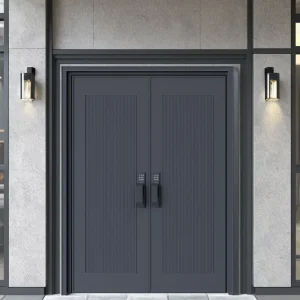
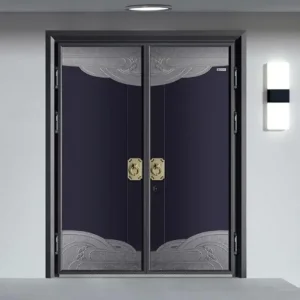
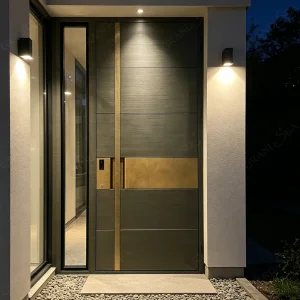
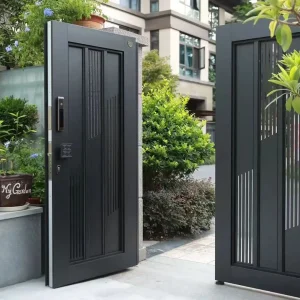
Connect with our senior engineering team to receive full product catalogues, thermal calculation sheets, custom shop drawings, and direct factory pricing for your upcoming commercial or residential developments.
