Engineered for extreme weather resistance, structural longevity, and seamless minimalist aesthetic requirements in commercial and residential developments.
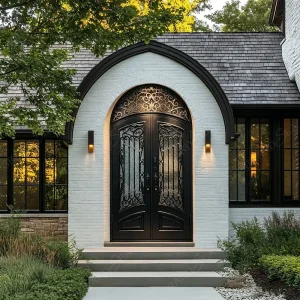
Nagoya, the industrial powerhouse of Japan’s Chubu region, represents a unique nexus of precision manufacturing, high-density commercial redevelopment, and sophisticated residential architecture. From the bustling commercial high-rises around Meieki and Sakae to upscale residential enclaves in Yagoto and Hoshigaoka, architectural demands for exterior building envelopes have escalated dramatically.
As local building standards mandate strict energy efficiency (compliant with Japan’s Next-Generation Energy Standards) alongside rigorous seismic resilience under the Building Standard Law (BSL), the role of the Glass Entry Door Supplier & Factory has evolved. Entry doors are no longer simple aesthetic thresholds; they are engineered thermal and structural barriers capable of handling inter-story drift during seismic events while maximizing natural light transmission and security.
A comprehensive comparative evaluation of door profile physics, glass assembly engineering, and surface protective coatings.
Global markets are shifting toward double-chamber Low-E coated insulating glass units (IGUs) and Vacuum Insulating Glass (VIG). In Nagoya, where solar heat gain in July/August is severe, argon gas-filled 6mm+12A+6mm double-silver Low-E glass reduces total solar energy transmittance (SHGC) to below 0.30 while maintaining 70% visible light transmission.
Non-thermal break metals cause severe interior condensation during Chubu winters. DERCHI structural glass doors utilize multi-chamber polyamide (PA66 GF25) thermal barriers integrated within high-grade 6063-T5 aluminum alloys, eliminating cold bridging and preventing moisture damage to interior floor surfaces.
In accordance with Japanese security preferences and storm safety standards, glass units feature SentryGlas® (SGP) or high-impact PVB interlayers. Even under violent typhoon-borne debris impacts or forced entry attempts, the glass sheet remains bonded without shattering into interior spaces.
| Door System Platform | Structural Frame Composition | Glass Unit Specs (IGU) | Thermal U-Value Range | Seismic & Wind Load Capacity | Primary Nagoya Market Application |
|---|---|---|---|---|---|
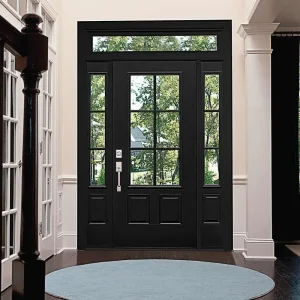
| Thermally Broken Glass Pivot Entry | Heavy-duty 6063-T5 aluminum with 34mm PA66 thermal strip | 8mm Low-E + 14Argon + 8mm Laminated SG | 1.2 - 1.5 W/(m²·K) | 3500 Pa (JIS A 4702 Grade S-6) | Modern Villa Entrance Gates & Commercial Hubs |
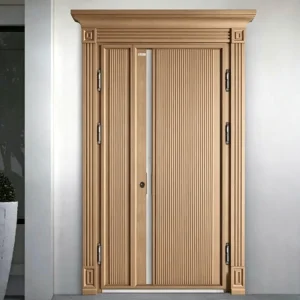
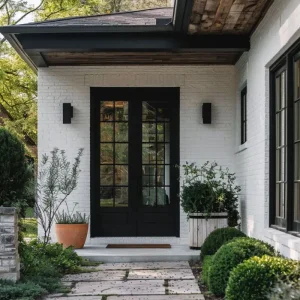
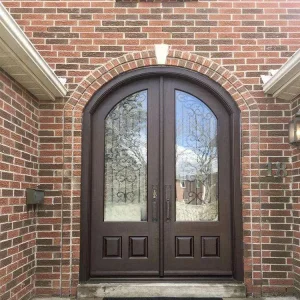
| Slim-Frame Double Glass French Doors | High-tensile extruded alloy, concealed multi-point lock | 6mm Tempered + 12A + 6mm Clear Low-E | 1.4 - 1.8 W/(m²·K) | 2800 Pa (JIS A 4702 Grade S-5) | Luxury Courtyard, Terrace & Residential Main Fronts |
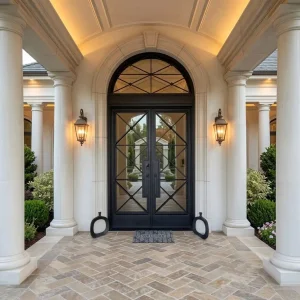
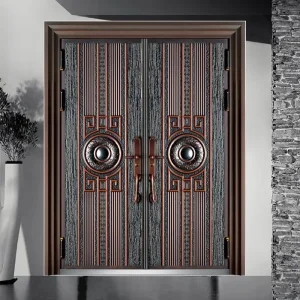
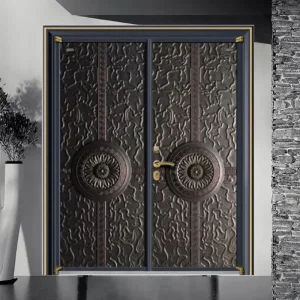
| Iron-Reinforced Cast Aluminum & Glass | Sand-cast solid relief panel with internal steel sub-structure | 6mm Frosted Tempered + 9A + 6mm Safety | 1.8 - 2.2 W/(m²·K) | 2400 Pa (JIS A 4702 Grade S-4) | Heritage Renovations & Classical Japanese Estates |
| High-Traffic Commercial Glass Lobby Door | SUS304 / SUS316 Stainless Steel perimeter frame | 10mm Fully Toughened + 1.52PVB + 10mm | 2.0 - 2.4 W/(m²·K) | 4000 Pa Structural Peak Resistance | Meieki & Sakae Office Towers & Boutique Outlets |
How DERCHI is pioneering smart glass technology, automated pivot physics, and zero-carbon manufacturing workflows.
Integration of PDLC (Polymer Dispersed Liquid Crystal) and Electrochromic tinting technologies directly powered by concealed low-voltage hinges. Users in high-density Nagoya urban residential zones can switch entry glass from crystal clear to 99% opaque via smartphone or smart home hubs.
Development of hydraulic self-closing floor pivots capable of handling glass door leaves up to 600 kg with zero soft-start resistance. Built-in 3D facial recognition and 3D palm-vein scanners engineered for seamless operation under freezing conditions.
Transitioning 100% of aluminum door profile extrusions to certified low-carbon hydro-powered aluminum billets. Fully recyclable silicone gasket compounds paired with vacuum glazing to achieve net-zero embodied carbon for green building certifications (LEED / CASBEE Japan).
From coastal wind zones near Ise Bay to urban heat islands in downtown Nagoya, explore customized door system deployments.
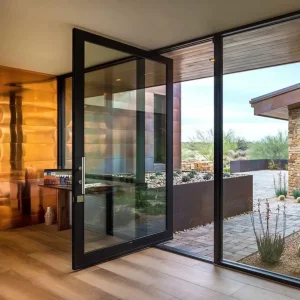
Requirement: High aesthetic elegance, thermal comfort, ultra-wide clear openings, and absolute privacy control.
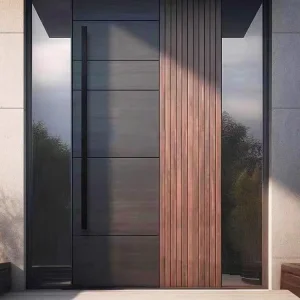
Solution: DERCHI Oversized Glass Pivot Doors (1600mm x 3200mm) featuring double-glazed insulated Low-E glass with custom vertical timber-textured internal frame breaks and concealed multi-point security locks.
Requirement: Heavy duty cycle resistance (1,000+ daily actuations), acoustic isolation against train noise, and maximal storefront visibility.
Solution: SUS316 Stainless Steel framed glass double-entry doors equipped with heavy-duty commercial floor springs, anti-finger-trap rubber seals, and soundproofing up to 40 dB.
Requirement: Strict cleanroom air tightness, fire safety compliance, and access control integration.
Solution: Fire-rated tempered glass entry assemblies with magnetic lock interlocks, positive-pressure air gaskets, and automated sliding/swing operators.
Japan is subject to frequent seismic activity and seasonal typhoon surges. Standard glass entry doors without structural flexible sub-frames are prone to glass fracture or jam during structural shifting.
DERCHI solves this critical engineering challenge through a Floating Frame Anchoring System. By placing dynamic EPDM expansion gaskets between the structural aluminum jamb and the masonry wall opening, seismic shear stress is absorbed before transferring to the glass panel.
| Deflection Limit | L/175 under full wind pressure |
| Water Tightness | 700 Pa (JIS A 4702 Grade W-5) |
| Air Infiltration | Grade A-4 (0.5 m³/h·m²) |
| Hinge Load Capacity | Up to 500 kg per door leaf |
| Surface Coating | PVDF 3-Coat / Fluorocarbon 25+ Yrs |
All door units are custom manufactured in our 180,000 m² factory and shipped directly to Nagoya port or project sites with full assembly documentation.
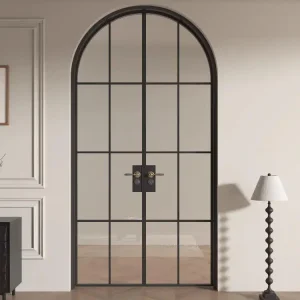
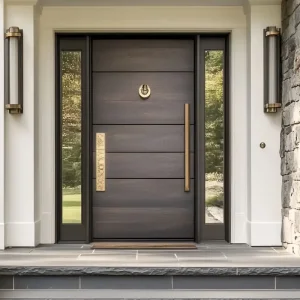
Clear answers regarding shipping, local code compliance, hardware options, and factory customisation.
Our engineering team designs custom door schedules tailored to Japanese structural standards. We utilize tempered glass compliant with JIS R 3206 and laminated safety glass meeting JIS R 3205 requirements. Wind pressure resistance is factory-tested to exceed JIS A 4702 Grade S-5 and S-6 requirements, suitable for high-rise developments in Nagoya's urban core and wind-exposed coastal zones near Ise Bay.
Production typically takes 25 to 35 business days following CAD shop drawing approval and deposit receipt. Shipping from Foshan/Shenzhen port direct to Nagoya Port takes approximately 5 to 7 days on direct vessel lines. Every unit is crated in fumigation-free plywood boxes with individual opening tags for rapid on-site sorting.
Yes. For oversized pivot doors up to 2,000mm wide and 4,000mm high, DERCHI utilizes internal heavy-duty steel sleeve reinforcements inside 6063-T5 aluminum profiles along with floor-pivot hardware rated up to 500 kg. Multi-point perimeter drop seals automatically engage upon closure to seal against wind-driven rain during intense typhoons.
Yes. Our in-house engineering team issues free 2D CAD section details, anchor installation blueprints, and 3D BIM models matching your exact door schedules within 24–48 hours of initial inquiry. This ensures flawless alignment with local Japanese general contractor (Zenecon) specifications prior to manufacturing.
DERCHI glass entry doors can be pre-drilled and fitted with top European and Japanese brand smart locks, including Miwa, Shoji-style motorized locks, fingerprint readers, PIN keypads, electronic strike plates, and smart home automation relays (Zigbee / Z-Wave / Matter compatible).
Contact our senior technical engineering team today for a free project consultation, custom CAD shop drawings, and competitive direct-from-factory pricing.
Send Inquiry Now →