Curated entrance solutions customized for New Zealand climate zones, engineered for coastal salinity, high wind pressure, and energy efficiency.
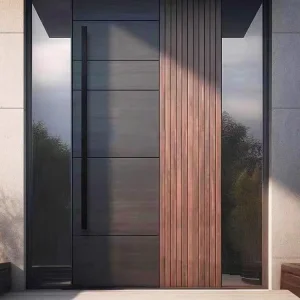
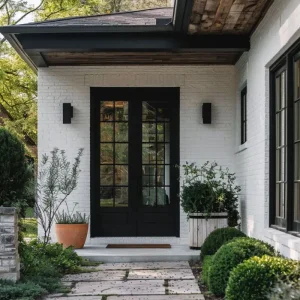
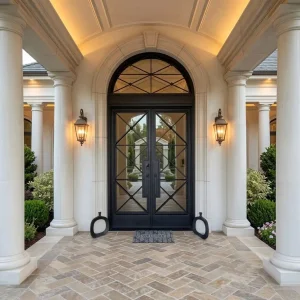
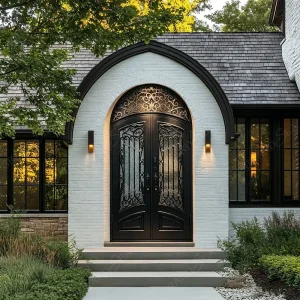
New Zealand's architectural sector is undergoing a profound structural transition. From the coastal estates of Takapuna and Herne Bay in Auckland to the alpine retreats of Queenstown and Wanaka, the demand for high-performance glass entry doors has grown exponentially over the past five years.
Driven by strict revisions to the New Zealand Building Code (NZBC) Clause H1 (Energy Efficiency), standard non-thermally broken joinery is no longer adequate for modern residential and commercial builds. Specifiers, architects, and structural engineers now demand entry door assemblies that combine low U-values with severe weather tolerance.
NZBC H1 Compliance Impact: Modern glass entry systems installed in NZ must deliver minimum thermal resistance (R-values ≥ 0.37 to 0.46 m²·K/W), necessitating advanced polyamide thermal breaks, argon gas fill, and low-emissivity (Low-E) double or triple glazing.
Bridging the gap between premier Foshan precision manufacturing and local New Zealand job site execution.
By leveraging DERCHI’s 180,000 m² vertically integrated manufacturing plant in Foshan, commercial contractors in Auckland, Christchurch, and Tauranga eliminate intermediary markup while securing superior structural extrusion profiles.
Every custom glass entry door order includes factory-issued CAD shop drawings, glass stress calculations, wind pressure test certificates under AS2047 / NZS 4211, and certified structural glazing reports for local Council Building Consents.
Comprehensive ocean logistics direct to Port of Auckland, Port of Tauranga, and Lyttelton. Products are packed in reinforced, fumigation-free plywood crates with custom foam corner protection, ensuring 0% transit damage.
A deep dive into profile extrusion metallurgy, thermal break barriers, and glass unit physics built for structural longevity.
DERCHI glass entry door frames utilize 6063-T5 / T6 architectural grade aluminum extrusions with wall thicknesses ranging from 2.0mm to 3.0mm. To eliminate thermal bridging, high-density Polyamide PA66-GF25 (25% Glass Fiber Reinforced) thermal break strips are inserted into the frame core.
This barrier prevents structural heat loss during cold South Island winters and block extreme radiant heat during North Island summers, ensuring high indoor thermal comfort year-round.
Glazing options strictly comply with AS/NZS 2208 (Safety Glazing Materials in Buildings). Double and triple glazing configurations (e.g., 6mm Low-E Toughened + 12A/16A Argon Gas Spacer + 6mm Clear Toughened) feature ceramic warm-edge spacers to minimize edge condensation.
For high-security entry pivot doors, PVB laminated glass interlayers (SentryGlas®) provide maximum anti-intruder protection while cutting 99% of damaging UV radiation.
Comprehensive engineering metrics to assist New Zealand specifiers in choosing the ideal entry door system.
| Door System Platform | Thermal U-Value Range | Wind Load Rating (NZS 4211) | Acoustic Insulation (Rw) | Max Single Leaf Dimension | Recommended NZ Application |
|---|---|---|---|---|---|
| Heavy-Duty Glass Pivot Door | 1.5 - 2.0 W/m²K | Extra High (Up to 2800 Pa) | 36 dB - 42 dB | 2000 mm × 4000 mm | Modern Architectural Villas, Luxury Estate Gates |
| Double Glazed French Entry Door | 1.6 - 2.2 W/m²K | Very High (Up to 2400 Pa) | 35 dB - 40 dB | 1800 mm × 2700 mm | Coastal Residences, Heritage & Contemporary Mix |
| Wrought Iron Glass Villa Door | 2.0 - 2.5 W/m²K | High (Up to 2000 Pa) | 32 dB - 38 dB | 1600 mm × 3000 mm | Security Villas, Gated Communities, Farmhouses |
| Aluminum Bi-Fold Glass Entrance | 1.7 - 2.3 W/m²K | Very High (Up to 2200 Pa) | 34 dB - 39 dB | 1000 mm × 3000 mm (per panel) | Indoor-Outdoor Patio Flow, Commercial Showrooms |
Exporting to New Zealand requires total adherence to stringent regulatory mandates. DERCHI doors undergo rigorous continuous testing to provide direct documentation for Council sign-offs:
Navigating New Zealand Council Consent (Auckland Council, Wellington City Council, Christchurch City Council) can be complex when importing building materials. DERCHI eliminates compliance hurdles by supplying full engineering producer statements and test reports prior to shipping.
Our engineering support office collaborates directly with your project’s architect or LBP (Licensed Building Practitioner) to supply structural CAD sections, fixing details, and glass producer certificates (PS1/PS2 technical reference documentation).
From modern minimalist black framed glass pivot systems to arched wrought iron double security entrances, inspect our extended range for New Zealand projects.
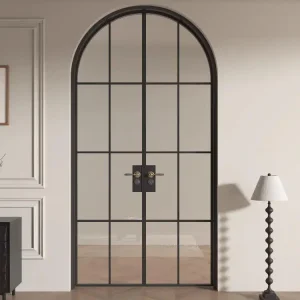
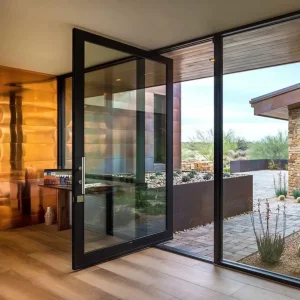
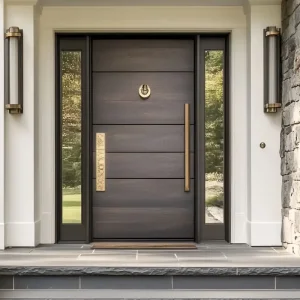
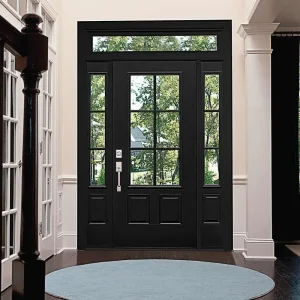
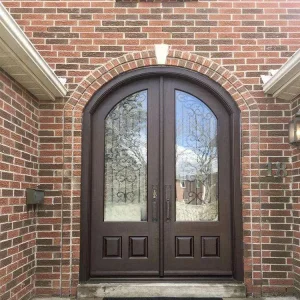
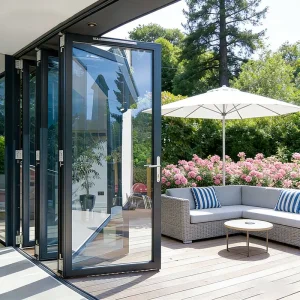
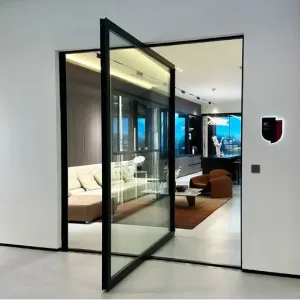
Examining structural implementation across diverse New Zealand environmental conditions and microclimates.
Challenge: Severe marine salt-spray environment and high solar heat gain during summer months.
Solution: DERCHI supplied custom 120mm thermally broken aluminum glass entry doors finished with a 50-micron PVDF fluorocarbon coating. Glazing comprised 8mm SunGuard Low-E toughened + 16A Argon + 8mm clear toughened glass, cutting solar thermal transmission while preventing salt pitting corrosion.
Challenge: Sub-zero winter temperatures, snow load pressure, and intense thermal insulation requirements.
Solution: Triple glazed glass pivot entry door system featuring dual polyamide thermal breaks. U-value reduced down to 1.2 W/m²K. Integrated heavy-duty Dorma Kaba floor spring rated for sub-zero oil fluid operation, preventing hinge freezing.
Challenge: Extreme wind zone (ULS > 2.5 kPa) and high-traffic commercial cycle requirements.
Solution: Steel-reinforced aluminum glass pivot door with 5-point motorized anti-prying lock hardware. Structural deflection calculations verified under AS2047 test protocols, ensuring zero frame warp under gusting harbor winds.
Addressing structural engineering, building code compliance, shipping, and custom hardware specifications.
Our entry door systems incorporate multi-chambered 6063-T5 aluminum extrusions fitted with high-performance Polyamide (PA66-GF25) thermal break barriers. Combined with argon-gas-filled Low-E double or triple glazing units, our door assemblies achieve overall thermal transmittance (U-values) from 1.5 to 2.0 W/m²K (R-values up to 0.50 to 0.66 m²·K/W), comfortably exceeding the updated NZBC H1 standards across all New Zealand climate zones (Zones 1 through 6).
We routinely engineer custom oversized glass pivot door leaves up to 2000 mm in width and 4000 mm in height. To prevent long-term deflection and sagging, oversized panels are built with internal steel-reinforced sub-frames and mounted on heavy-duty concealed hydraulic floor springs rated for glass loads up to 500 kg.
Yes. Our door joinery is designed and laboratory tested under AS2047 and NZS 4211 protocols. Frames feature heavy structural wall thicknesses (up to 3.0mm) and multi-point perimeter locking systems, successfully withstanding Ultimate Limit State (ULS) wind pressure up to 3,000 Pa (N6 rating), rendering them suitable for high-wind coastal areas like Wellington, Banks Peninsula, and Northland.
We supply a comprehensive technical documentation package with every project quote. This includes fully dimensioned CAD shop drawings, elevation details, glass compliance certificates (AS/NZS 2208 safety glass marks), weather tightness test reports (NZS 4211), and structural calculation summaries (PS1/PS2 equivalent documentation) for presentation to your local Council building consent authority.
Custom manufacturing takes approximately 25 to 35 days following final CAD drawing sign-off and color sample approval. Ocean transit from Shenzhen/Guangzhou ports to Port of Auckland or Port of Tauranga takes approximately 14 to 18 days, with Lyttelton (Christchurch) taking approximately 20 to 22 days. Total turnaround time from order confirmation to job site delivery is typically 6 to 8 weeks.
Under the China-New Zealand Free Trade Agreement (NZ-CN FTA), qualifying aluminum architectural joinery and entry doors imported with a Certificate of Origin (Form F) enter New Zealand at 0% tariff duty. Only standard local Goods and Services Tax (15% GST) and basic customs entry clearance fees apply upon import.
