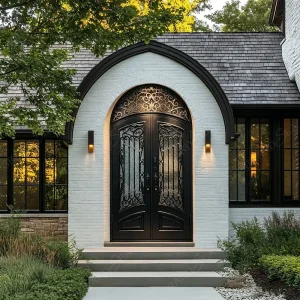
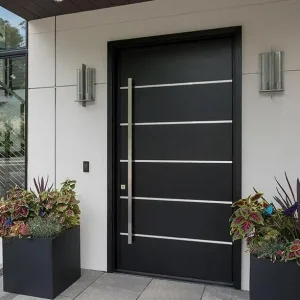
Engineered for extreme UV stability, high wind-load resistance, and unmatched physical perimeter protection in tropical coastal climates.
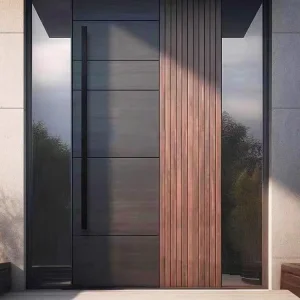
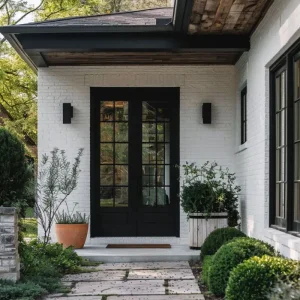
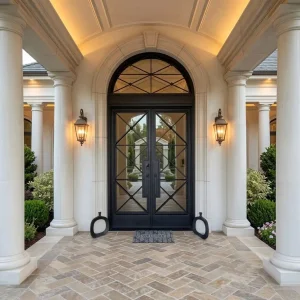
Nigeria’s real estate sector is undergoing an aggressive structural transformation. Driven by high-density urban expansion in Lagos (Eko Atlantic, Ikoyi, Banana Island, Lekki Phase 1), institutional infrastructure projects in Abuja (Maitama, Asokoro), and commercial hubs in Port Harcourt and Kano, the demand for high-end architectural facade envelope systems has reached an unprecedented scale.
Coastal West Africa presents severe environmental stressors: ultra-high atmospheric humidity (exceeding 85% RH annually), aggressive salt-fog corrosion along the Gulf of Guinea, torrential monsoon rainfall, and intense UV exposure (UV index 11+). Standard entrance systems degrade rapidly under these conditions through frame warping, thermal seal failures, paint delamination, and iron oxide rust.
Security remains a non-negotiable procurement core across luxury residential estates and corporate headquarters in Nigeria. Modern glass entry doors must harmoniously fuse architectural transparency with fortress-grade physical resistance, incorporating multi-point gear locking mechanisms, heavy-duty anti-pry hinge pin systems, and multi-layer ballistic/impact laminated glass.
With heavy reliance on independent Diesel Generator sets and inverter solar storage microgrids across Nigerian residential and commercial facilities, HVAC thermal management directly impacts operational expenditures. Thermally broken aluminum frames combined with Double or Triple Insulated Glass Units (IGU) lower ambient heat transfer significantly, cutting air-conditioning power consumption by up to 32%.
To bridge the gap between architectural aesthetic ambition and severe climate durability, engineered entry systems utilize advanced metallurgy, glass science, and mechanical hardware.
Modern villa designs in Lekki and Maitama favor grand entrance dimensions exceeding 1.8 meters in width and 3.5 meters in height. Standard butt hinges fail under these cantilever forces. Engineering specifications mandate heavy-duty floor-concealed hydraulic pivot boxes (German Dormakaba or customized DERCHI heavy-pivot hardware) capable of supporting door leaves up to 500kg. These systems feature 360-degree precision adjustment, soft self-closing hydro-dampers, and hold-open positioning at 90 degrees.
Security glass engineering for the West African market moves away from single-sheet tempered glass toward multi-layer laminated structural glass matrix compositions. A baseline specification for perimeter entry doors includes 6mm Low-E Toughened Glass + 12mm Argon-filled Aluminum Spacer + 6mm Toughened Glass + 1.52mm SGP (SentryGlas®) Structural Interlayer + 6mm Clear Toughened Glass. SGP interlayers are 5 times tougher and up to 100 times stiffer than standard PVB interlayers, remaining intact even if both glass panes are fractured under physical assault.
Aluminum structural framing utilizes high-tensile 6063-T6 or 6061-T6 architectural extrusions with profile wall thicknesses ranging from 2.0mm to 3.0mm. To withstand salt-laden air in coastal areas like Victoria Island and Port Harcourt, all metal surfaces undergo a multi-stage pretreatment process followed by AkzoNobel or PPG 3-Coat PVDF (Fluorocarbon resin) coating (exceeding AAMA 2605 requirements). This provides immunity against chalking, fading, chemical corrosion, and pitting for over 25 years.
Nigerian luxury properties increasingly deploy automated smart entry systems. Door frames are pre-milled and wired in-factory to house 3D Biometric Facial Recognition scanners, capacitive fingerprint sensors, encrypted RFID keycards, and Bluetooth/Wi-Fi smart locks. Crucially, these systems integrate embedded 12V LiFePO4 battery backup modules and mechanical override keyways, ensuring full operational access during municipal grid blackouts and generator transfer switch delays.
Engineering evaluation table for real estate developers, structural engineers, and procurement specialists specifying doors for West African commercial & residential developments.
| Performance Parameter | Wrought Iron & Glass Pivot | Thermally Broken Glass Pivot | Aluminum French Glass Door | Bullet-Resistant Glass Entrance |
|---|---|---|---|---|
| Primary Structural Frame | Forged Q235 Steel + Zinc Galvanized | Extruded 6063-T6 Aluminum Alloy | Heavy-Duty Extruded Aluminum | Armor-Reinforced Steel / Aluminum |
| Profile Depth / Thickness | 50mm - 80mm Leaf Depth | 100mm - 140mm Heavy Frame | 80mm - 100mm Dual Chamber | 120mm Heavy Security Core |
| Standard Glazing Spec | 12mm Dual-Tempered Sealed Unit | 6 Low-E + 12Ar + 6 Toughened IGU | 5 + 1.14PVB + 5 Laminated | 32mm Multi-Layer Polycarbonate IGU |
| Corrosion Resistance (Salt Spray) | Hot-Dip Zinc + Epoxy (1500 Hrs) | 3-Coat PVDF Coating (3000+ Hrs) | Qualicoat Powder Coating (2000 Hrs) | Fluoropolymer Hard-Anodized |
| Acoustic Insulation (Rw) | 32 dB | 38 - 42 dB | 35 dB | 45 dB+ |
| Wind-Load Resistance | 3.0 kPa (High Storm Grade) | 4.5 kPa (Super High-Rise) | 3.5 kPa | 5.0 kPa (Maximum Defense) |
| Locking System Standard | 3-Point Mechanical Mortise | German Multi-Point Roller Lock | 5-Point Security Gear Lock | Electric Motorized 7-Point Bolt |
| Target Project Application | Classic Luxury Villas & Gates | Modern Commercial Lobbies / Estates | Patio Enclosures & Perimeter Access | Consulates, Banks, Executive Mansions |
Importing building materials into Nigeria requires navigating stringent trade regulations, customs clearance protocols, and ocean transport protection standards.
The Standards Organisation of Nigeria Conformity Assessment Programme (SONCAP) mandates that imported glass and aluminum products possess a Product Certificate (PC) and a SONCAP Certificate (SC). DERCHI works directly with accredited international testing agencies (Intertek, SGS, Cotecna) to issue laboratory test reports for impact resistance, tempered glass fragmentation safety (NIS ISO 9001 standard), and structural stability, accelerating Form M opening and customs release at Apapa and Tincan Ports.
Transits from Foshan Port to Lagos take approximately 30-45 ocean freight days through tropical sea routes with high temperature variations inside steel containers. To prevent glass etching, seal degradation, and oxidation, every door assembly is wrapped in PE protective film, corner-guarded with high-density EPE foam, vacuum-sealed with industrial desiccant bags, and encase in fumigation-free solid plywood crates engineered for fork-lift unloading.
Correct installation is critical to long-term performance. Brickwork practices in Nigeria rely heavily on hollow concrete blocks, requiring specialized anchoring strategies rather than standard expansion bolts. DERCHI supplies customized shop drawings, CAD BIM models, structural anchoring calculations, embedded steel sub-frame sleeves, and step-by-step video installation guides tailored for local civil engineering teams.
As green building codes (EDGE Certification) and smart city initiatives take root across Nigeria, architectural entrance designs are evolving beyond static structures into intelligent, energy-harvesting building envelopes.
Widespread adoption of PDLC and electrochromic glass tinting powered by smart home apps, allowing instant transition from 99% clear transparency to opaque privacy without physical blinds.
Transitioning from traditional gas-filled double glazing to 8mm ultra-thin Vacuum Insulated Glass units achieving U-values below 0.6 W/m²K, drastically reducing thermal loads in tropical zones.
Building-Integrated Photovoltaic (BIPV) translucent entry glass panels that generate off-grid electrical energy from direct sunlight to power ambient entryway lighting and smart lock systems.
Deep-learning AI sensors embedded inside door frames, analyzing visitor thermal profiles, threat detection, and seamless biometric authorization without physical contact.
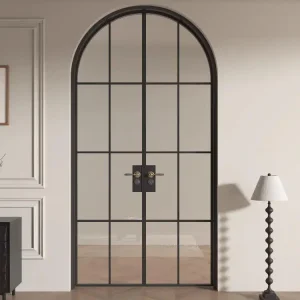
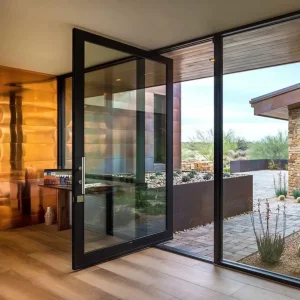
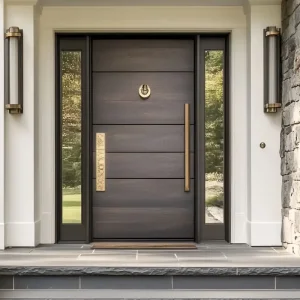
Explore our complete range of certified glass entry systems optimized for West African architectural environments.
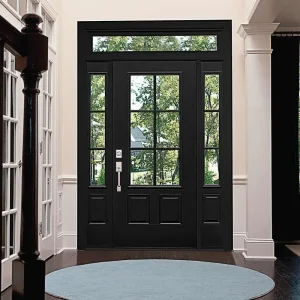
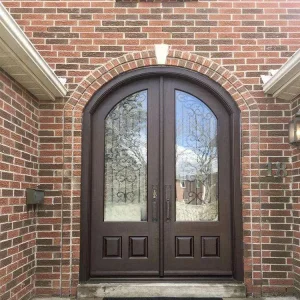
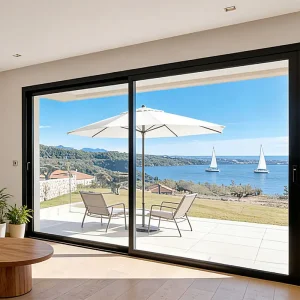
Direct technical guidance from DERCHI facade engineers on shipping, installation, security ratings, and climate customization.
Our coastal door series utilizes 6063-T6 extruded aluminum profiles equipped with continuous 25mm polyamide (PA66) thermal break strips that physically isolate internal frame profiles from external heat. This prevents thermal bridging and condensation buildup. For oxidation resistance, metal components undergo multi-stage chromate conversion pretreatment followed by a 3-Coat PVDF (Fluoropolymer) finish tested to ASTM B117 standards for over 3,000 continuous hours of salt spray exposure without surface pitting or peeling.
We supply a complete export documentation package required by the Standards Organisation of Nigeria (SON). This includes factory ISO 9001 quality audit records, laboratory test certificates for glass impact and thermal performance, Commercial Invoices detailing HS Codes, Packing Lists with opening number marks, Certificate of Origin, and pre-shipment Product Certificates (PC) issued via accredited inspection bodies (Intertek/SGS) to allow your freight agent to easily secure the SONCAP Certificate (SC) for Form M release.
For custom luxury villa projects in areas like Maitama or Banana Island, DERCHI engineers single-leaf glass pivot doors up to 2,200mm in width and 4,000mm in height. These oversized leaves incorporate internal steel-core structural reinforcing stiffeners, heavy-duty floor pivot hardware rated up to 500kg, and multi-point perimeter locking gears to prevent panel deflection under high wind loads.
All smart electronic locking options integrated into DERCHI entry doors feature dual-redundancy power systems. Primary power operates via low-voltage direct current connected to your building's solar or mains inverter circuit. In the event of a total blackout, an internal 12V LiFePO4 battery pack maintains lock functionality for up to 6 months of continuous use. Furthermore, every system includes physical mechanical high-security emergency key cylinders and micro-USB emergency power jump ports.
Engineering shop drawing creation and technical approval take 5-7 working days. Factory production for custom thermally broken aluminum or wrought iron glass entry systems typically ranges from 25 to 35 days depending on specification complexity and surface finish (PVDF or wood-grain transfer). Sea freight transit from Foshan/Guangzhou ports to Lagos (Apapa or Tincan) generally takes 30-40 days. We advise client procurement teams to allocate a total window of 70 to 85 calendar days from initial CAD sign-off to site arrival.
Connect directly with DERCHI senior door engineers for customized CAD shop drawings, structural wind-load calculations, glass specification advice, and factory-direct wholesale pricing.
Send Inquiry Now