Engineered for high solar radiation, coastal humidity, and seismic resistance in Lima, Arequipa, Trujillo, and Cusco.
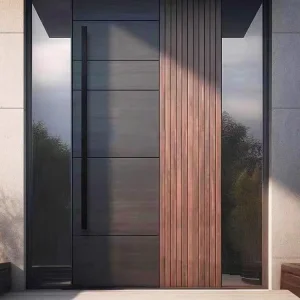
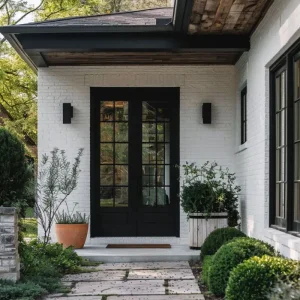
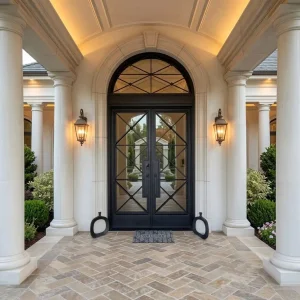
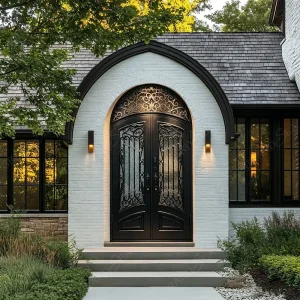
Peru’s construction sector is undergoing a profound qualitative shift. Driven by expanded private investment in high-density commercial towers, luxury residential complexes in Metropolitan Lima (such as Miraflores, San Isidro, Surco, and La Molina), and coastal hospitality developments from Paracas to Mancora, architectural specifications for fenestration and entrance systems have reached unprecedented technical rigor.
Historically reliant on local artisan workshops or uncertified aluminum profiles, the Peruvian architectural landscape now demands institutional-grade glass entry doors engineered to satisfy stringent performance metrics: structural wind load resistance under high coastal pressure, acoustic attenuation for dense urban environments, thermal breaks to manage microclimate variance, and certified seismic resilience.
Strategic Market Shift: Procurement teams in Peru are transitioning from local fabrication to direct factory sourcing from top-tier automated manufacturers capable of delivering structural warranty documentation, BIM integration, and compliance with Peru's National Building Code (Reglamento Nacional de Edificaciones - RNE).
From saline coastal mist in Callao to high-altitude UV radiation in Arequipa and Cusco, glass entry doors must be engineered for extreme environmental durability.
Coastal cities like Lima and Callao experience high atmospheric humidity combined with aggressive sea salt spray. Standard anodized frames degrade rapidly. Our factory utilizes architectural-grade 6063-T5 aluminum with 25-micron PVDF fluoropolymer coating or marine-grade SUS316 sub-structures, guaranteeing 20+ years of salt-mist anti-corrosion performance.
High-altitude regions such as Arequipa (2,325m) and Cusco (3,400m) face severe ultraviolet exposure and wide diurnal temperature swings (>20°C in a single day). Double-laminated Low-E glass units with PVB interlayers absorb intense UV energy while polyamide thermal break strips prevent thermal stress cracking and profile deflection.
Peru sits along the Pacific Ring of Fire. Glass entry doors—especially large-scale pivot systems—must accommodate structural drift without catastrophic glass shatter. Our engineered frame joints, floating glass gaskets (EPDM dual-durometer), and heavy-duty floor pivots absorb dynamic lateral racking during seismic events.
Comprehensive comparative analysis for Peruvian project engineers, architects, and quantity surveyors.
| Performance Criterion | DERCHI Factory Standard (Export Grade) | Standard Local Peruvian Fabrication | Target Peruvian Norm (RNE) |
|---|---|---|---|
| Structural Profile Material | Extruded Aluminum Alloy 6063-T5 (T6 optional) with steel core reinforcement | Recycled alloy 6063-T3/T4 without core reinforcement | NTE E.050 (Estructuras de Aluminio) |
| Thermal Insulation (U-Value) | 1.6 – 2.2 W/(m²·K) (PA66-GF25 Polyamide Thermal Break) | > 4.8 W/(m²·K) (Non-thermally broken continuous frame) | NTE EM.110 (Confort Térmico) |
| Glass Build-Up & Safety | 6mm Low-E + 12A + 6mm Tempered Laminated (SGCC / EN 12150 certified) | 4mm – 6mm Single float glass or basic non-laminated clear glass | NTE E.040 (Vidrio en la Edificación) |
| Acoustic Isolation (STC / R_w) | 36 dB – 42 dB (Multi-layer perimeter EPDM sealing + argon gas) | < 22 dB (Single rubber seal, high air infiltration) | RNE Acoustic Comfort Standard |
| Wind Pressure Resistance | Class 5 (Up to 3,000 Pa / AS2047 N6 compliant) | Class 2 (< 1,000 Pa, dynamic flex on high floors) | NTE E.045 (Cargas de Viento) |
| Hardware & Pivot Load Capacity | German Dormakaba / Custom Heavy-Duty Floor Pivot rated to 500 kg | Local pin hinges rated to 80 kg – 120 kg | High Traffic Commercial Grade |
For commercial real estate developers in Lima and project management firms overseeing hotel projects in the Sacred Valley, choosing between importing direct from a specialized factory like DERCHI versus buying locally assembled glass doors is a pivotal financial and operational decision.
Local Peruvian workshops often assemble door frames using imported raw extrusions paired with local glass suppliers. While lead times for single replacement doors may be shorter, systemic drawbacks emerge in large-scale projects: lack of uniform quality control, structural deflections under load, non-certified glass tempering, and inconsistent surface anodization.
Direct sourcing from our 180,000 m² automated facility in Foshan eliminates these failure points. Each glass entry door undergoes automated CNC milling, robotic corner crimping, ultrasonic seal inspection, and pre-shipment structural load testing before seaworthy plywood crating.
A streamlined 5-stage process engineered for project engineers, procurement officers, and main contractors in Peru.
Submit architectural schedules and door openings. Our technical desk generates structural calculations, wind load simulations, and CAD shop drawings tailored to Peruvian RNE compliance.
Select frame profiles (thermally broken aluminum, cast aluminum, or stainless steel), glass performance coatings (Low-E, frosted, tint), hardware finishes, and smart access lock integration.
Production carried out across fully automated CNC lines. QC inspectors verify dimensions within ±0.5mm tolerances and test water infiltration (ASTM E331) and air leakage (ASTM E283).
Doors are wrapped in EPE protective foam, corner-shielded, and packaged in fumigation-free plywood crates labeled by door schedule tag numbers. Direct container shipping to Callao/Chancay.
Complete export documentation provided: Bill of Lading, Commercial Invoice, Packing List, Certificate of Origin (Form F for TLC China-Perú tariff preference), and ISO/CE test certificates.
Comprehensive step-by-step video installation manuals, torque specs for anchor bolts, structural silicone bonding guidelines, and live technical video consultation for site crews.
As smart city initiatives grow across Metropolitan Lima and environmental certifications like EDGE and LEED become standard for class-A office towers and eco-resorts, glass entry door engineering must evolve.
Vacuum Insulated Glass (VIG) Integration: Future-proofing our door collections with VIG units that achieve center-of-glass U-values as low as 0.6 W/(m²·K) in a slim 10mm profile, significantly lightening pivot door leaf weights while doubling thermal efficiency.
Electrochromic Smart Glass: Switchable privacy glass that transitions from transparent to translucent via smartphone, biometric scanner, or home automation system (KNX/Control4), perfect for modern villa main entrances and corporate boardrooms.
DERCHI is committed to environmental stewardship. Our aluminum profiles incorporate up to 40% low-carbon hydro-powered primary aluminum, reducing embodied carbon dioxide equivalent (CO2e) metrics to support projects seeking LEED Gold or Platinum certification in Peru.
Addressing the core technical, logistical, and compliance questions of contractors, architects, and developers in Peru.
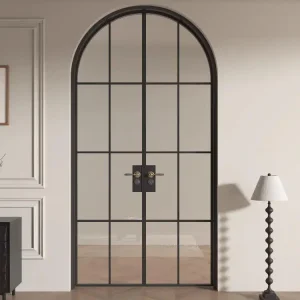
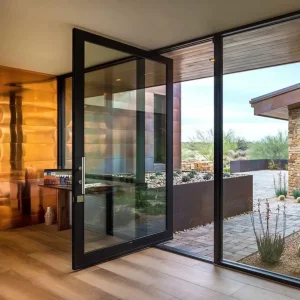
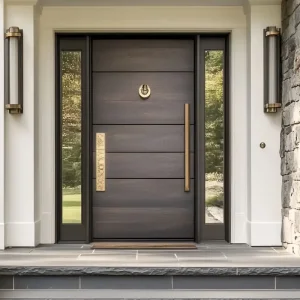
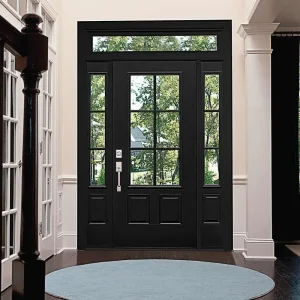
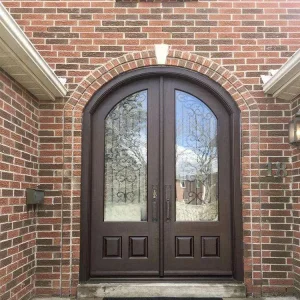
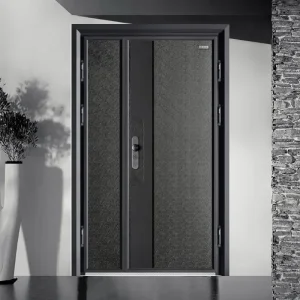
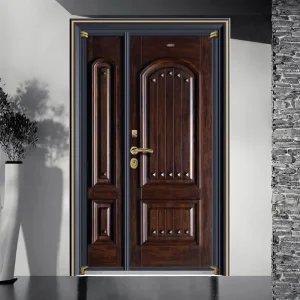
Architectural entrance doors suitable for luxury villas, commercial developments, and high-security entrances in Peru.
Transform your architectural project in Peru with direct factory engineering, certified seismic resilience, and competitive wholesale pricing. Talk directly with our senior technical engineering team today.
