Designed to fulfill stringent European building codes, delivering U-values down to 0.8 W/(m²·K), structural wind load resistance, and premium acoustic dampening.
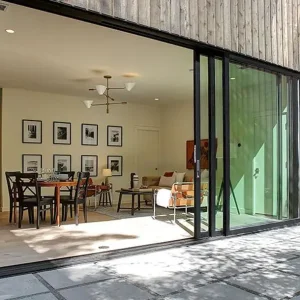
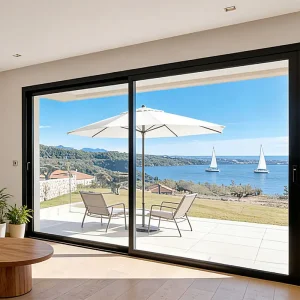
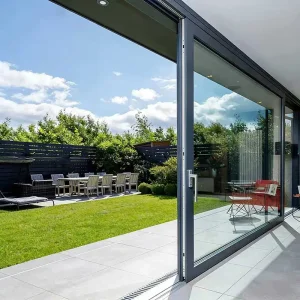
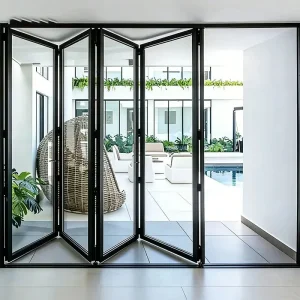
Germany represents Europe’s most technically demanding market for architectural envelope systems. As the Federal Building Energy Act (Gebäudeenergiegesetz - GEG 2024) imposes strict operational carbon thresholds for both new residential developments and passive house refurbishments (Altbausanierung), the baseline performance metrics for entrance doors have shifted dramatically. Modern German architects, property developers, and general contractors no longer evaluate entry doors merely as aesthetic focal points; they are treated as complex, multi-functional thermal and security barriers.
To successfully enter and maintain competitive dominance in cities like Munich, Frankfurt, Hamburg, and Berlin, entry door suppliers must adhere to rigorous technical criteria across four core dimensions:
GEG mandates strict maximum thermal transmittance. Standard German residential projects require Ud-values ≤ 1.3 W/(m²·K), while Passive House (Passivhaus) standards require extreme insulation performance down to Ud ≤ 0.80 W/(m²·K) using polyamid multi-chamber thermal breaks and vacuum insulating glass (VIG).
Security expectations in Germany lean heavily on verified resistance classes. High-end residential villas and commercial facades mandate RC2 or RC3 ratings, requiring steel-reinforced aluminum profiles, multi-point hook locks, anti-drill cylinders, and laminated safety glass (P4A/P5A).
With urban density rising in major German metropolitan hubs, airborne sound insulation for main entrances must meet sound insulation classes (SK) 3 to 5, providing noise suppression levels between 38 dB and 46 dB to insulate indoor spaces from ambient traffic.
Traditionally, European builders relied exclusively on local German, Polish, or Austrian fenestration manufacturers. However, macro-economic shifts, skyrocketing energy and labor costs within Central Europe, and extended production lead times (often reaching 16-24 weeks for bespoke pivot or cast aluminum systems) have forced German procurement directors to re-evaluate their supply chain architecture.
By establishing strategic partnerships with Tier-1 Chinese entry door manufacturers equipped with vertical integration (extruding, powder coating, glazing, assembly, and testing in-house), German buyers unlock unparalleled competitive advantages without sacrificing technical quality:
Procuring direct-from-factory aluminum and cast aluminum entrance door systems delivers a 35% to 50% cost optimization compared to domestic EU brands. This margin buffer enables German distributors and general contractors to offer highly competitive project bids while retaining substantial profit margins.
European factories often penalize custom dimensions with non-standard surcharge fees and extreme lead times. Top Chinese manufacturing centers like Foshan leverage advanced 5-axis CNC machining centers and instant CAD/BIM shop drawing rendering, reducing sample prototyping cycles down to 12-15 days.
Germany’s continental climate experiences aggressive seasonal temperature differentials—from freezing sub-zero alpine winters in Bavaria to intense summer solar radiation. This thermal flux causes the "Bi-metal effect", where external aluminum skins expand significantly while interior skins remain stable, potentially warping poorly engineered entrance doors.
Our engineering matrix overcomes structural deflection and thermal leakage through three specialized innovations:
We utilize 24mm to 34mm glass-fiber reinforced polyamide strips (PA66 GF25) engineered with shear-stress decoupling mechanisms. This absorbs differential thermal expansion between exterior and interior profile faces, eliminating frame distortion even under direct sunlight exposure up to 80°C.
Factory-integrated Winkhaus, KFV, or GU multi-point automatic locking systems feature 3 to 5 heavy-duty steel hooks and deadbolts. Fully compatible with modern smart home ecosystems (Somfy, Loxone, KNX) via 3D biometric fingerprint scanners, RFID readers, and motorized electric strikes.
Co-extruded cellular EPDM perimeter gaskets with continuous vulcanized corners guarantee watertightness under driving rain pressures up to 1,050 Pa (DIN EN 12208 Class 9A) and eliminate air infiltration (DIN EN 12207 Class 4).
Choosing the ideal platform requires balancing thermal requirements, security ratings, door opening dimensions, and architectural aesthetics.
| Door System Platform | Core Profile Structure | Thermal Ud Value | DIN Security Rating | Maximum Leaf Dim. (W×H) | Primary Target Application |
|---|---|---|---|---|---|
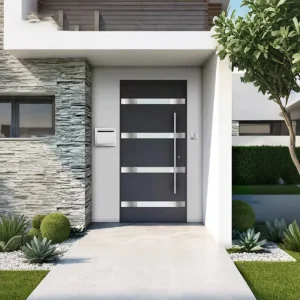
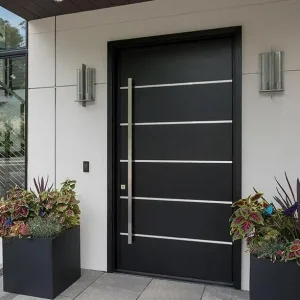
| Thermally Broken Aluminum | 6063-T5 alloy + PA66 GF25 strip + PU foam infill | 0.85 – 1.20 W/(m²·K) | RC2 / RC3 Compliant | 1400 × 3000 mm | Modern Single-Family Villas, Low-Energy Homes |
| Cast Aluminum Art Doors | 6–12mm Solid Sand-Cast Decorative Relief + Subframe | 1.10 – 1.40 W/(m²·K) | RC3 / RC4 Compliant | 1600 × 3500 mm | Luxury Manors, Gated Estates, Classic Renovations |
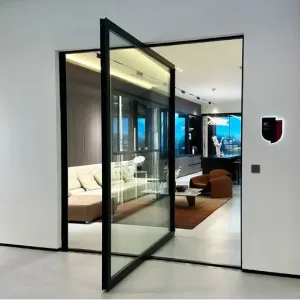
| Structural Glass Pivot Doors | Heavy-Duty Floor Spring Pivot + Low-E Triple Glazing | 0.78 – 1.10 W/(m²·K) | RC2 Security Glass | 2000 × 4500 mm | Architectural Lobbies, Commercial Facades, Contemporary Villas |
| SUS304/316 Stainless Steel | 1.5–2.0mm Stainless Skin + High-Density Rockwool Core | 1.20 – 1.50 W/(m²·K) | RC4 Anti-Prying Class | 1500 × 3200 mm | High-Security Bank/Vault Entrances, Industrial Facilities |
As Europe moves toward Net-Zero carbon mandates, door design is transitioning into smart building integration and zero-carbon material cycles. Our R&D division focuses on four core technological milestones:
Transitioning 100% of our extrusion billet inventory to post-consumer recycled aluminum refined via hydro-electric energy, cutting embodied carbon emissions to under 4.0 kg CO2/kg aluminum profile.
Integrating 8mm-12mm ultra-thin Vacuum Insulated Glass units achieving Ug values down to 0.40 W/(m²·K), reducing overall leaf thickness and weight by up to 40%.
Incorporating transparent micro-perovskite solar arrays directly into door sidelights and transom panels to power local smart locks, LED accent lighting, and biometric access points autonomously.
Addressing the most critical questions from German architectural consultants, developers, and procurement managers.
Our entry doors feature engineered 6063-T5 aluminum profiles fitted with PA66 GF25 polyamide thermal insulation strips and expanded polyurethane foam cores. Combined with Low-E triple glazing filled with 90% Argon gas, our assemblies achieve overall Ud values as low as 0.78 - 0.95 W/(m²·K), exceeding the baseline GEG standard requirement of ≤ 1.3 W/(m²·K).
Each shipment is accompanied by a comprehensive technical compliance dossier including CE Mark Declaration of Performance (DoP), ISO 9001 factory certificates, laboratory test reports for water tightness (DIN EN 12208), air permeability (DIN EN 12207), and wind resistance (DIN EN 12210), alongside full CAD section details and BIM Level 2 blocks.
Manufacturing typically takes 25 to 30 calendar days from the date of CAD drawing approval. Direct ocean freight from Foshan/Shenzhen to major German ports (Hamburg, Bremerhaven) or Rotterdam takes approximately 28 to 35 days, resulting in a total project lead time of 8 to 10 weeks.
Our packaging process utilizes a 5-layer protective protocol: 1) Surface protective film, 2) EPE foam corner armor, 3) Moisture-barrier vacuum wrap, 4) Heavy-duty corrugated paper carton, and 5) Fumigation-free solid plywood crating with internal tension strapping. Freight damage rates are maintained below 0.15%.
Yes. We specialize in extra-large architectural pivot doors up to 2000mm in width and 4500mm in height. These assemblies incorporate heavy-duty floor-spring pivots rated for 500kg loads, internal structural steel stiffeners to prevent deflection, and German Winkhaus multi-locking points.
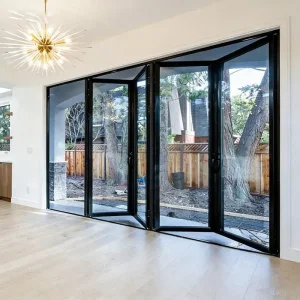
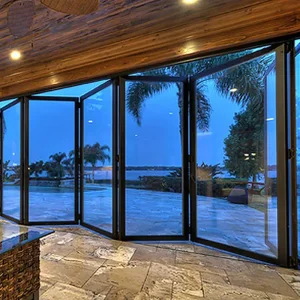
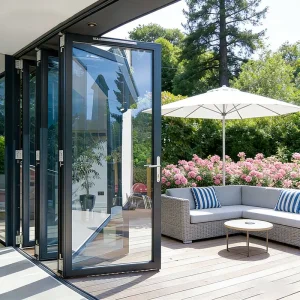
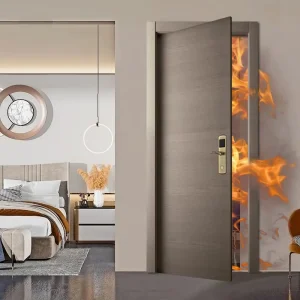
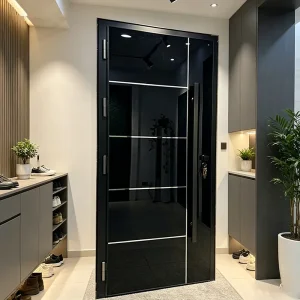
Explore our complete range of certified bi-fold, sliding, interior aluminum frame, and smart security pivot entry doors.
Contact our senior technical engineering team today for instant project estimations, CAD shop drawings, sample requests, and comprehensive DIN/CE test documentation packages.
