Direct factory-manufactured exterior doors compliant with international building codes and optimized for Tokyo's modern luxury residences and commercial developments.
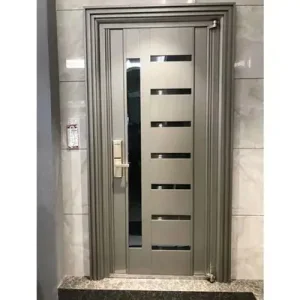
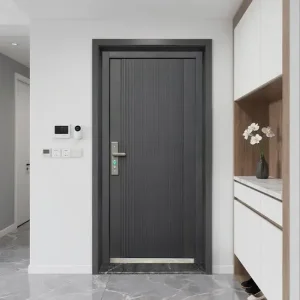
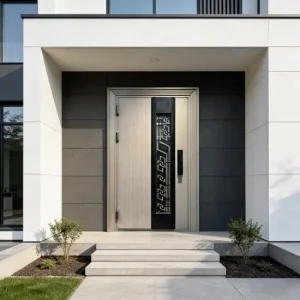
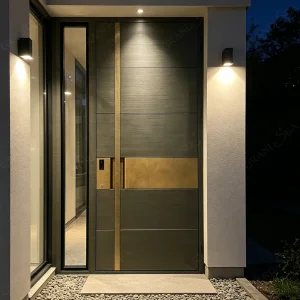
The Greater Tokyo Area represents one of the world's most demanding urban architectural environments. Characterized by high structural density, stringent fire safety regulations under the Japanese Building Standard Law (Kenchiku Kijun-hō), severe seismic activity, and aggressive salt-laden atmospheric conditions along Tokyo Bay (Minato, Koto, and Shinagawa wards), constructing high-performance entrance systems requires an unprecedented synthesis of metallurgical expertise and structural engineering.
As Tokyo undergoes continuous urban renewal—spurred by major commercial redevelopments in Shibuya, Toranomon, and Nihonbashi alongside ultra-luxury residential expansion in Hiroo, Azabu, and Omotesando—architects and general contractors (Zeiren) are shifting away from traditional painted mild steel or standard aluminum extrusions. The modern standard demands custom structural stainless steel entry doors engineered with marine-grade SUS304 and SUS316 alloys, integrated thermal breaks, dynamic anti-seismic floor pivots, and Physical Vapor Deposition (PVD) titanium surface coatings.
Core Architectural Insight for Tokyo Procurement: Standard architectural entrance doors frequently fail in Tokyo due to structural warping caused by seismic inter-story drift, rapid oxidation from Tokyo Bay salt spray, or non-compliance with strict Fire Prevention District (Boushi-ka / Jun-boushi-ka) regulations. DERCHI’s engineered stainless steel entry systems provide verified information gain: integrating high-yield structural steel inner cores with thermally decoupled outer skins to guarantee zero deflection and lifetime durability.
Our factory combines advanced CNC laser fabrication, robotic TIG welding, and European hardware logic to deliver door systems engineered specifically for the Japanese market.
Engineered hinge mounts and 3D adjustable pivot systems absorb up to ±1/100 story drift angles, preventing door jamming during severe earthquakes in Tokyo's seismic zone.
Utilizing SUS316L austenitic stainless steel with nickel content exceeding 10% and molybdenum additions (2-3%), fully immune to pit corrosion in Tokyo Bay's saline marine environment.
Multi-chamber thermal insulation core with polyamide structural breaks achieving U-values down to 1.4 W/(m²·K) and sound attenuation up to 42 dB against Yamanote traffic noise.
State-of-the-art Physical Vapor Deposition coatings providing anti-fingerprint, scratch-resistant bronze, copper, titanium black, and champagne gold metallic aesthetics.
Certified fire-rated steel constructions meeting Japanese Fire Prevention District standards (1-hour to 2-hour rating with intumescent fire seals and safety tempered glass).
Factory pre-wired hardware mortise pockets compatible with Japan’s leading smart lock systems (FeliCa, IC cards, motorized multi-point locking, biometric scanning).
Selecting exterior entrance systems for commercial flagships and luxury residences in Tokyo requires detailed knowledge of material science and mechanical behavior. Unlike inland environments, Tokyo’s coastal proximity exposes exterior door frames to continuous humidity and salt aerosols. Standard 200-series stainless steel or unprotected carbon steel suffers rapid micro-pitting and surface discoloration within months of installation.
At DERCHI’s 180,000 m² Foshan manufacturing base, we enforce strict alloy verification using Thermo Fisher XRF spectrometers. For Tokyo projects, we offer two distinct stainless steel formulations based on geographic exposure within the Tokyo Metropolitan Area:
Japan experiences thousands of seismic events annually. The primary failure mode for heavy entrance doors in Tokyo during seismic sway is frame racking—where structural shear forces deform the door frame, locking the leaf in place and obstructing emergency egress routes.
DERCHI’s engineering team resolves this through dynamic structural isolation:
| Technical Parameter | Standard SUS304 System | Heavy-Duty SUS316L System | Seismic Oversized Pivot Door |
|---|---|---|---|
| Skin Thickness | 1.2 mm - 1.5 mm SUS304 | 1.5 mm - 2.0 mm SUS316L | 2.0 mm - 3.0 mm Reinforced Alloy |
| Thermal Transmittance (U-Value) | 2.1 W/(m²·K) | 1.6 W/(m²·K) (Thermal Break) | 1.4 W/(m²·K) (VIP Core Option) |
| Seismic Drift Rating | 1/150 Story Drift | 1/100 Story Drift | 1/75 Extreme Seismic Drift |
| Acoustic Insulation (STC) | 35 dB Rating | 39 dB Soundproofing | 42 dB Studio Grade Insulation |
| Fire Resistance (JIS/CE) | 30 Mins Non-Structural | 60 Mins Certified Barrier | 120 Mins Insulated Fire Door |
| Surface Finish Options | Hairline (HL), Satin, Mirror | PVD Titanium Bronze/Black | Custom Sculptural Relief & PVD |
| Maximum Leaf Dimension | 1200 mm x 2400 mm | 1500 mm x 3000 mm | 2000 mm x 4000 mm (Oversized) |
Tokyo experiences significant seasonal temperature differentials, ranging from hot, humid summers (35°C+, 80% RH) to crisp winters dropping near 0°C. Uninsulated metal doors act as thermal bridges, causing internal surface condensation that damages interior wooden flooring and drywall finishings.
Our solution incorporates high-density Polyamide 66 (PA66 GF25) thermal break strips between the exterior and interior stainless steel profiles. Coupled with polyurethane foam injection (density 45 kg/m³) or high-performance Vacuum Insulation Panels (VIP), our stainless steel entry doors prevent heat loss, maintain internal surface temperatures above the dew point, and comply with Japan's energy efficiency directives for modern zero-emission buildings (ZEB).
Streamlining the journey from Foshan precision manufacturing to on-site assembly in Tokyo's tight construction envelopes.
Our engineering department translates architect shop drawings into precise 2D/3D CAD & Revit BIM models formatted for Japanese general contractor approval protocols.
Every production batch undergoes raw material spectral analysis, dimensional check at ±0.5 mm, water tightness testing under 600 Pa pressure, and lock cycle trials.
Doors are wrapped in protective PE film, corner-guarded with high-density EPE foam, and sealed inside heavy-duty, fumigation-free plywood crates for direct delivery to Tokyo Port.
Construction sites in Tokyo—especially in dense commercial corridors like Ginza or narrow residential streets in Yanaka and Kagurazaka—present extreme space constraints. Unloading oversized crates requires precise coordination.
DERCHI offers customized unitized packaging where each crate is tagged with room/opening numbers corresponding to the contractor’s master schedule. Frame sub-assemblies are designed for quick site joining, minimizing street blockage time and eliminating on-site cutting or welding noise, fully complying with Tokyo municipal noise abatement ordinances.
Direct technical answers provided by DERCHI senior structural engineers regarding compliance, shipping, and customization.
Our door systems are custom-engineered to meet or exceed Japanese structural performance criteria. We calculate wind pressure load capability under JIS A 4702 standards (up to S-6 grade), enforce water tightness under pressure (W-5 grade), and incorporate anti-seismic frame clearance. All mill test reports (MTR), structural calculations, and CAD section details are provided for submission to local Japanese building inspectors (Ninhon Architectural Inspection Centers).
Physical Vapor Deposition (PVD) is a vacuum coating process where titanium nitride particles are deposited onto the stainless steel surface at an atomic level. This creates a ceramic-hard surface layer (over 2000 HV micro-hardness) that will not chip, peel, or fade under intense UV rays. For luxury projects in Tokyo, PVD provides rich metallic lusters (bronze, brass, titanium black) while increasing scratch resistance by 10x over powder coating.
Yes. We specialize in custom oversized entry doors, producing single pivot leaves up to 2,000 mm in width and 4,000 mm in height. To support leaf weights up to 600–800 kg without sagging, we integrate internal carbon-steel truss skeletons, heavy-duty adjustable German floor springs (DORMA/GEZE compatible), and active top pivot bearing retainers.
Once shop drawings are finalized, standard production takes 25 to 35 days depending on hardware and surface finish complexity. Direct ocean freight from Nansha/Foshan Port to Tokyo Port takes approximately 4 to 6 transit days. Our logistics team handles full FOB, CIF, or DDP documentation to ensure smooth customs clearance.
Our typhoon-grade exterior doors feature triple-continuous EPDM weather gaskets, drop-down automatic bottom seals, and concealed drainage channels with anti-backflow valves. Under dynamic pressure testing, our assemblies withstand up to 600 Pa water spray without internal leakage.
Factory-direct security, fire-rated, acoustic, and pivot door collections suitable for apartments, commercial complexes, and private estates across Greater Tokyo.
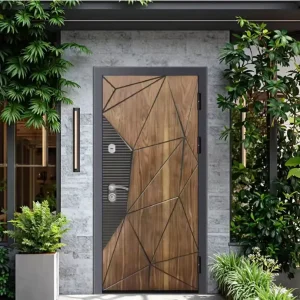
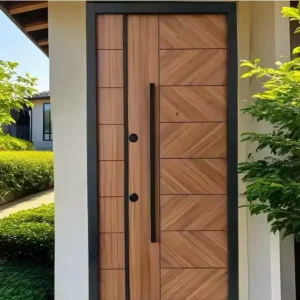
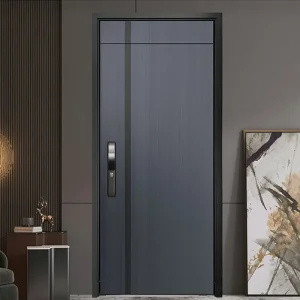
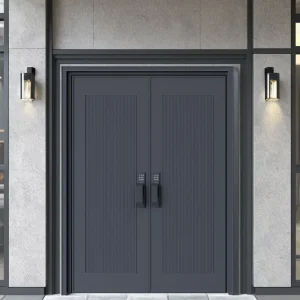
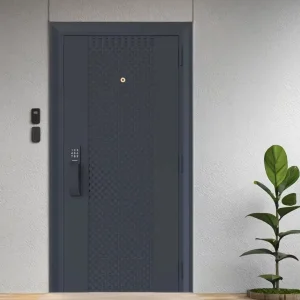
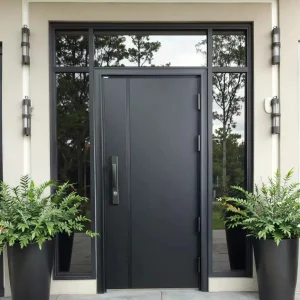
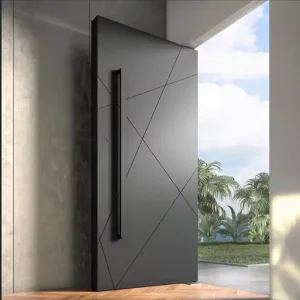
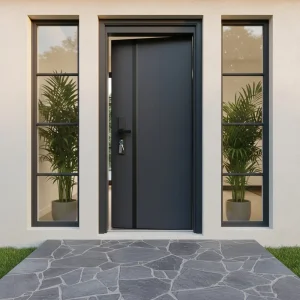
Direct factory pricing, comprehensive CAD drawings, structural calculations, and seamless ocean logistics to Tokyo & Yokohama. Get a complete quotation within 24 hours.
Send Inquiry Now