Premium security, structural pivot, and thermally broken systems compliance-tested for Kansai urban developments.
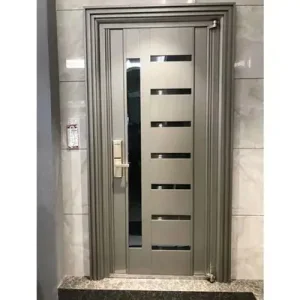
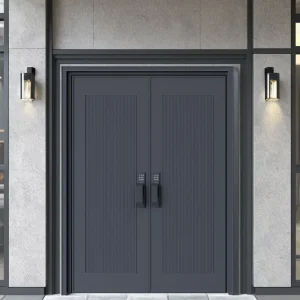
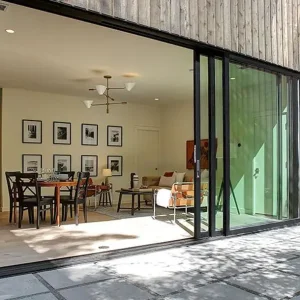
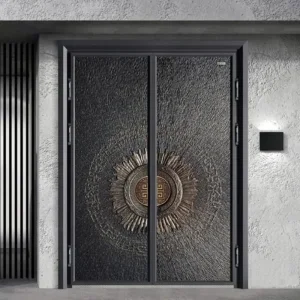
The Osaka metropolitan region—the economic core of Japan’s Kansai area—presents a unique set of architectural, environmental, and structural demands for modern fenestration systems. As urban redevelopment surges across key commercial nodes like Umeda, Namba, and Nakanoshima, alongside intense infrastructure development for Expo 2025 on Yumeshima Island, the market demand for architectural aluminum entry doors, cast aluminum security gates, and large-format structural pivot doors has escalated dramatically.
Architects, general contractors (Taisei, Kajima, Takenaka), and real estate developers operating in Osaka must balance strict localized building standards with environmental stressors. Osaka’s geography along Osaka Bay exposes buildings to salt-laden coastal winds, elevated humidity during summer, severe typhoon pressure shocks, and seismic threats governed by the Japanese Building Standards Act (建築基準法 - Kenchiku Kijun-hō).
E-E-A-T Technical Insight: Entrance door systems supplied to Osaka must satisfy JIS A 4702 performance benchmarks (covering wind load, water tightness, air permeability, and noise reduction) while aligning with Zero Energy House (ZEH) thermal efficiency targets requiring U-values lower than 1.6 to 2.0 W/(m²·K).
Driven by Osaka Expo 2025 and new luxury hotel construction, high-durability commercial entrance doors with integrated smart locks and fire protection are mandatory for high-footfall openings.
Osaka Bay experiences severe typhoon sea breezes. Doors require AAMA 2605 fluorocarbon PVDF powder coating and heavy-duty 6063-T5 aluminum profiles rated up to 3000 Pa wind resistance.
Osaka municipal codes require Tokubetsu Bosui (Special Fireproof Equipment) certifications for multi-family residential entrances, featuring self-closing drop seals and intumescent gaskets.
Modern architectural fenestration has evolved beyond static barriers into complex, multi-functional energy management systems. To meet the exacting technical standards of Osaka’s commercial and residential buyers, direct-factory suppliers utilize cutting-edge metallurgical compositions, thermal break mechanics, and smart access control integrations.
Non-insulated aluminum doors suffer from thermal bridge loss, leading to condensation, mold growth, and high HVAC power consumption during Osaka’s hot summers and chilly winters. Advanced factories incorporate 24mm to 34mm PA66GF25 (polyamide reinforced with 25% glass fiber) thermal break strips inside extruded 6063-T5 profile chambers. This layout reduces frame U-values down to 1.2 – 1.8 W/(m²·K), preventing moisture accumulation even during Osaka's monsoon season (Tsuyu).
Entry doors destined for Osaka must seamlessly interface with Japanese access control systems. OEM/ODM production lines pre-engineer mortise cutouts specifically designed for industry-standard Japanese locks including MIWA (e.g., MIWA FD, PR, and DVF series) and GOAL smart lock cylinders. Furthermore, hidden electric strike plates, biometrics (fingerprint/facial recognition), and motorized multi-point locking rods can be pre-wired inside the aluminum extrusion cavity during factory assembly.
To resist salt fog along coastal zones such as Osaka Nanko and the Kansai Airport area, aluminum profiles undergo 3-coat, 2-bake AkzoNobel or PPG fluorocarbon resin (PVDF) electrostatic spraying. This treatment provides over 20 years of color retention, high UV degradation resistance, and chemical immunity against urban smog and acid rain.
| Door Platform | Core Construction | Thermal Performance (U-Val) | Acoustic Insulation | Recommended Osaka Application |
|---|---|---|---|---|
| Thermally Broken Aluminum Entry Door | 6063-T5 Profile + 34mm PA66 Insulation Strip + PU Foam Core | 1.2 – 1.6 W/(m²·K) | 38 dB - 42 dB | Modern Luxury Villas (Minoo, Ashiya), Low-Energy ZEH Housing |
| Heavy-Duty Cast Aluminum Door | 6mm - 12mm Solid Cast Aluminum Surface + Reinforced Steel Skeleton | 1.8 – 2.2 W/(m²·K) | 35 dB - 40 dB | Executive Villa Gates, Historical Machiya Restorations, Estates |
| Oversized Structural Pivot Door | Steel-Reinforced Core + German Dormakaba/FritsJurgens Floor Springs | 1.5 – 1.9 W/(m²·K) | 36 dB - 40 dB | Hotel Lobbies, Corporate Flagships, Commercial Towers (Umeda/Namba) |
| SUS304 / 316 Stainless Steel Armor Door | 1.5mm Stainless Steel Plate + Aluminum Honeycomb + Multi-Point Locks | 2.0 – 2.5 W/(m²·K) | 40 dB - 45 dB | High-Security Multi-Family Apartment Main Entrances & Service Gates |
Why are leading Japanese real estate developers, import distributors, and architectural contractors increasingly sourcing custom aluminum entry doors directly from China’s mega-manufacturing hub in Foshan? The answer lies in the massive leap forward in Industry 4.0 automated precision, strict compliance testing, and supply chain resilience.
With automated 5-axis CNC machining centers, tolerance margins for hinge cutouts, mortise lock grooves, and corner joint brackets are held under ±0.2mm. This ensures exact alignment during rapid on-site assembly in Osaka projects.
By leveraging complete upstream aluminum extrusion, casting, and anodizing supply chains in Foshan, direct procurement delivers premium custom doors at 30% to 40% lower costs than domestic Japanese fabricators.
Located near South China ports (Nansha, Shekou, Yantian), sea freight transit time to Osaka Port (大阪港) is only 3 to 5 days. Complete door packages arrive in fumigation-free plywood crates with opening numbers for easy site handling.
Every door undergoes pre-shipment assembly verification, air/water pressure chamber testing, coating thickness measurement, hardware torque checking, and 3D laser scan validation prior to export packing.
Exporting entry doors to Japan requires strict adherence to local regulations. Our specialized export engineering department assists Osaka architects and construction managers with complete technical documentation, CAD section details, and BIM models compliant with Japanese standard practices.
Regulatory Verification Checklist: All exported entry door series are manufactured under ISO 9001 certified quality management systems. Test reports cover CE, AS2047, NFRC, and UL references, allowing local Japanese administrative officials (指定確認検査機関) to clear structural verification smoothly.
We provide localized DWG shop drawings and BIM blocks matching your schedule numbering, specifying sub-frame anchor points, sill drainage details, and seal layouts.
Fire-rated pivot and security doors equipped with steel cores, ceramic fire glass, and perimeter expandable seals certified for 30 to 60-minute fire resistance ratings.
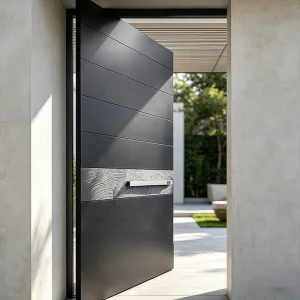
No rigid standard size limits. Modern single leaf pivot doors up to 2000mm × 4000mm and bespoke arched entrance gates are custom-engineered per project requirements.
Answers to common procurement, compliance, and engineering questions for Osaka construction projects.
Our aluminum entry door systems are manufactured under ISO 9001 quality management and tested against wind load, water tightness, air permeability, and structural safety requirements comparable to JIS A 4702 (Grade A-4 air tightness, Grade W-5 water tightness). Full test summaries, material mill certificates for 6063-T5 aluminum, and structural calculation sheets are provided with every quote to facilitate smooth approval by Japanese building inspectors.
Yes. Our engineering team routinely integrates lock cutouts for standard Japanese locksets including MIWA (FD, PR, DVF series) and GOAL smart access solutions. We utilize precision 5-axis CNC machining to ensure exact mortise depth and wire channel alignment prior to powder coating and shipping.
Bespoke sample doors require 12–18 days, while container project orders take 25–35 days depending on surface finish (e.g., PVDF, anodized, or wood-grain transfer). Direct ocean freight shipping from South China ports (Nansha / Shekou) to Osaka Port (大阪港) takes approximately 3 to 5 transit days, ensuring prompt overall delivery schedules.
Each door panel is wrapped with multi-layer protective PE film, fitted with EPE shock-absorbing corner guards, packed in heavy-duty 5-ply cartons, and secured in fumigation-free plywood crates. Hardware, locksets, and gaskets are individually boxed and labeled with your opening identification tags, maintaining damage rates below 0.3% across international shipments.
Standard leaf dimensions reach up to 1600mm wide by 3200mm high. For grand entrances, hotel lobbies, or luxury villa gates in Osaka, we manufacture leaves up to 2000mm wide by 4000mm high, incorporating internal steel reinforcement tubes, heavy-duty floor pivots rated up to 500kg, and multi-point perimeter latching to eliminate leaf deflection.
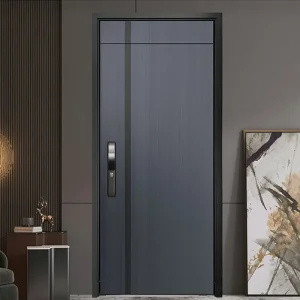
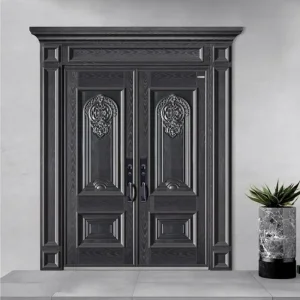
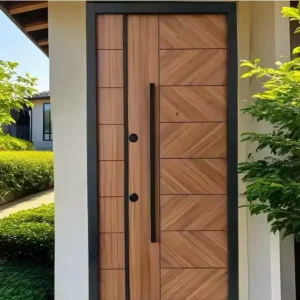
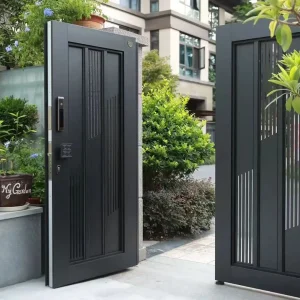
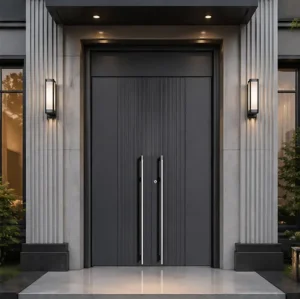
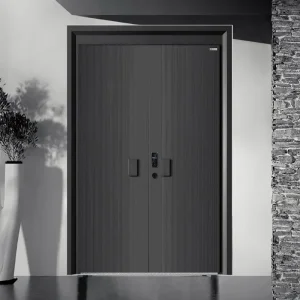
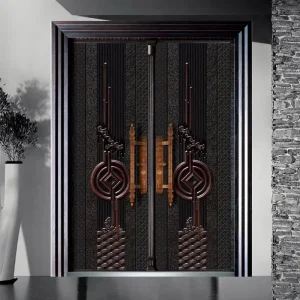
Explore our full line of custom single doors, cast aluminum gates, noise-reduction steel systems, and armored security solutions.
Connect directly with our engineering team for localized shop drawings, customized technical schedules, and direct factory pricing for your Osaka commercial or residential project.
Send Inquiry Now