Explore DERCHI's certified door systems integrating thermal break aluminum frames, structural pivot hardware, and high-tensile stainless steel security screen assemblies.
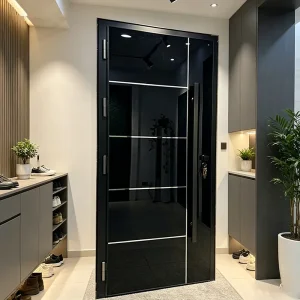
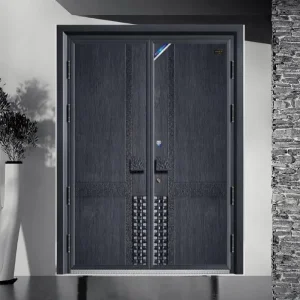
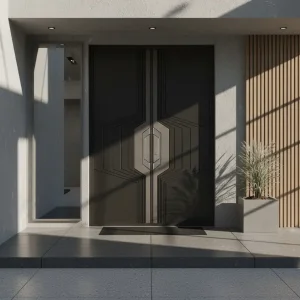
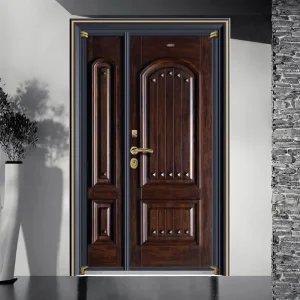
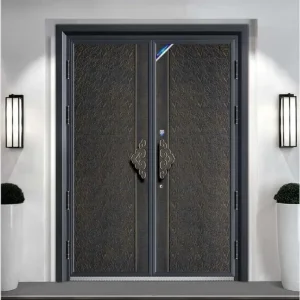
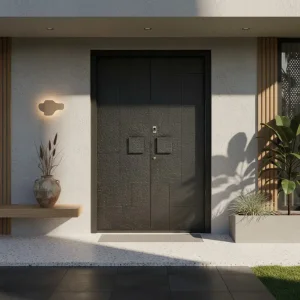
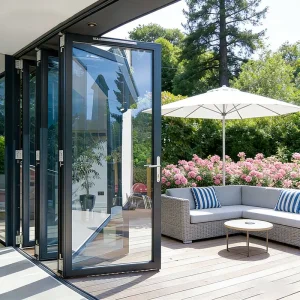
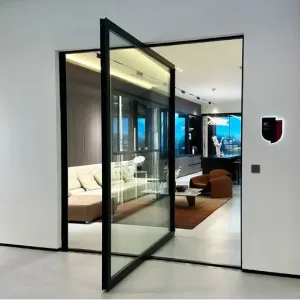
As architectural benchmarks transition toward biophilic design, natural ventilation, and zero-trust perimeter security, the global market for stainless steel security screen doors is undergoing a structural transformation.
Driven by strict Florida Building Code (FBC) impact-resistant standards and NFRC thermal performance indices, North American developers demand heavy-duty 0.9mm SUS304/316 woven mesh combined with thermally broken 6063-T6 aluminum frames capable of resisting large missile impact and high cyclic pressure differential.
In Australian residential and resort projects, compliance with AS3959 (Construction of buildings in bushfire-prone areas) requires screen door mesh that resists ember attack and radiant heat up to BAL-40 and BAL-FZ levels while maintaining AS2047 structural air/water tightness ratings.
Coastal and desert environments across the GCC region subject entrance systems to extreme thermal cycling and airborne sodium chloride. Specifiers require AkzoNobel Interpon D2525 super-durable powder coating paired with marine-grade SUS316L wire mesh to eliminate galvanic corrosion and pitting.
Information Gain Breakdown: Understanding the chemical composition, tensile strength physics, and surface passivation that differentiate industrial security mesh from standard flyscreens.
DERCHI manufactures security screen doors using precise metallurgical ratios. Standard SUS304 contains 18% Chromium and 8% Nickel, yielding tensile strength exceeding 900 MPa—ideal for high-impact urban residential applications. For severe marine environments (within 5 km of coastlines), DERCHI specifies SUS316 mesh, enriched with 2–3% Molybdenum. This chemical enrichment dramatically inhibits pitting corrosion caused by atmospheric chlorides, preserving structural integrity over 25+ year operational lifespans.
Traditional screens suffer from wire slippage under localized pressure. DERCHI utilizes automated heavy-duty weaving looms that maintain a uniform 11×11 or 14×14 mesh weave density using 0.80mm to 1.00mm wire diameters. Following weaving, the mesh undergoes a 5-stage chemical pre-treatment (degreasing, acid etching, chromium-free passivation) followed by electrostatic application of thermosetting AkzoNobel powder coating (0.08mm layer thickness), verified by 3000-hour continuous salt spray testing (ASTM B117).
| Performance Indicator | SUS304 Standard Security | SUS316 Marine Architectural | Heavy-Duty Commercial (1.0mm) | Testing Benchmark / Standard |
|---|---|---|---|---|
| Wire Diameter & Mesh Density | 0.80mm / 11 × 11 Mesh | 0.80mm / 11 × 11 Mesh | 1.00mm / 10 × 10 Mesh | ISO 9044 Industrial Wire Cloth |
| Tensile Wire Strength | ≥ 900 N/mm² | ≥ 950 N/mm² | ≥ 1100 N/mm² | ASTM A580 / A580M Specs |
| Forced Entry Resistance | Pass (Jammed Lever / Knife Shear) | Pass (Jammed Lever / Dynamic Impact) | Exceeds High-Security Class 3 | AS5041 / EN1627 RC3 Category |
| Corrosion Resistance (Salt Spray) | 1,500 Hours Neutral Salt Spray | 3,000+ Hours CASS / ASTM B117 | 3,000+ Hours CASS / ASTM B117 | ASTM B117 / ISO 9227 Standard |
| Airflow & Ventilation Rate | 58% Open Area Ventilation | 58% Open Area Ventilation | 52% Open Area Ventilation | CFD Fluid Dynamics Calculated |
| UV & Solar Heat Gain (SHGC) | Blocks 42% Solar Radiation | Blocks 45% Solar Radiation | Blocks 50% Solar Radiation | NFRC 200 / ASHRAE Standards |
Under the strict governance of ISO 9001 quality assurance systems, DERCHI operates one of Asia’s most advanced integrated door and window fabrication complexes, bridging architectural aesthetics with industrial-grade mechanical security.
Extruding primary 6063-T5 aluminum profiles with frame wall thicknesses up to 2.0mm–3.0mm, ensuring zero deflection under severe wind loads up to 3000 Pa (AS2047 N6 compliant).
5-axis automated CNC milling guarantees tight tolerances (±0.5mm) for lock mortises, heavy-duty floor pivots, anti-pry wedge channels, and concealed multi-point latching hardware.
Every production batch undergoes five rigorous checkpoints: raw profile tensile test, coating thickness verification, knife shear mesh check, pneumatic sash cycling, and ocean packaging audit.
How DERCHI screen doors combine high-tension mesh locking retention channels with advanced smart-locking automation to create an impenetrable building barrier.
Unlike conventional screen doors that hold mesh with plastic splines, DERCHI engineers utilize a continuous aluminum clamp wedge system. High-tensile stainless steel mesh is folded and mechanically locked inside the extruded frame channel, preventing the screen from being kicked or pried out under 4.5 kN of force.
Equipped with 3-point to 5-point stainless steel deadbolt latching mechanisms. Upon key or handle engagement, top, middle, and bottom hook-bolts expand into reinforced stainless strike plates, resisting crowbar insertion and frame spread attempts.
Engineered for contemporary smart homes and commercial facilities, DERCHI screen doors support biometric fingerprint identification, encrypted RFID keycards, digital touchpads, and Tuya/Zigbee IoT connectivity for seamless remote monitoring and access log audit trails.
Anticipating future architectural demands, DERCHI R&D is pioneering four cornerstone technologies to redefine window and door security over the coming decade.
Integrating high-density polyamide thermal break strips (PA66GF25) inside the extruded aluminum screen frame. This reduces thermal conductivity across the frame boundary, helping passive house projects achieve overall window assembly U-values below 1.4 W/(m²·K).
Embedding micro-conductive optical threads into the stainless steel wire weave. Any attempt to cut, saw, or deform the mesh triggers an immediate silent alarm signal to the building security network before forced entry can be completed.
Deploying fluorine-free hydrophobic surface treatments over the AkzoNobel powder layer. Rainwater automatically washes away airborne particulate matter, reducing maintenance clean cycles by 70% in high-pollution urban centers.
Committing to 100% recyclable 6063 alloy extrusions and low-carbon primary aluminum billets derived from hydro-powered smelting facilities, reducing embodied carbon dioxide (CO2e) per door frame by 45%.
How DERCHI eliminates procurement risk, streamlines custom CAD shop drawing approvals, and ensures damage-free global containerized transit.
Our in-house facade engineering team converts architectural schedules into stamped CAD shop drawings, elevation details, wall-anchor section drawings, and Revit BIM models within 48 hours of initial enquiry.
Every door leaf is sealed in moisture-proof protective film, guarded with EPE shock foam edge caps, packed in 5-layer heavy cartons, and enclosed in fumigation-free solid plywood crates designed for fork-truck unloading.
Shipped orders include complete documentation packages: CE marking declarations, AS2047 test certificates, ISO 9001 factory audits, and traceable raw mill certificates for local building inspector sign-off.
In-depth answers to real-world engineering, specification, and installation questions encountered by architects, builders, and procurement officers.
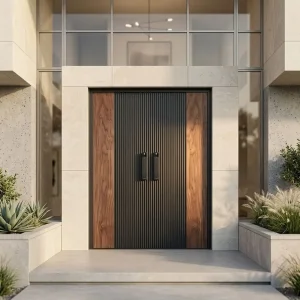
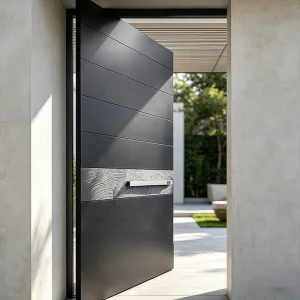
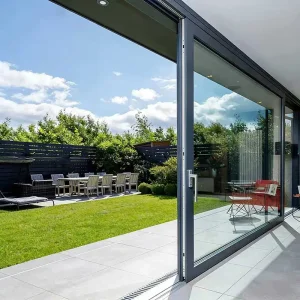
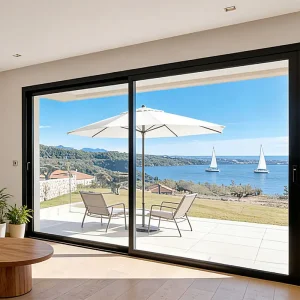
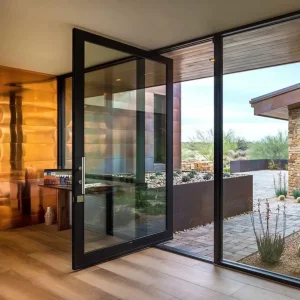
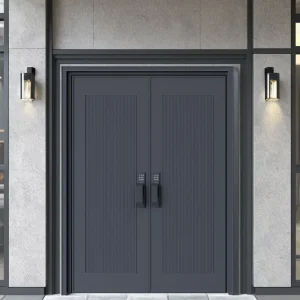
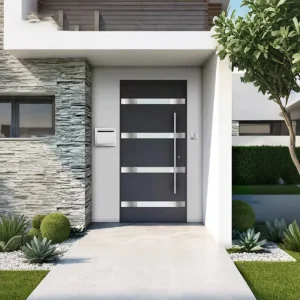
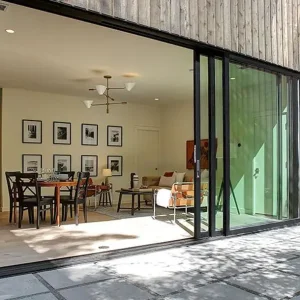
Complete your building specification with DERCHI's hurricane-rated sliding, minimalist pivot, and acoustic insulated architectural entrance assemblies.