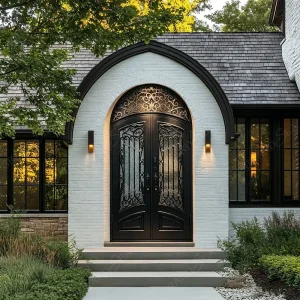
In modern architectural design, the curved top or arched entry door represents the pinnacle of aesthetic elegance, historical prestige, and structural grandeur. However, engineering an arched security door that simultaneously satisfies extreme forced-entry resistance (EN 1627 RC3/RC4), low thermal conductivity (NFRC rated U-values < 1.8 W/m²K), structural wind-load tolerances (AS2047 N6 standards), and smooth biometric integration requires an advanced manufacturing framework. DERCHI, operating from its 180,000 square meter mega-manufacturing hub in Foshan, China, has pioneered three-dimensional profile bending and thermal isolation technology specifically designed for radiused structural aluminum, cast aluminum, and armored stainless steel security doors.
Standard rectangular doors distribute locking bolt pressure uniformly along straight vertical jams. Conversely, arched frames introduce radial shear stress and flexural deformation when exposed to high-pressure pry attacks or extreme wind pressures. Ordinary fabricators cut and weld straight profiles into segmented arches, creating micro-fractures, air gaps, and thermal bridges. DERCHI solves this via cold-rolled hydraulic stretch-bending of continuous multi-chamber 6063-T5 aluminum extrusions, paired with multi-axis CNC milled locking channels that maintain 100% gasket sealing pressure throughout the entire arc curve.
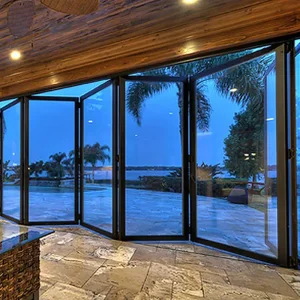
Explore our flagship certified exterior security doors, hurricane-resistant bi-folds, cast aluminum villa entrances, and bulletproof armored doors manufactured for international building codes.
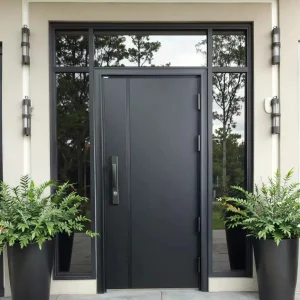
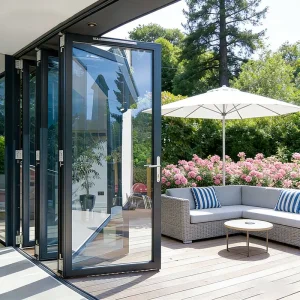
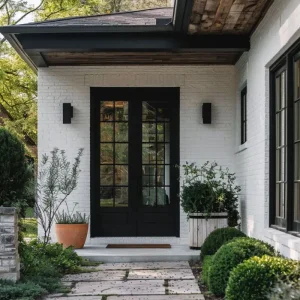
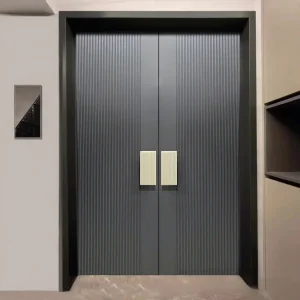
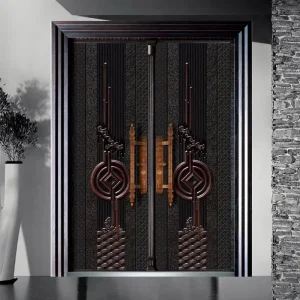
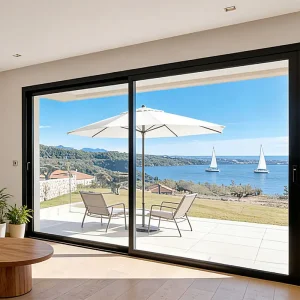
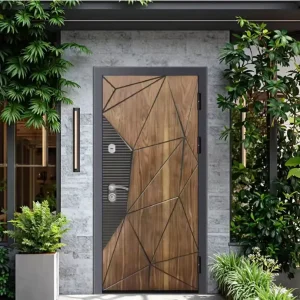
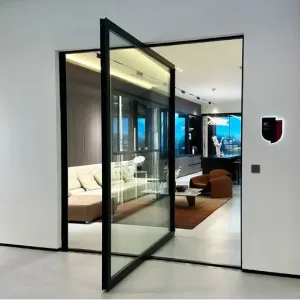
The international building envelope sector has witnessed a 14.8% compound annual growth rate (CAGR) in demand for custom radiused security entrances. From Mediterranean-style private estates in California to luxury commercial compounds in Dubai and historical restoration projects in London, architects are increasingly specifying arched front entrances that combine classical aesthetics with high-tech fortification.
Ultra-luxury villas in North America, Australia, and the Middle East require oversized arched entrances (spanning up to 2.5m wide by 4.5m high) equipped with multi-point automated drop-bolts, heavy-duty floor pivots, and bullet-resistant armored core infills capable of passing UL 752 Level 3 ballistics tests.
Boutique hotels, corporate headquarters, and embassy buildings utilize radiused aluminum glass curtain entries with high-frequency access control, motorized panic hardware, and thermal break engineering that meets strict European EN 14351-1 CE standard compliance.
Municipal urban renewal projects in Western Europe demand exact-replica arch geometry with modern anti-prying steel cores, replacement insulated glass with Low-E coatings, and hidden biometric sensors that honor original exterior building facades.
The cross-section of structural metallurgy, smart IoT access, and green building efficiency has transformed how custom arched security doors are designed, extruded, and assembled.
Transitioning from mechanical keyways to integrated 3D facial recognition, encrypted Bluetooth low energy (BLE), and hidden capacitive fingerprint scanners concealed within stainless steel pull handles.
Integration of 34mm high-density Polyamide (PA66GF25) thermal break strips into radiused aluminum extrusions, preventing condensation and lowering door frame U-factors to under 1.6 W/(m²·K).
Replacing thin stamped aluminum sheet metal with 8mm to 12mm thick heavy sand-cast aluminum relief panels, providing virtually unbreakable structural barrier protection with rich 3D textures.
Engineering arched frames to withstand extreme hydrostatic pressures and high-velocity projectile impacts (TAS 201/202/203 and AS2047 N6 ratings) for tropical storm coastal regions.
Comprehensive factory engineering data comparing frame depth, thermal isolation performance, burglary ratings, and structural load metrics across primary product lines.
| Security Door Material Platform | Structural Core Build-Up | Thermal U-Value Range | Burglary Class (EN 1627) | Acoustic Reduction | Primary Application |
|---|---|---|---|---|---|
| Thermally Broken Arched Aluminum | 6063-T5 profile (3.0mm wall thickness) + 34mm PA66 insulation | 1.5 – 1.8 W/(m²·K) | RC3 Certified | 38 dB - 42 dB | Modern coastal estates, luxury villas, energy-efficient homes |
| Sand-Cast Aluminum Villa Gate | 8-12mm solid cast panel + dual-layer steel sub-frame core | 1.8 – 2.2 W/(m²·K) | RC4 / Bulletproof | 35 dB - 40 dB | Palace main entrances, high-security gated compounds |
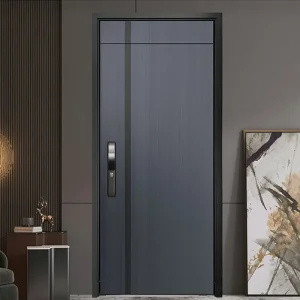
| Armored SUS304 / Steel-Wooden Core | 2.0mm SUS304 shell + anti-drill manganese plates + rockwool core | 2.0 – 2.4 W/(m²·K) | RC4 Heavy-Duty | 40 dB - 45 dB | Armored residential doors, panic room security access |
| Heavy-Duty Architectural Pivot Glass | Reinforced steel internal spine + 42mm Low-E triple tempered glass | 1.4 – 1.7 W/(m²·K) | RC2 / RC3 Impact | 36 dB - 40 dB | Luxury hotel lobbies, contemporary villa grand entries |
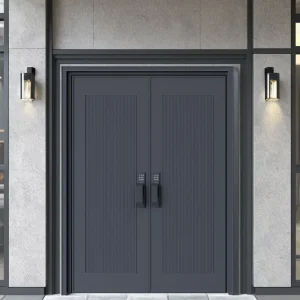
| Fire-Rated Stainless Steel Apartment | Double layer galvanised steel skin + perlite ceramic board core | 2.2 – 2.6 W/(m²·K) | UL 120-Min Fire | 32 dB - 38 dB | Commercial stairwells, hotel suites, multi-family towers |
Building envelopes face vastly different environmental threats across international job sites. DERCHI customizes frame alloy treatments, glazing specs, and sealing gaskets per regional climate requirement.
Designed for ambient temperatures exceeding 50°C and sandstorm conditions in the GCC region. Utilizing AkzoNobel fluorocarbon (PVDF) 3-coat finishes that resist UV degradation, combined with double EPDM magnetic drop seals that prevent micro-fine sand infiltration.
Engineered to meet Florida High Velocity Hurricane Zone (HVHZ) requirements and NFRC energy codes. Features multi-laminated SentryGlas® interlayer glass and reinforced continuous hinge pins that absorb severe cyclic wind pressure loads.
For seaside villas exposed to marine humidity, DERCHI utilizes marine-grade SUS316 stainless steel hardware, chromate pre-treatment, and anodized aluminum surface coatings certified to pass 3,000 hours of neutral salt spray (NSS) testing without oxidation.
Our engineering team continuously advances industrial manufacturing limits to solve complex architectural challenges. Below is our strategic technical development roadmap through 2028.
Deployment of 6-axis CNC hydraulic stretch-bending machinery capable of curving thermal-break aluminum profiles up to 300mm section depth with absolute 0.1mm radius precision.
Integration of nanoporous aerogel insulation blankets inside metal door leaf cavities, lowering total door panel thermal transmittance to U < 0.9 W/(m²·K) for Passive House standards.
Co-development of next-generation door handles featuring embedded sub-dermal vein scanning and quantum-resistant wireless encryption protocols for high-security residential applications.
Commercialization of bio-inspired polymer exterior surface coatings that automatically heal minor surface scratches under natural sunlight exposure while maintaining zero gloss fade.
Browse our extended line of wrought iron glass entrances, stainless steel safety doors, fireproof pivot doors, and bulletproof steel-aluminum composite gates.
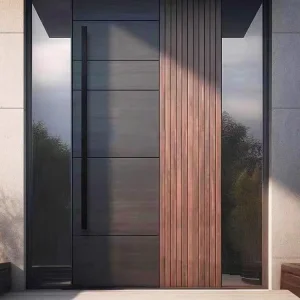
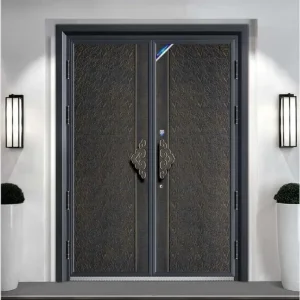
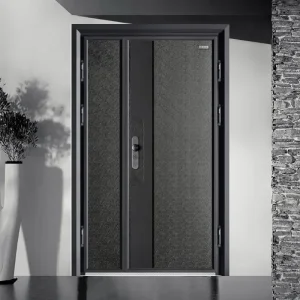
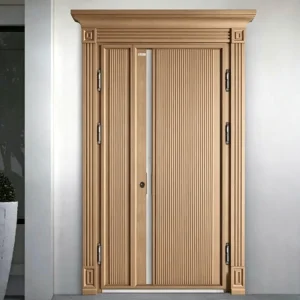
For international architectural firms, facade contractors, and door distributors, DERCHI operates a completely transparent, milestone-tracked manufacturing pipeline from initial CAD drafting to final sea-freight container loading.
Our in-house facade engineering department issues free detailed shop drawings, thermal calculation sheets, and BIM blocks (Revit/IFC) within 24 hours of project schedule submission, verifying arch radii and structural anchoring points.
Multi-chamber extrusions undergo cold hydraulic stretch-bending under real-time laser sensor guidance, ensuring zero profile cross-section collapse and maintaining a tight ±0.5mm dimension tolerance across large arch spans.
Finished door leaves are wrapped in 5-layer protective film, EPE foam corner guards, and sealed inside heavy fumigation-free plywood crates, reducing oceanic freight transit damage rates to below 0.3% globally.
Direct answers from DERCHI lead structural engineers regarding custom arched door specifications, delivery timelines, hardware integration, and global building code compliance.
DERCHI addresses arched leaf deflection by integrating a continuous high-tensile structural steel core inside the aluminum frame extrusions, combined with 3D adjustable heavy-duty German-engineered 500kg-rated floor pivots or continuous stainless steel flag hinges. Every arch curve undergoes finite element analysis (FEA) to ensure zero frame distortion under wind loads up to 3,000 Pa.
Yes. We regularly produce Gothic arches, Roman semi-circular arches, Tudor arches, and segmentally radiused doors. Clients can submit digital CAD files, DXF profiles, or physical physical 1:1 job-site template scans. Our CNC stretch-bending machinery accurately matches custom radius profiles to within ±0.5mm tolerance.
Unlike lower-tier fabricators who insert rigid thermal strips after bending (which leads to strip cracking), DERCHI utilizes specialized flexible Polyamide PA66GF25 thermal insulation strips extruded with proprietary elastic memory polymers. The extrusion is roll-crimped and stretch-bent as a single unified system, maintaining total thermal isolation without micro-gaps.
Our door systems carry CE compliance certificates (EN 14351-1), Australian AS2047 N6 wind/water/air tightness test reports, ISO 9001 quality management verification, and NFRC thermal simulation reports. Fire-rated assemblies are manufactured according to UL 10C and BS 476 fire resistance standards.
Sample or single-unit custom villa entry doors require 12 to 18 days for CAD drawing approval, tooling, and fabrication. Bulk commercial project orders take 25 to 35 days post deposit and drawing sign-off. We have no strict container MOQ for custom project orders; we ship both single sample units and full 40ft HQ containers worldwide.
