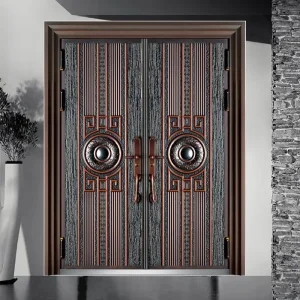
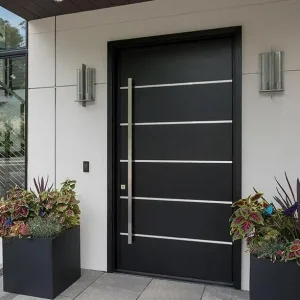
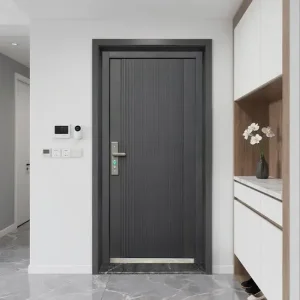
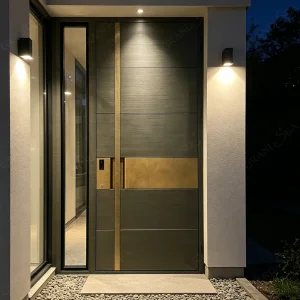
Precision-crafted exterior entrance solutions tested for extreme thermal stress, wind-driven rain, and high-impact structural loads.
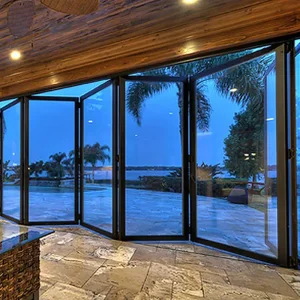
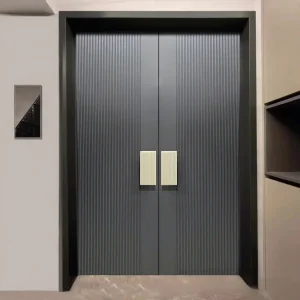
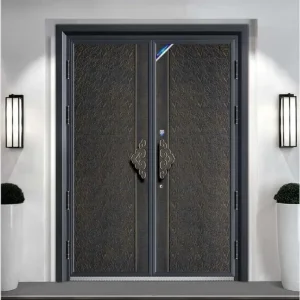
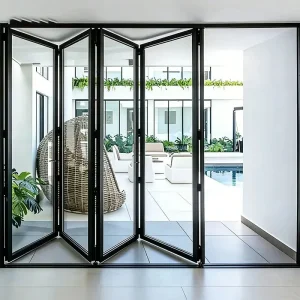
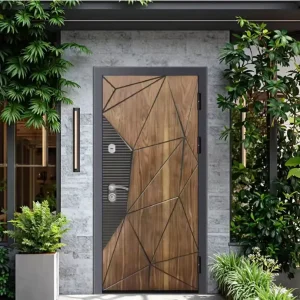
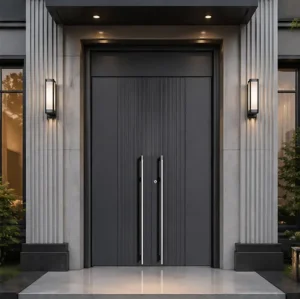
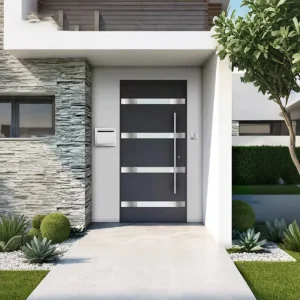
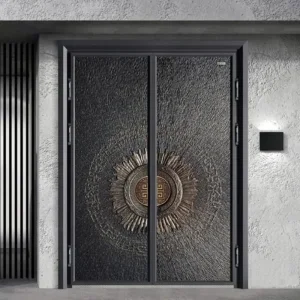
In modern architectural engineering, the exterior entrance door serves as the primary boundary against thermal transfer, atmospheric moisture, dynamic wind pressures, and structural stress.
Global climate instability has pushed building code standards to unprecedented levels. Original Design Manufacturers (ODMs) in China have transitioned from simple material fabricators into high-precision structural engineering hubs. A true Weather Resistant Entry Door must maintain structural integrity, air tightness (EN 12207 Class 4), and water penetration resistance (EN 12208 Class 9A) across extreme thermal gradients ranging from -30°C in sub-arctic regions to +55°C in desert environments.
The engineering challenge lies in overcoming thermal bridge losses, frame deflection under negative wind loading, and material degradation driven by solar UV radiation and salt spray corrosion. DERCHI’s proprietary door engineering platform utilizes multi-chamber 6063-T6 extruded aluminum profiles integrated with 25% glass-fiber reinforced Polyamide (PA66-GF25) thermal breaks, eliminating energy transfer while providing structural rigidity up to DP100 design pressures.
Foshan’s industrial cluster leverages fully automated production lines, digital twin quality control, and vertical supply integration to ensure absolute delivery reliability.
Automated profile milling delivers ±0.1mm dimensional precision across lock pockets, hinge preparations, and drainage channels, eliminating manual fitting errors.
Automated vertical powder-coating units apply 3-coat PVDF finishes adhering to AAMA 2605 standards, guaranteeing 30+ years of color retention and salt-fog resistance.
In-house aluminum extrusion, casting, glass processing, and assembly reduce lead times by 35% compared to fragmented European supply chains.
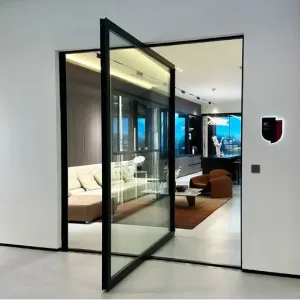
DERCHI utilizes high-grade 6063-T6 aluminum alloys featuring a tensile strength exceeding 205 MPa and yield strength above 170 MPa. For oversized villa entrance gates and heavy pivot assemblies, structural components are reinforced with internal 304/316 stainless steel sub-frames. This composite engineering prevents sag and leaf deflection even on massive custom pivot door panels reaching dimensions of 2,000 mm × 4,000 mm and weighing up to 500 kg.
Commercial developers, architectural specifiers, and distributors require clear risk mitigation, complete technical documentation, and total cost of ownership (TCO) predictability.
1. Dimensional Mismatch: Inaccurate site measurements lead to massive retrofit expenses.
2. Sealant Breakdown: Substandard EPDM gaskets cause air infiltration and moisture damage within 24 months.
3. Compliance Failure: Inability to present AS2047, NFRC, or CE documentation halts local site inspections.
4. Transit Damage: Inadequate ocean freight packaging leads to scratched finishes and glass micro-fractures.
1. Automated BIM & CAD: Full shop drawing generation matched to opening numbers prior to fabrication.
2. Continuous EPDM Weatherstripping: Automotive-grade vulcanized EPDM seals retain flexibility from -40°C to +120°C.
3. Certified Compliance Packs: Pre-issued test reports for wind pressure, water tightness, and U-values.
4. Heavy Wooden Crating: Fumigation-free plywood crates with internal EPE foam buffers keep damage rates < 0.3%.
| Performance Standard | Test Parameters & Criteria | DERCHI Measured Value | Target Climate Application |
|---|---|---|---|
| Wind Pressure (ASTM E330 / AS2047) | Cyclonic wind loading up to ±3,000 Pa | Passes N6 / DP100 (3,600 Pa) | Coastal Hurricane Zones, High-Rise Buildings |
| Water Penetration (EN 12208) | Continuous water spray under static air pressure | Class 9A (600 Pa test threshold) | Monsoon & High-Rainfall Environments |
| Thermal Transmittance (NFRC / EN ISO 10077) | Overall frame + glass panel heat transfer rate | U-value: 1.1 - 1.6 W/(m²·K) | Cold Northern Continental & Alpine Regions |
| Acoustic Insulation (ISO 10140-2) | Sound transmission loss (Rw rating) | 38 dB - 44 dB noise attenuation | Urban Commercial, Airport & Railway Corridors |
| Saline Spray Resistance (ASTM B117) | Continuous salt fog corrosion exposure | 3,000+ Hours without surface pitting | Marine & Oceanfront Properties |
Tailored entry door configurations built to withstand geographic weather challenges without aesthetic compromise.
High humidity and airborne salt rapidly corrode standard metals. DERCHI integrates anodized or 50-micron PVDF-coated 6063-T6 aluminum with 316-grade stainless steel hardware, effectively halting galvanic corrosion.
Internal frost build-up leads to door bowing and seal failure. Our triple-sealed thermal break systems use polyolefin insulants inside profile chambers, maintaining interior comfort while preventing frame distortion.
Intense ultraviolet sunlight degrades standard paint coatings and warps single-layer panels. DERCHI cast-aluminum relief entry doors feature heat-reflective pigments and anti-bowing split-mould technology.
Bridging the gap between Chinese factory engineering and local building code installation standards across international markets.
A primary barrier for architectural developers importing custom entry doors is ensuring on-site compliance with local building standards. DERCHI overcomes this through an integrated engineering support model:
Our engineering team verifies each project schedule against target country requirements: AS2047 / AS1288 for Australia and New Zealand, NFRC / Florida Building Code (TAS 201/202/203) for North America, and CE / EN 14351-1 for the European Union. Certified testing reports accompany all production orders.
We supply full shop drawings, anchor placement details, dynamic structural load calculations, and BIM-ready Revit models. Dedicated English-speaking technical project managers provide real-time video installation support for contractor teams during initial door frame positioning.
Anticipating architectural trends: Integrating Smart IoT structural hardware, Vacuum Insulated Panels, and carbon-neutral material processing.
Next-gen entrance doors combine hidden motor drives, 3D facial recognition, palm-vein biometrics, and Z-Wave/Zigbee smart home connectivity directly into thermal breaks.
Incorporating Vacuum Insulated Glass (VIG) inside aluminum entry panel cores drops total door U-values below 0.6 W/(m²·K), meeting ultra-strict Passive House criteria.
DERCHI is implementing 80%+ post-consumer recycled aluminum extrusion billets powered by solar-supplemented factory arrays, drastically reducing embodied carbon per unit.
Expert insights directly from DERCHI’s senior structural engineering and export compliance division.
Discover our full engineering catalog of luxury cast aluminum, armored steel, glass, and modern pivot entry solutions.