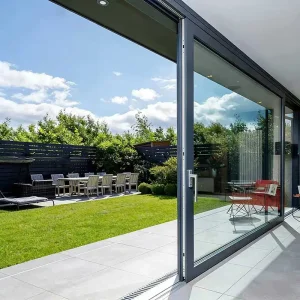
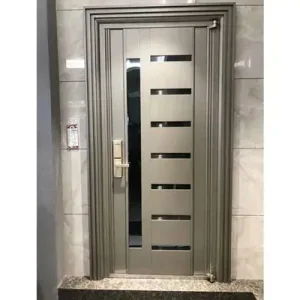
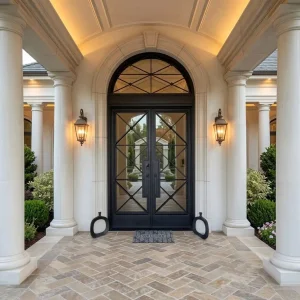
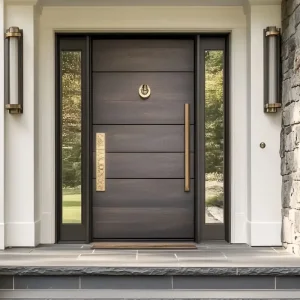
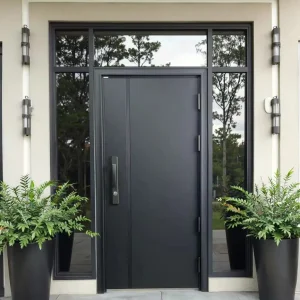
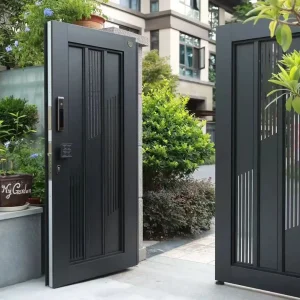
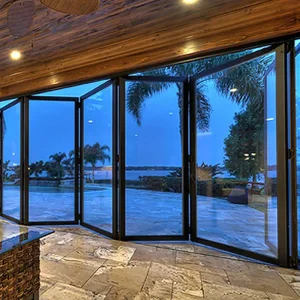
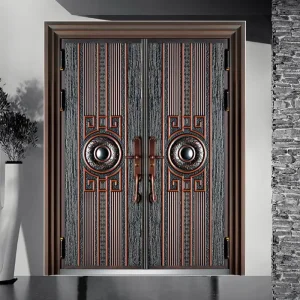
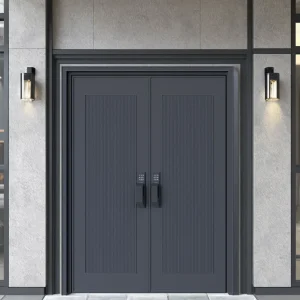
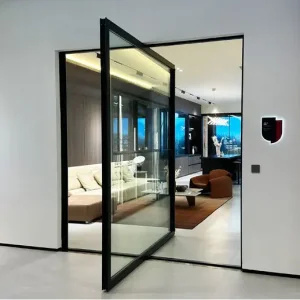
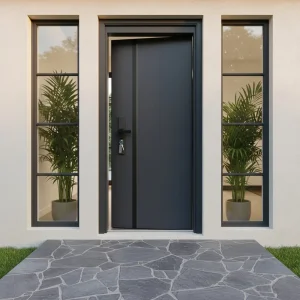
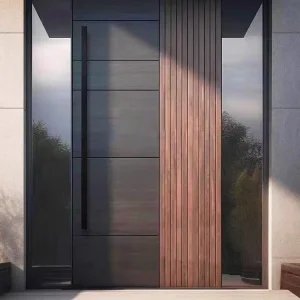
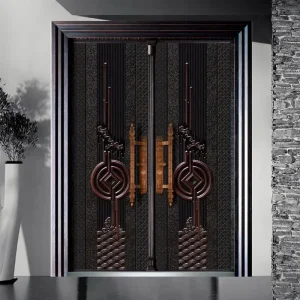
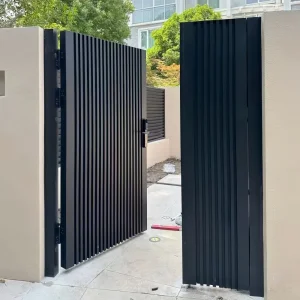
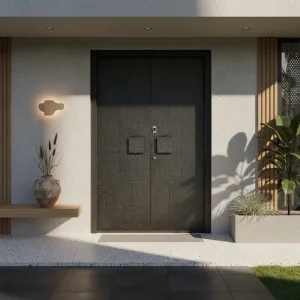
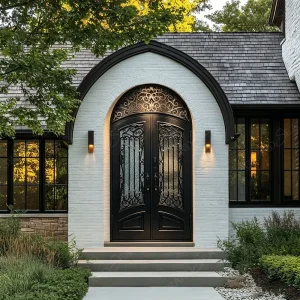
Eight project-ready door families from the DERCHI production base. Images, product titles and URLs are retained for specification review, sample ordering and distributor enquiries.
An entrance door has to do two jobs at once: carry the architectural statement of the building and survive 20 years of weather, wind load and daily use. DERCHI designs, extrudes, finishes and tests each door in-house, so architects, distributors and contractors receive one accountable partner instead of a chain of sub-suppliers.
Since 2000 our engineering team has delivered custom aluminum, cast aluminum, glass and stainless steel entry doors to residential villas, hotel lobbies and commercial entrances in North America, Australia, the United Kingdom, the Philippines and the Middle East.
A thermal break aluminum door is not simply an aluminum door with a plastic strip. The polyamide bridge is only one part of a system that includes profile chambers, glass edge, gaskets, drainage, hardware, anchoring tolerance and installation quality. In this white paper, DERCHI engineers explain where the market is moving, which climates demand which build-up, and how buyers can compare suppliers using verifiable evidence rather than catalogue claims.

Thermal break aluminum doors have moved from a premium option to a baseline envelope component in many commercial and industrial markets. The reason is structural rather than decorative.
As building codes in the EU, North America, Australia and the Gulf region push whole-envelope U-values lower, a door that performs like a window is no longer optional. Specifiers now ask for measured U-values, condensation resistance, air infiltration, water penetration, wind-load and acoustic data before they compare price.
In coastal, hurricane and typhoon-prone regions, resilience is equally important. The entrance must resist pressure cycling, salt spray, impact and forced entry while still operating smoothly. Thermal break profiles, laminated glass, reinforced pivots and multi-point locks are now evaluated as one system.
Contractors are buying entrances as engineered packages: shop drawings, hardware schedules, opening-numbered packing and installation manuals. Factory assembly reduces site labour, protects finish quality and shortens the window between façade close-in and interior fit-out.
Developers increasingly request environmental product declarations, recycled aluminum content, lower-VOC finishes and take-back pathways. Thermal break aluminum is well positioned because it combines long service life, recyclability and stable dimensional performance.
These themes come from enquiry reviews and specification workshops, not from an external statistical survey. They show why buyers are asking for more technical evidence earlier.
Procurement has become more evidence-based. A buyer who once compared only frame thickness and square-metre price now asks for section drawings, glass build-up, hardware list, test standard, packing method and after-sales responsibility. This is healthy for the category because it rewards factories that can document what they build.
At the same time, supply chains have become more regional and more risk-aware. Importers want a China thermal break aluminum door manufacturer that can support BIM coordination, sample approval, container loading plans and installation guidance across time zones. The winning supplier is not the one with the lowest headline price; it is the one that reduces unknown risk between drawing approval and final handover.
Thermal break aluminum doors are not a single specification. The same visual language can require very different glass, gaskets, hardware and anchoring depending on climate, traffic and code jurisdiction.
Salt spray, wind-driven rain and high humidity demand PVDF or high-grade powder coating, stainless hardware, effective drainage and corrosion-resistant fasteners. Slim sightlines remain possible when the profile system and installation details are engineered together.
Thermal break width, warm-edge spacers, triple glazing, gasket continuity and installation thermal bridges determine real performance. For low-energy homes, the door must be modeled with the wall assembly, not selected from a catalogue in isolation.
Solar heat gain, dust infiltration and thermal cycling punish weak gaskets and poor drainage. Low-E glass, shaded entrances, UV-stable finishes and serviceable hardware matter as much as the U-value on the drawing.
AS2047 N6, impact-rated glass, reinforced pivots, multi-point locking and pressure-equalized drainage are common requirements. Testing evidence should match the actual leaf size, glass build-up and hardware set — not a smaller reference sample.
Large pivot leaves, fire-rated assemblies, acoustic comfort and high-traffic durability drive the specification. Smooth operation and hardware serviceability protect guest experience and reduce maintenance downtime.
Steel security doors, fire-rated openings, durable finishes and access-control integration take priority over decorative detailing. Clear opening sizes, traffic cycles and emergency egress must be resolved before production.
Every platform shares the same hardware logic, gasket system and factory testing protocol — you only choose the material behaviour that matches the climate, budget and design language of your project.
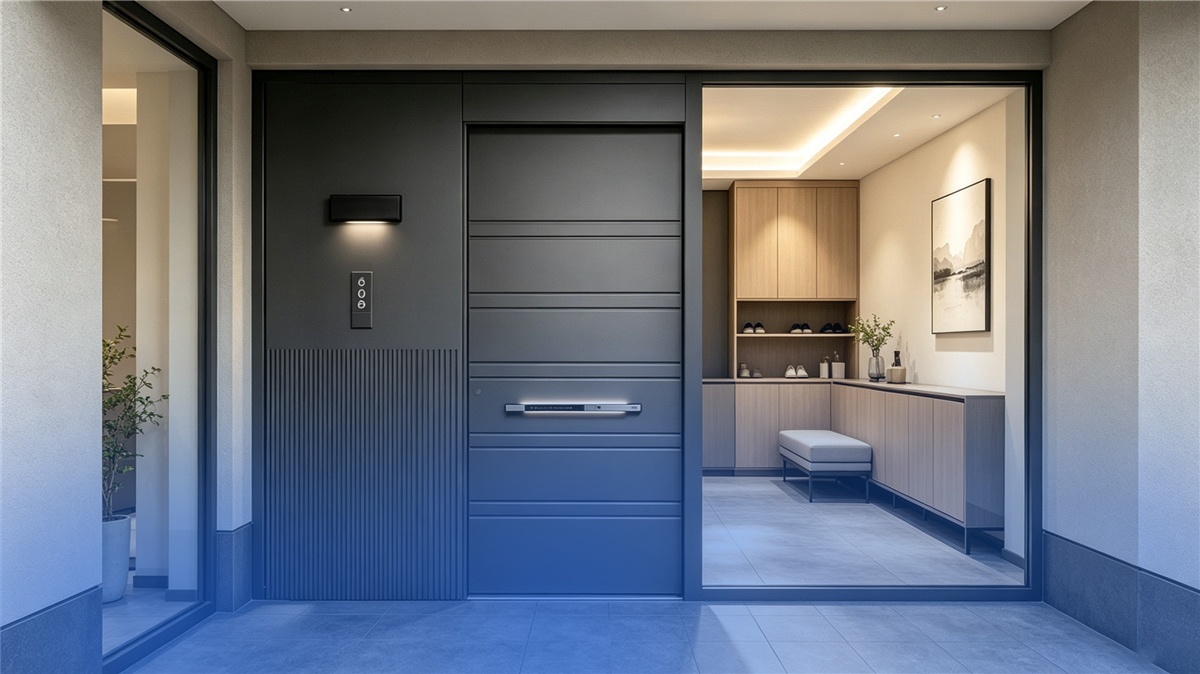
6063-T5 thermally broken profiles with polyamide strips, ideal for coastal and high-humidity locations where corrosion resistance and slim sightlines both matter.
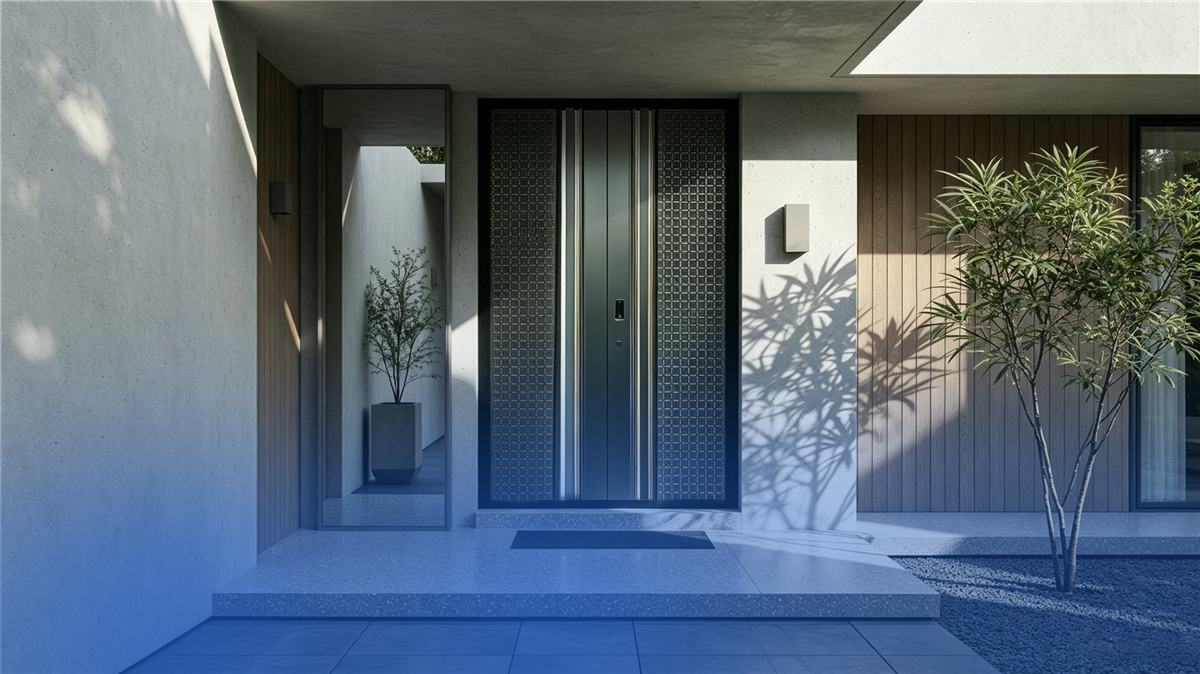
Sand-cast panels 6–12 mm thick reproduce deep relief patterns that stamped sheets cannot achieve — the classic choice for villa main gates and heritage renovations.
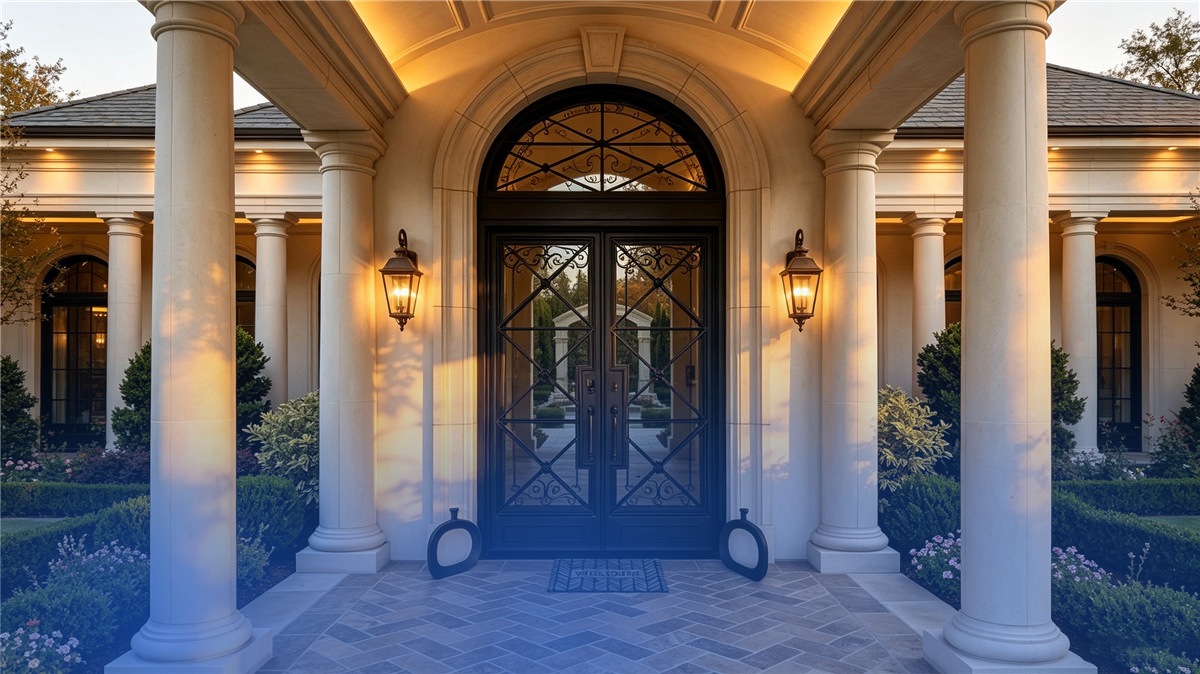
Low-E laminated and tempered insulating glass units up to 42 mm, engineered with structural pivot hardware to keep oversized glazed leaves operating smoothly for years.
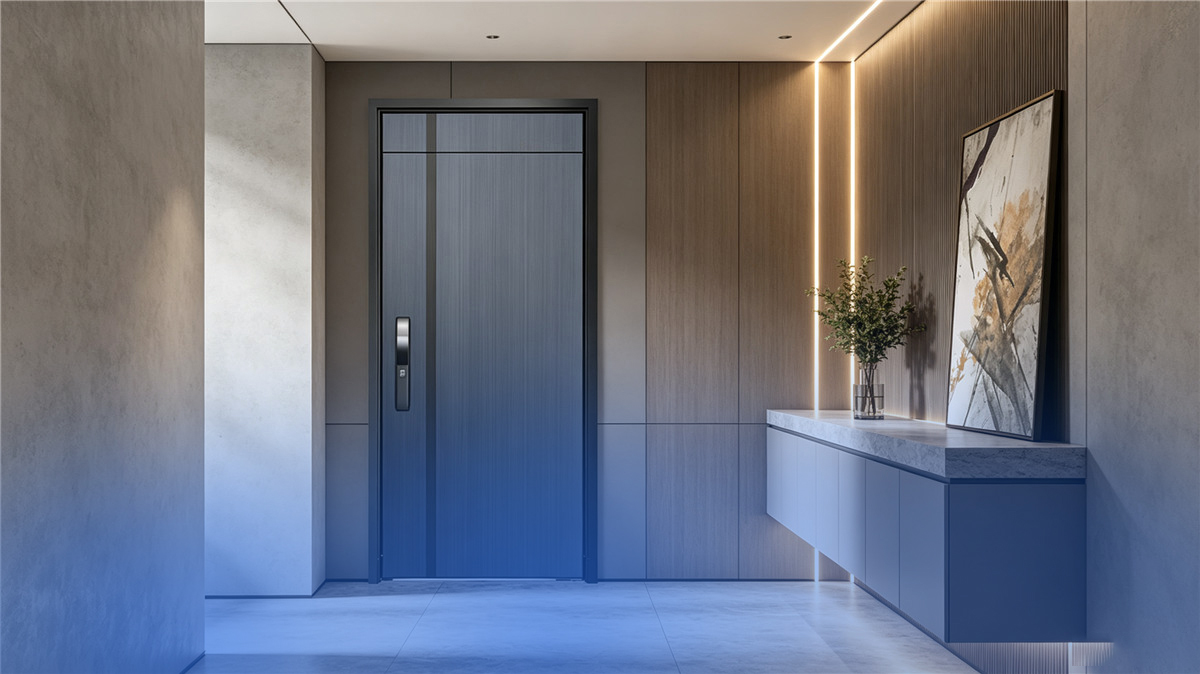
SUS304 / SUS316 skins over a reinforced core deliver the highest anti-prying resistance in our range, specified for high-risk entrances and commercial back-of-house openings.
For buyers, the roadmap is not an abstract forecast. It defines which questions to ask now so that a door package remains serviceable, compliant and upgradable through the next refurbishment cycle.
Expect more requests for digital product passports, EPD summaries, component traceability and test reports linked to actual opening sizes. Thermal break width, glass package and installation detail will be documented as one performance record.
CNC cutting, automated glazing lines and vision-based QC will reduce variation on large leaves. Smart locks, access-control integration and concealed cable routes will move from options to planned interfaces.
Recycled aluminum, bio-based or recycled polyamide, lower-VOC coatings and take-back programs will become procurement criteria. Circularity will be assessed together with durability and repairability.
Doors will increasingly be specified with sensors, predictive maintenance data and façade-system interfaces. BIM blocks will carry hardware, maintenance and performance attributes, not just geometry.
Use this factory reference to shortlist the right platform before you request drawings. Values are typical measured ranges from DERCHI production batches and will be confirmed per project configuration.
Ask for polyamide width, chamber layout and glass-edge detail. A wider break can improve U-value, but it must be matched with gasket continuity and a frame depth that suits the wall assembly.
Oversized pivot doors need floor pivots, hinges and locking points rated for the real leaf weight. A beautiful section drawing fails if the hardware package is undersized for daily use and wind pressure.
Test reports should align with leaf size, glass build-up and hardware. Buyers comparing a China thermal break aluminum door supplier should ask for certificates, section details, packing plan and warranty responsibility in one package.
| Door Platform | Core Build-Up | Thermal U-Value | Wind / Water Rating | Best Suited To | Maintenance |
|---|---|---|---|---|---|
| Aluminum Entry Door | 6063-T5 thermal break frame, 80–120 mm depth, PU-filled leaf | 1.8–2.4 W/(m²·K) | Up to AS2047 N6 / 3,000 Pa water test | Coastal villas, modern facades, large pivot openings | Rinse and inspect gaskets annually |
| Cast Aluminum Entry Door | 6–12 mm sand-cast relief panel bonded to aluminum sub-frame | 2.0–2.6 W/(m²·K) | Up to 2,400 Pa wind load | Classical villa gates, gated communities, heritage projects | Wax patina refresh every 2–3 years |
| Glass Entry Door | Structural pivot frame with 24–42 mm laminated / insulating glass | 1.6–2.2 W/(m²·K) | Up to 2,800 Pa wind load, 35 dB+ acoustic | Hotel lobbies, showrooms, daylight-driven residences | Glass cleaning; hinge torque check yearly |
| Stainless Steel Entry Door | SUS304/316 skin 1.2–2.0 mm, honeycomb or rock-wool core | 2.2–2.8 W/(m²·K) | Highest anti-prying class in range | High-security entrances, service and commercial doors | Neutral detergent wipe; no abrasive pads |
Need the full test report package, glazing options or hardware cut sheets for your specification? They are included in our project catalog.
Request a Catalog →DERCHI (Guangdong Deji Youpin Doors and Windows) is recognised among the top-tier premium door and window brands in China. Aluminum extrusion, CNC machining, surface finishing, glazing and assembly all happen inside our own plant, which is why we can hold tolerance at ±0.5 mm on large leaves and commit to fixed production windows.
Our E-E-A-T position is simple: experience on real sites, expertise in door physics and accountability after delivery. Project case studies in the United States, Canada, the Philippines and the Gulf region give our engineers first-hand data on how doors behave under cyclonic wind, desert heat cycling and salt-laden air.


Project case studies in the United States, Canada, the Philippines and the Gulf region give our engineers first-hand data on how doors behave under cyclonic wind, desert heat cycling and salt-laden air.
In-house laboratories check air infiltration, water penetration, wind resistance and operating force before a batch is released, so specification sheets reflect measured values — not catalogue estimates.
Every shipment carries an opening-numbered packing list, hardware spare kit and a named engineer contact. Warranty claims are handled directly by the factory, not by an intermediary trader.
Eight international certifications and more than 30 appearance and technology patents back a supply process that was built around the way overseas contractors actually buy.

Entry doors, interior doors, windows and garage systems come from a single accountable factory, cutting consolidation costs and removing the finger-pointing between multiple vendors.


CE, ISO 9001, AS2047 N6 and fire-rated test evidence is supplied with the quotation, so local building inspection and insurance approval do not stall your programme.


Non-standard widths, arched heads, matched sidelights and RAL-specific finishes are routine. Our drafting team returns CAD shop drawings that mirror your door schedule numbering.


English-speaking sales engineers answer within your working hours, from first enquiry to on-site installation guidance. Average first response time is under four hours.

Share drawings, opening sizes and performance targets. We confirm feasibility and material options within 24 hours.
Free CAD sections, hardware schedule and finish samples are issued for your approval and stamping.
Extrusion, CNC cutting, welding, finishing and glazing under one roof, with in-line QC at five checkpoints.
Water, air and operating-force checks, then crated in fumigation-free plywood with opening-numbered labels.
Container loading plan, customs documents, installation manual and video guidance for the first openings.
Whether you are an architect pushing a design boundary, a homeowner building a long-term sanctuary or a contractor protecting a programme date, you need different information from the same factory.

Bring the Vision to Life
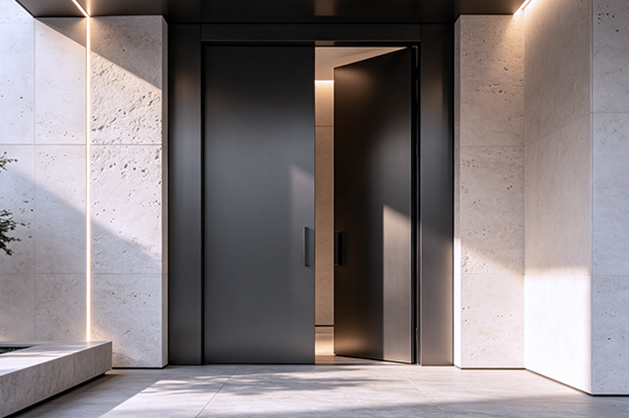
Crafted for Daily Comfort
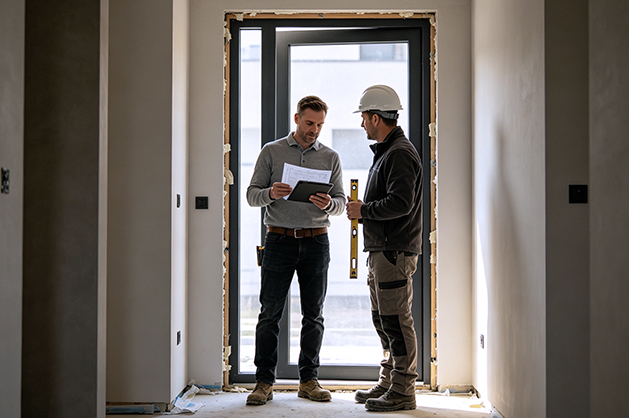
On-Time Delivery, Zero Guesswork
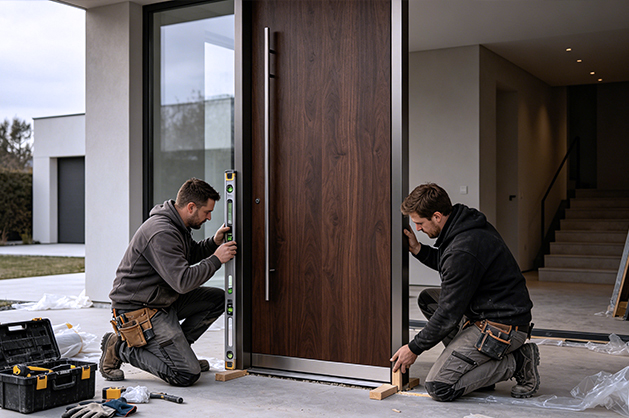
Engineered for Scale & Compliance
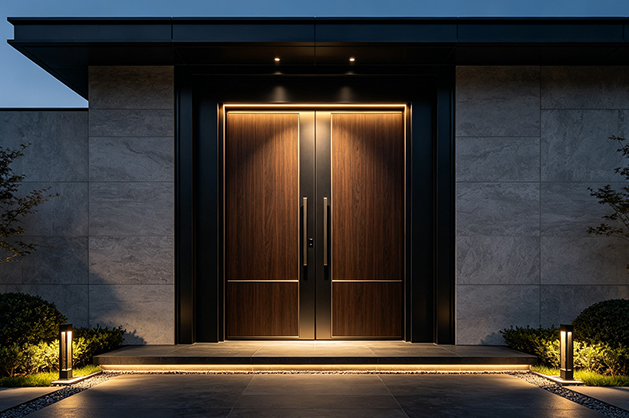
Seamless Fit, Instant Upgrade
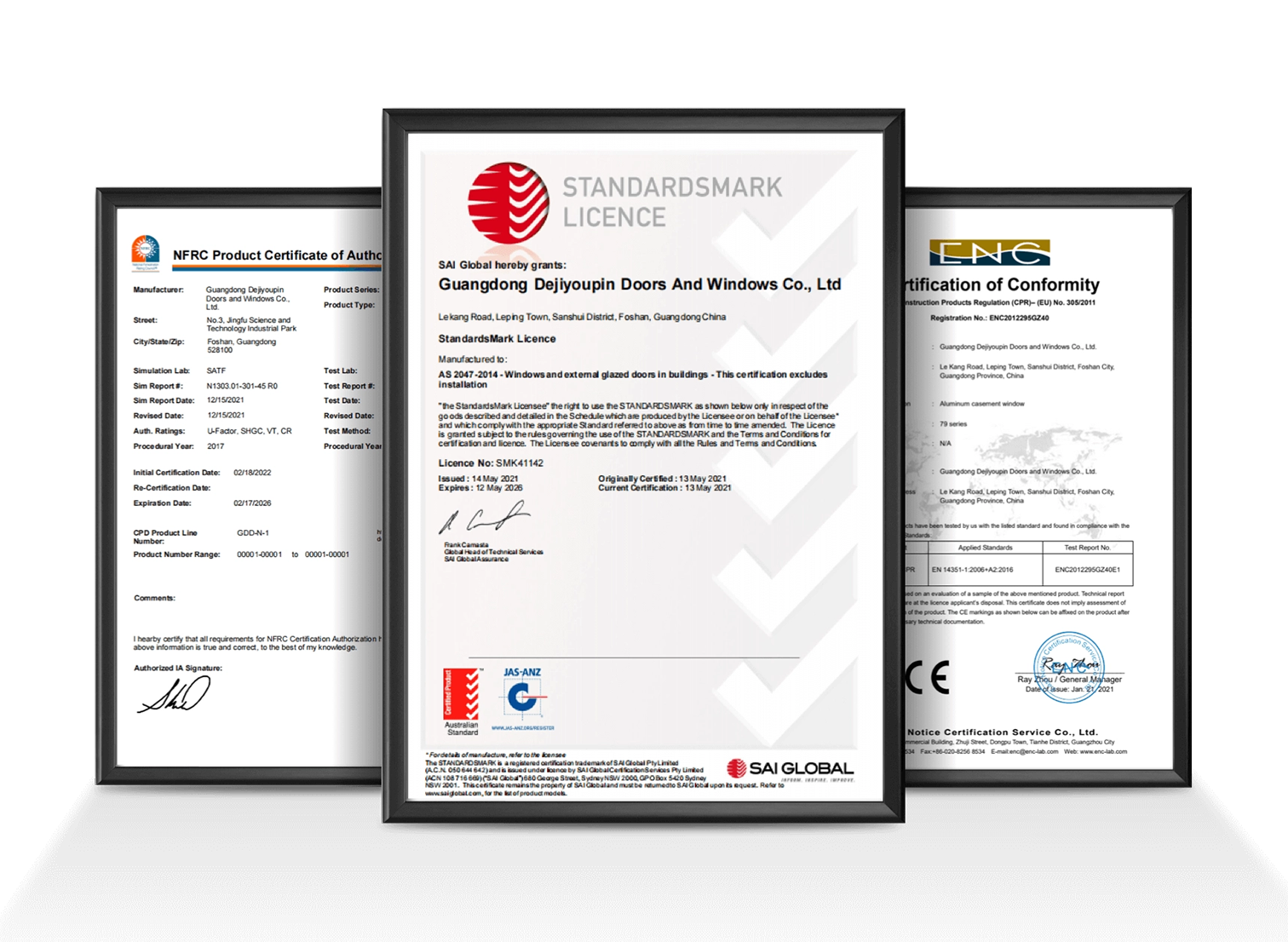
Claims mean nothing without evidence. Each DERCHI door platform is supported by third-party test reports, traceable material certificates and patent registrations that your consultant or inspector can independently verify.

Thermal break aluminum doors sit at the intersection of envelope performance, security, fire safety, aesthetics and logistics. A macro solution therefore has to coordinate design, manufacturing, compliance and site installation.
Free CAD shop drawings, section details and BIM-ready blocks help the design team close interfaces early. Door schedules can be mirrored by opening number to reduce site confusion.
For high-risk projects, sample doors and mock-up reviews can verify finish, hardware feel, gasket line and installation sequence before bulk production begins.
Opening-numbered packing, fumigation-free crates, separate hardware boxes and container loading plans keep site sorting fast and reduce transit damage claims.
Test reports, material certificates, hardware cut sheets, installation manuals and warranty terms can be bundled with the quotation for consultant and inspector review.
A named engineer contact, spare hardware kit and clear responsibility for replacement parts protect the building owner long after handover.
Standardised product families, finish charts, sample support and technical training help distributors build a local offer without carrying every possible configuration.
Cannot fly to Foshan yet? Open the 360° tour and inspect the extrusion lines, powder coating plant, glazing stations and finished-goods warehouse before you commit to a sample order.
Answers from DERCHI engineers for architects, importers, contractors and project owners comparing a China thermal break aluminum door manufacturer and supplier.
Our door systems are produced under an ISO 9001 quality system and have been tested for CE marking, AS2047 N6 (Australian wind, water and air performance) and UL-referenced fire-rated constructions for pivot and commercial lobby doors. Test reports and certificates are released with the quotation package, so your local building inspector can verify compliance before installation begins.
Standard production covers leaves up to 1,600 mm wide and 3,200 mm high. For oversized villa gates and hotel lobby entrances we engineer leaves up to 2,000 × 4,000 mm using reinforced steel-core frames, heavy-duty floor pivots rated to 500 kg and multi-point hardware that controls long-term deflection.
Sampling takes 12–18 days. Bulk production is normally 25–35 days after drawing approval and deposit, depending on the finish selected (powder coating, wood-grain transfer or PVDF). There is no fixed container MOQ for project orders, and single-unit sample doors are accepted for showroom display or local testing.
Each leaf is wrapped in protective film, corner-guarded with EPE foam, sealed in a five-layer carton and fixed inside a fumigation-free plywood crate. Hardware and glazing beads are boxed separately and labelled per opening number, which speeds up site sorting and keeps transit damage claims below 0.3% of shipped units.
Yes. Our engineering team issues free CAD shop drawings, section details and BIM-ready blocks that match your door schedule, followed by installation manuals with torque and anchoring specifications, plus video-call guidance while your crew installs the first openings.
In most cases yes. Send the competitor section drawing, hardware list and performance schedule; our technical team will produce an equivalence table showing where our profile matches, exceeds or differs, so you can present a transparent alternative to the design team rather than an unverified substitution.
Typical DERCHI aluminum entry door platforms range from about 1.8 to 2.4 W/(m²·K), depending on frame depth, thermal break width, glass build-up, spacer type and leaf size. Lower values are possible with deeper profiles, triple glazing and careful installation detailing, but the project-specific number should always be confirmed against the actual opening configuration and test evidence.
Compare more than price. Ask for section drawings, measured performance data, hardware brand and rating, glass specification, finish warranty, packing method, lead time, factory audit evidence and after-sales responsibility. A supplier that can answer these points with documents is usually safer than one that offers only a low square-metre rate.
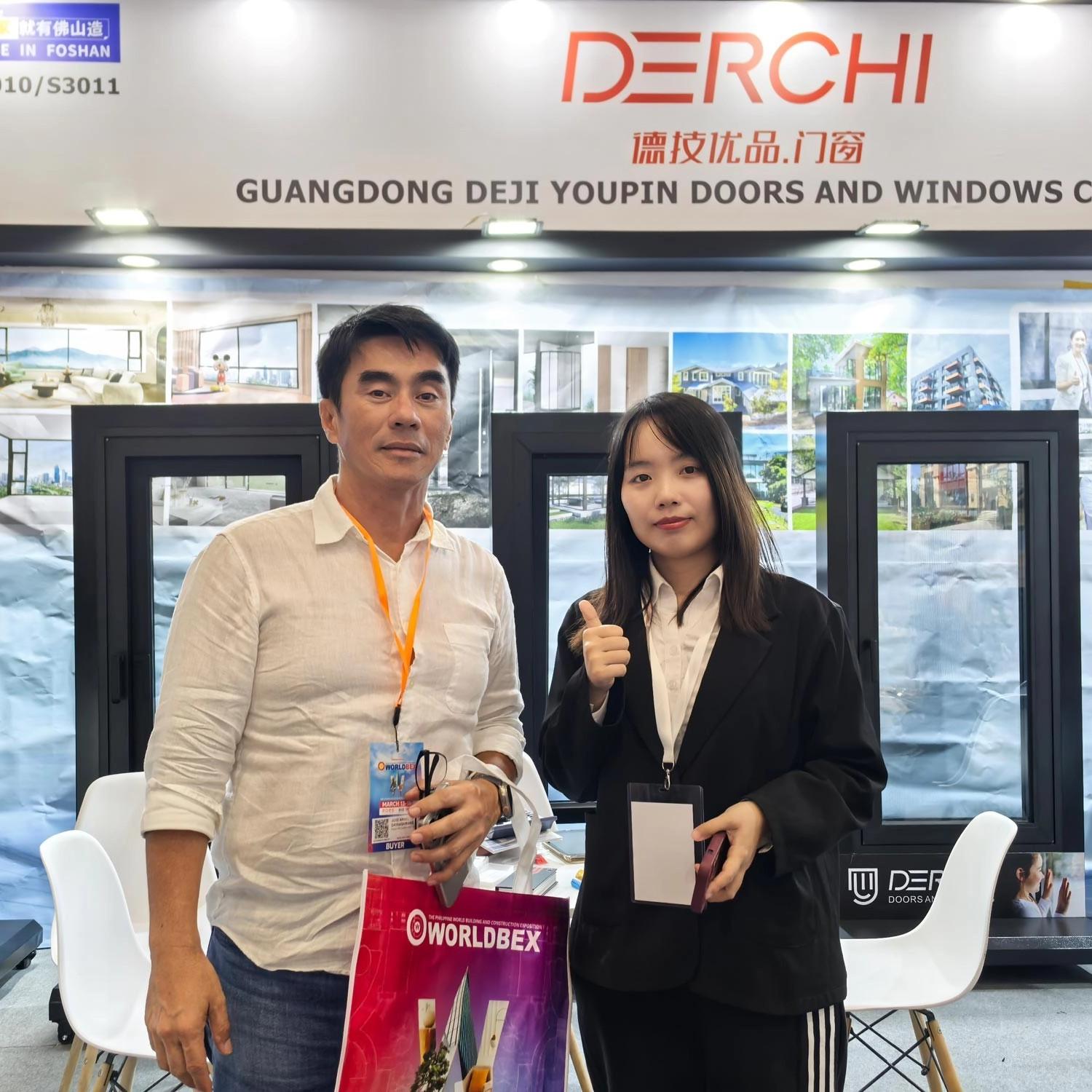
Humidity, typhoon wind load and hardware corrosion dominated conversations at our WORLDBEX stand. Here is how we answered and which door build-ups were specified afterwards.
Read Insight →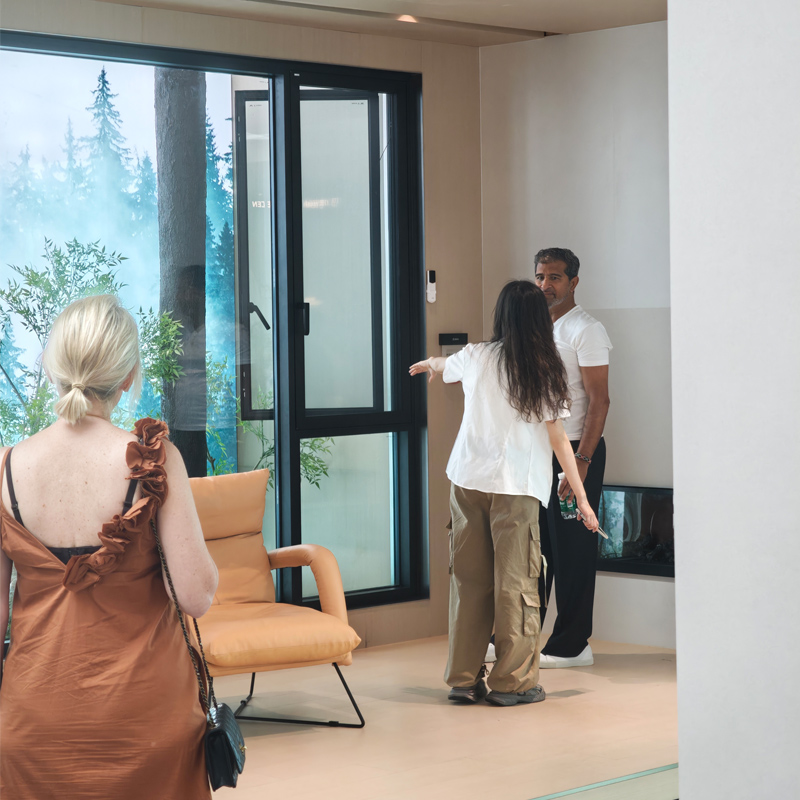
A UK builder moved a dozen villa projects to DERCHI. We break down the profile depth, gasket layout and hardware choices that made the switch defensible on paper.
Read Insight →
Wind resistance, air and water tightness and durability — what the N6 rating actually measures, and the construction changes we made to reach it in cyclone-prone regions.
Read Insight →Tell us the opening sizes, climate zone and design intent. Our engineers will come back with a shortlist, section drawings and the certification evidence your project needs.
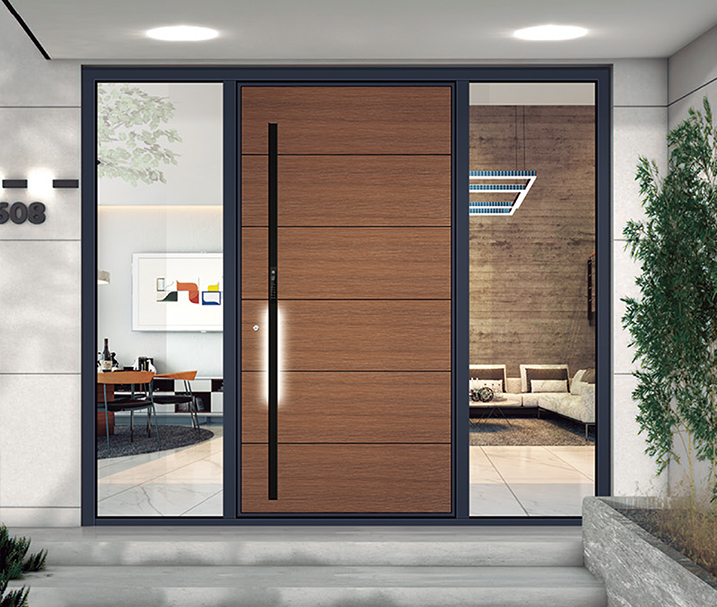
Additional door families for fire-rated apartment entrances, NFRC-rated pivot doors, armored security doors, courtyard gates and classic European residential entrances.
Speak with an English-speaking sales engineer for custom thermal break aluminum doors, entry systems, pivot doors, security doors, fire-rated doors and architectural window solutions.

 [email protected]
 WhatsApp / Tel: +86 15878811461
 Building 19, Shenke Chuangzhi Park, No. 6 Xingye East Road, Shishan Town, Nanhai District, Foshan City, Guangdong, China
DERCHI supplies custom thermal break aluminum doors and architectural entrance systems from Foshan, China, with CAD shop drawings, performance documentation, export packing and installation support for global residential, hospitality and commercial projects.