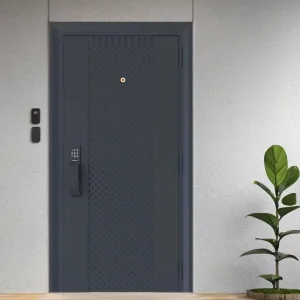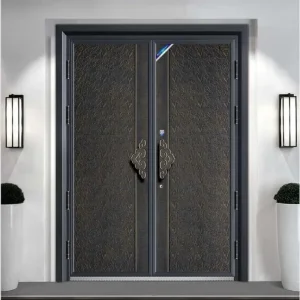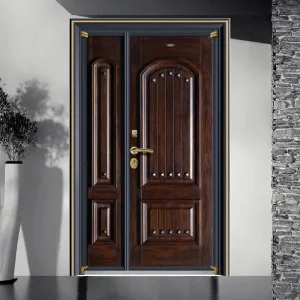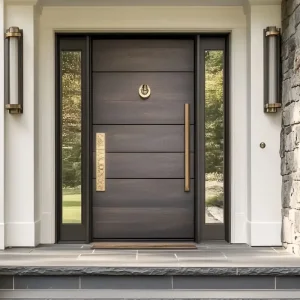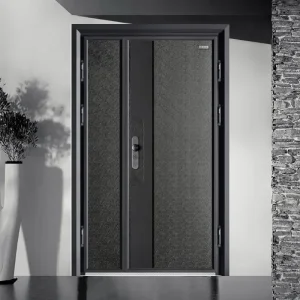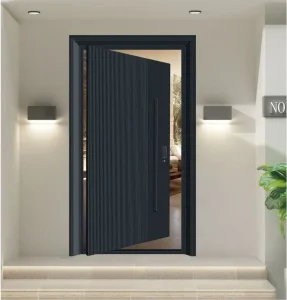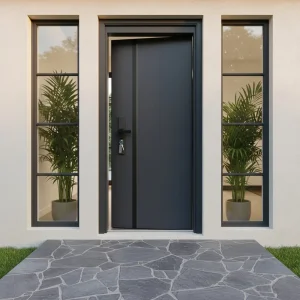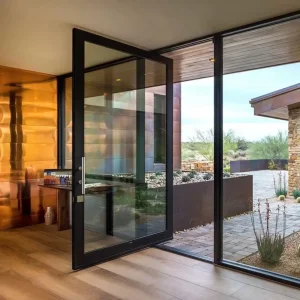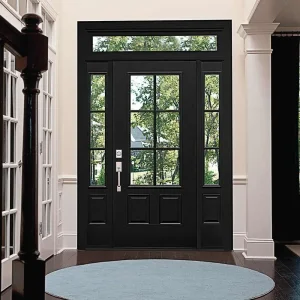
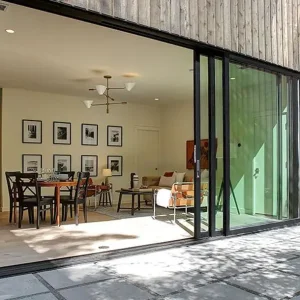
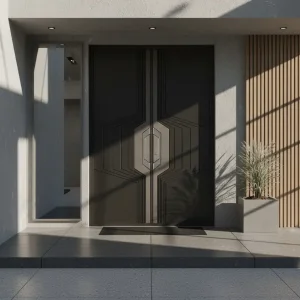
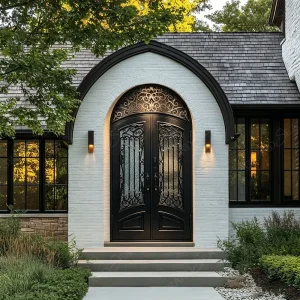
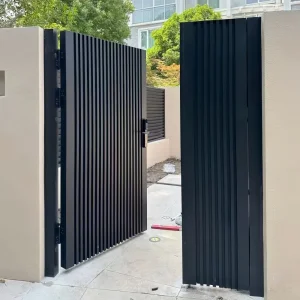
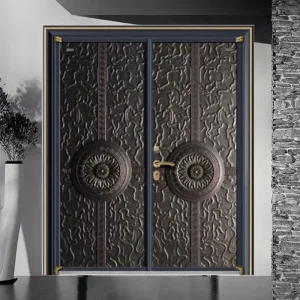
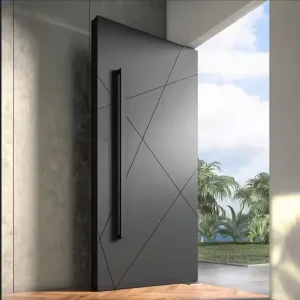
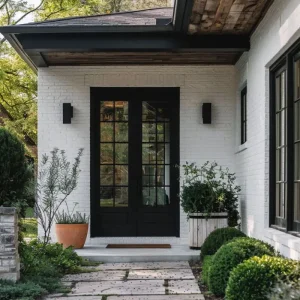
As global energy regulations tighten and modern architectural envelope design pushes for grander structural openings, the thermal break aluminum entrance door has evolved from a simple security barrier into a complex micro-climatic engine. This report details the technical principles, procurement strategies, and manufacturing innovations originating from China's premier fenestration hubs.
Four macro forces are currently redefining the commercial and high-end residential door market worldwide. China's manufacturing sector leads the integration of these technological shifts.
Global building codes—such as Europe's EPBD, Australia's NCC, and North American Title 24—require overall door assembly U-values down to 1.0–1.4 W/(m²·K). Thermal break aluminum doors with triple-glazed Low-E units and warm-edge spacers are now essential to prevent heat gain in tropical climates and rapid warm air loss in alpine zones.
Modern luxury architecture prioritizes seamless interior-exterior transitions. Single leaf door dimensions have scaled dramatically, reaching up to 2,000mm in width and 4,000mm in height. Engineered heavy-duty floor pivots rated up to 500kg and reinforced internal steel cores ensure these giant panels operate effortlessly.
Mechanical keys are rapidly giving way to motorized multi-point locksets, facial recognition scanners, biometric fingerprint access, and building automation (BMS) connectivity. Concealed wire conduits built into thermally broken extrusions keep high-tech electronic locking hidden and weather-protected.
With coastal urban growth, standard powder coating is being replaced by PVDF (Fluorocarbon) coatings and hyper-durable 25-micron anodizing. These advanced surface treatments prevent chalking, salt spray degradation, and color fading under aggressive UV exposures.
When global B2B buyers select a Chinese door manufacturer, technical compliance and transparent lab test documentation form the baseline of trust.
| Performance Dimension | Testing Methodology / Standard | DERCHI Factory Target Value | Engineering Impact |
|---|---|---|---|
| Thermal Transmittance (U-Value) | ISO 10077-2 / NFRC 100 | 1.2 – 1.8 W/(m²·K) (Configurations up to 0.8) | Prevents condensation; reduces building HVAC loads significantly. |
| Wind Pressure Resistance | AS2047 (N6) / ASTM E330 | Up to 4,500 Pa Design Serviceability | Guarantees structural integrity in coastal typhoon and cyclone zones. |
| Water Penetration Resistance | EN 12208 / AS4420.1 | Static Head > 600 Pa | Prevents rainwater ingress under wind-driven storm conditions. |
| Acoustic Isolation (Rw) | ISO 717-1 / ASTM E90 | 38 dB – 45 dB Sound Attenuation | Dampens urban street traffic and industrial airport noise. |
| Air Infiltration Rate | ASTM E283 / EN 12207 | Class 4 (< 0.5 m³/h·m²) | Eliminates unwanted drafts and dust infiltration in harsh environments. |
Foshan is recognized as the global epicenter of structural aluminum manufacturing. By unifying raw material extrusion, precision CNC milling, polyamide crimping, surface treatment, and double-glazed IGU assembly into one integrated 180,000m² facility, DERCHI eliminates sub-contractor delays and maintains strict ±0.5mm tolerances.
Automated milling of lock pockets, hinge points, and drainage weep holes eliminates human manual error, guaranteeing perfect alignment of multi-point locking systems.
We utilize 25% glass-fiber reinforced polyamide strips engineered to match the linear thermal expansion coefficient of aluminum, preventing frame shear under severe temperature swings.
Export packaging utilizes customized fumigation-free plywood crates, corner protective EPE foam, and vacuum wrap—maintaining a transit damage rate below 0.3% across 60+ countries.
Different geographic environments demand specialized door configurations. Here is how DERCHI customizes thermal break aluminum doors for global climate zones.
Locations: Florida, Caribbean, Australia Coastline, Philippines.
Engineering Focus: Reinforced 6063-T6 aluminum extrusion walls (2.0mm+), impact-resistant laminated Low-E glass (PVB/SGP interlayers), and PVDF marine-grade finish resisting 2,000 hours of salt spray.
Locations: Canada, Northern Europe, High-Altitude Resorts.
Engineering Focus: Multi-chamber thermal break profiles filled with expanded Polyurethane (PU) foam or Aerogel insulation, paired with triple argon-filled glazing to eliminate frost and cold drafts.
Locations: Middle East (UAE, Saudi Arabia), Arizona.
Engineering Focus: Solar Heat Gain Coefficient (SHGC) optimized glass coatings reflecting IR rays, heat-resistant EPDM gaskets that do not dry-rot under 50°C+ heat, and dust-proof perimeter seals.
Detailed answers from our lead structural engineers regarding procurement, technical specifications, compliance, and custom manufacturing.