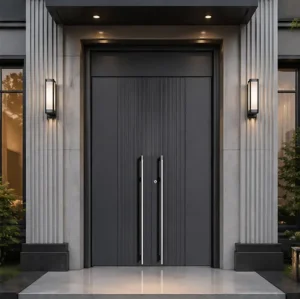
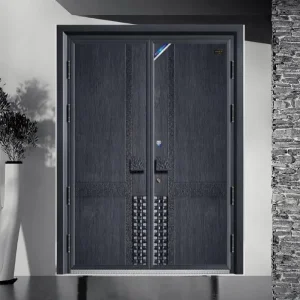
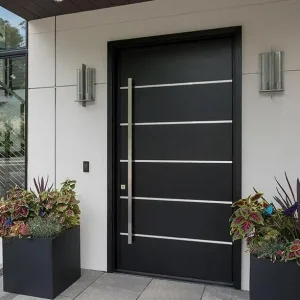
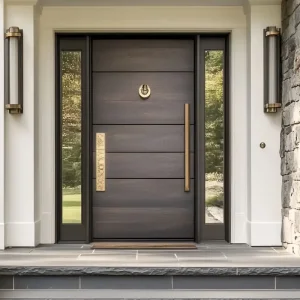
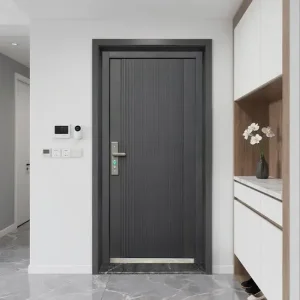
Certified OEM/ODM product range engineered for global architectural projects, high-end residential estates, and commercial entrances.
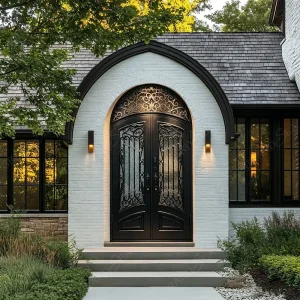
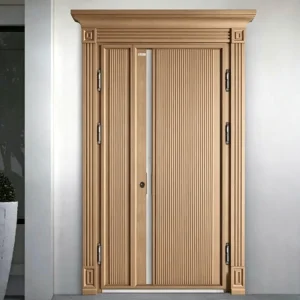
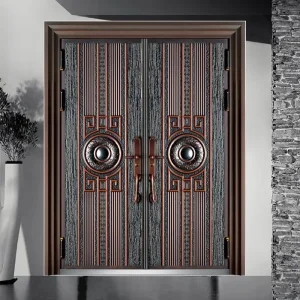
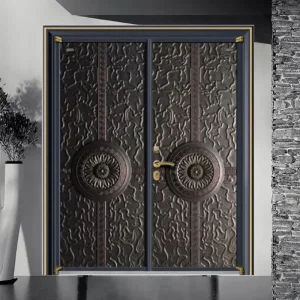
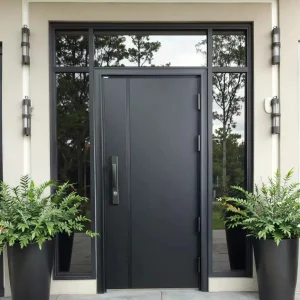
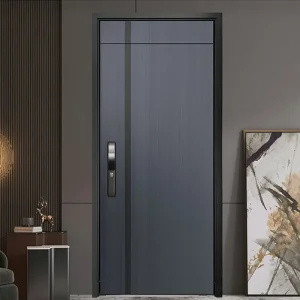
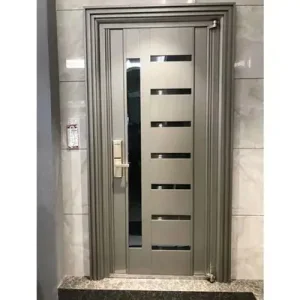
Why premier developers, architectural procurement firms, and commercial distributors are shifting from traditional steel/timber doors to high-precision Chinese aluminum OEM platforms.
In modern architectural design and real estate development, the main entrance door is no longer viewed merely as a physical barrier; it represents the intersection of structural security, thermal performance, and architectural aesthetics. Historically, European and North American projects relied heavily on solid timber or galvanized steel composite doors. However, material degradation—such as timber warping due to humidity fluctuations, paint peeling from intense UV exposure, and thermal bridging inherent in steel core assemblies—has driven a systemic transition toward high-grade aluminum alloy entry systems.
According to recent global architectural hardware trade data, the demand for **Custom Secure Aluminum Entry Doors** is growing at an annual rate exceeding 8.4% globally. Key growth drivers include stringent building energy codes (such as Europe's Passive House standards and North America's NFRC thermal metrics), alongside heightened buyer demand for smart biometric integration and high-burglary-resistance ratings (EN 1627 RC2 to RC4 standards).
Unlike steel which oxidizes or wood which rots under coastal atmospheric conditions, 6063-T5 aluminum alloy treated with PVDF fluorocarbon coatings withstands 3,000+ hours of salt spray testing without structural oxidation.
By incorporating multi-cavity Polyamide PA66GF25 thermal breaks and polyurethane foam infills, modern aluminum entry doors reach U-values down to 0.85 W/(m²·K), dramatically reducing HVAC thermal loss.
Equipped with internal steel armor reinforcement cores, solid cast aluminum decorative plates (6mm–12mm thickness), and multi-point hook locking systems that lock at 5 to 9 points simultaneously.
An engineering breakdown of profile extrusions, casting density, armor core layers, and hardware load mechanics engineered by Foshan OEM manufacturers.
The manufacturing process of high-security aluminum entry doors requires rigid adherence to precision engineering. Leading Chinese manufacturers, centered in the industrial hub of **Foshan, Guangdong**, utilize state-of-the-art 6,000-ton to 10,000-ton extrusion presses to produce primary door frames using primary **6063-T5 aluminum alloy**. Compared to recycled scrap aluminum, primary 6063-T5 delivers superior tensile strength (≥ 160 MPa) and yield strength (≥ 110 MPa), ensuring zero structural warping over decades of operation.
When selecting OEM configurations, architectural buyers generally choose between two core panel technologies:
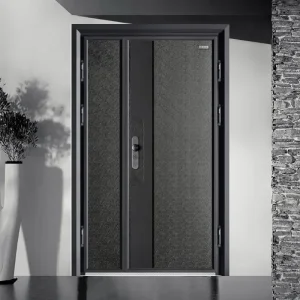
For high-security applications, such as royal villas, embassy structures, and high-risk residential zones, Chinese factories incorporate the "German Cast Aluminum Armour" structural layout. This multi-layered composite sandwich includes:
| Layer Component | Material Specification | Structural & Functional Role |
|---|---|---|
| Outer Exterior Face | 8mm–10mm Solid Vacuum-Cast Aluminum Panel | UV resistance, anti-impact, anti-cut, three-dimensional decorative aesthetic. |
| Sub-Surface Armor Plate | 2.0mm High-Tensile Manganese Steel Sheet | Anti-drilling barrier preventing lock bypass and power tool penetration. |
| Structural Core Infill | Hydrophobic Fireproof Rockwool / Honeycomb Aluminum | Acoustic absorption (STC 40dB+), thermal insulation, and fire resistance (UL 90 min rated). |
| Internal Reinforcement | 3D Tubular Steel Matrix Frame | Prevents torsion distortion under extreme physical forces and wind loads up to 5,000 Pa. |
| Inner Interior Face | Custom Wood Grain / Anodized Aluminum Panel | Matches internal interior design aesthetics (Walnut, Oak, Brushed Titanium, Matt Black). |
Leveraging China's premier industrial manufacturing cluster to deliver custom door engineering at unmatched scale and speed.
Why do leading global brands partner with China for OEM door manufacturing? The answer lies in **total supply chain cluster integration**. In Foshan, within a 15-kilometer radius, factories have direct access to aluminum smelting, custom mold toolmakers, PVDF fluorocarbon coating lines, German hardware importers (such as HOPPE, GU, SIEGENIA), and glass tempering plants. This proximity eliminates logistics lag, enables rapid prototype turnarounds within 12 days, and reduces cost overheads by 35% to 50% relative to European production costs without compromising engineering quality.
How Chinese Secure Aluminum Entry Doors are customized to meet localized climatic demands, structural requirements, and architectural styles across key global markets.
Focus: Hurricane Impact & NFRC Thermal Metrics. Exterior doors exported to Florida and coastal states incorporate Florida Product Approval (FPA) hurricane impact glass (laminated 8mm + 1.52PVB + 8mm) and heavy-duty 500kg pivot hinges to resist pressure spikes exceeding 4,500 Pa during storm events. In northern states, multi-cavity thermal breaks achieve U-factors below 0.22 BTU/h·ft²·°F.
Focus: CE Mark, EN 1627 RC3/RC4 Burglary Standards. European projects demand minimalist sightlines paired with extreme structural security. OEM doors feature concealed 3D-adjustable hinges, flush architectural panels, integration with smart home KNX/Zigbee protocols, and motorized multi-point automatic locking systems operated via 3D facial recognition or fingerprint readers.
Focus: AS2047 Compliance & Coastal Corrosion Resistance. Doors shipped to Australia undergo rigorous testing for air infiltration, water penetration (600 Pa), and structural deflection under cyclonic wind ratings up to N6. Marine-grade anodizing or AkzoNobel Interpon powder coatings are standard to prevent surface degradation from marine salt air.
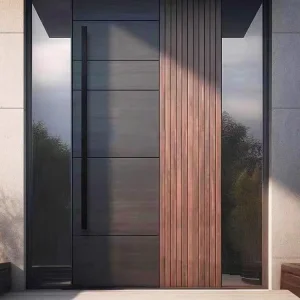
Focus: Desert Heat Isolation & Oversized Villa Entry Gates. Grand villa designs in the Middle East often require massive double door leaves reaching heights of up to 4.0 meters. OEM factories utilize reinforced internal steel skeletons combined with specialized double EPDM weatherstripping gaskets to seal out extreme heat, blowing dust, and sandstorms.
How real estate developers, contractors, and brand owners execute custom door manufacturing contracts from shop drawing approval to ocean shipping.
Executing an OEM project with a Chinese secure entry door manufacturer follows a rigorous quality assurance workflow designed to eliminate installation errors on job sites thousands of miles away:
Architectural elevation drawings, frame profile cross-sections, wall anchor details, and hardware schedule matching are finalized by in-house engineers prior to material cutting.
For custom door designs, custom casting molds are developed within 10 to 14 days. Surfaces undergo pre-treatment (chromating) followed by PVDF coating or anodizing to guarantee color consistency.
Prior to packaging, every assembled door leaf is mounted on a factory test rig to evaluate diagonal tolerance (within ±1.0mm), smooth latch operation, air seal tightness, and electronic lock responsiveness.
To eliminate transit damage during multi-week ocean transport, door units are wrapped in a 4-layer protective system: 1) Protective anti-scratch surface film, 2) High-density EPE foam corner guards, 3) Sealed 5-layer corrugated carton, and 4) Fully enclosed fumigation-free solid plywood crates secured with steel strapping. Freight transit damage claims are kept below 0.2% across global shipping routes.
Technical responses from factory engineers to common inquiries regarding material choices, structural specs, custom sizing, and international shipping.
Extruded aluminum entry doors use hollow or thermal-break aluminum profiles assembled around an insulating core. They are lightweight, highly energy-efficient, sleek, and ideal for modern contemporary aesthetics. Cast aluminum entry doors utilize solid vacuum-cast aluminum plates (typically 6mm to 12mm solid thickness) welded to an armored steel/aluminum framework. Cast doors offer significantly higher impact resistance, heavy-duty anti-theft properties, and intricate 3D carved textures suitable for luxury villas and classical main entrance gates.
Yes. Chinese OEM factories regularly manufacture custom oversized pivot doors up to 2,000mm in width and 4,000mm in height per leaf. To support leaf weights ranging from 250kg to over 600kg, engineered German heavy-duty floor pivots (such as Dormakaba or customized heavy-duty hydraulic floor springs) are integrated alongside internal steel anti-sag tension rods to prevent long-term leaf warping.
Cast aluminum exhibits inherently superior corrosion resistance compared to iron or mild steel because aluminum naturally forms a protective oxide layer. Furthermore, export-grade doors receive a multi-stage surface treatment including sandblasting, chemical passivation, primer sealant, and double-layer PVDF (Fluorocarbon) powder coating. This enables the surface to pass 3,000-hour neutral salt spray (NSS) testing, guaranteeing no oxidation, blistering, or color fading in oceanfront settings.
OEM doors can be pre-drilled and wired for a wide range of mechanical and electronic hardware. Standard options include multi-point mechanical hook locks (5 to 9 locking points) with C-class anti-drill lock cylinders. For smart access control, systems support 3D structured-light facial recognition, semiconductor fingerprint sensors, IC cards, encrypted keypad PINs, and smart home integration via Tuya, Zigbee, or Bluetooth protocols with motorized automatic bolt retraction.
For custom OEM/ODM architectural projects, many factories offer flexible order requirements. While container orders (20GP/40HQ) offer the best shipping efficiency, sample orders or single-unit custom entry doors for luxury residential builds are accepted. Standard lead time is 12 to 15 days for CAD drawing confirmation and sample fabrication, and 25 to 35 calendar days for full bulk production after deposit approval.
Yes. Established Chinese door manufacturers engineer systems specifically designed to meet target export market standards. Products are backed by third-party laboratory test reports for CE compliance (EN 14351-1), Australian standards (AS2047 wind pressure, water tightness, and air infiltration), and NFRC energy performance ratings. Test documentation and material mill certificates are provided during the bidding and drafting stages.
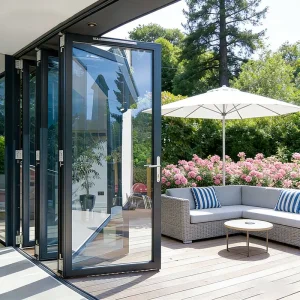
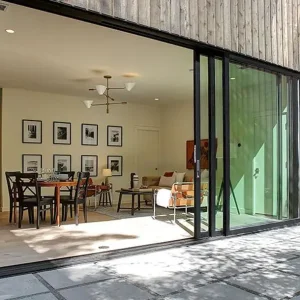
Explore additional certified OEM entry configurations including explosion-proof doors, large glass pivot systems, and thermal bi-fold exterior doors.