Explore our top-tier exterior pivot systems, bulletproof cast aluminum armour doors, and thermal-break architectural entrance solutions engineered for global building codes.
In contemporary high-end architectural design, the entry door is no longer merely a point of egress; it represents the structural threshold between ambient external environmental stress and internal climate-controlled luxury. Over the past decade, global procurement dynamics have shifted dramatically toward Chinese luxury door manufacturers. Driven by massive industrial integration in Foshan—the world's premier architectural hardware hub—leading manufacturers like DERCHI Doors and Windows have transformed standard entryway production into an advanced discipline of precision thermal engineering, structural metallicity, and bespoke aesthetic mastery.
Information Gain Insight: Modern architectural luxury entry doors engineered in China merge aerospace-grade 6063-T5 aluminum extrusions, multi-chambered polyamide (PA66GF25) thermal breaks, electro-hydraulic German pivot hardware, and solid 8–12mm sand-cast aluminum relief panels, achieving wind resistance up to 3,000 Pa and thermal insulation U-values below 1.6 W/(m²·K).
International project developers, facade consultants, and architectural specifiers face mounting pressures: strict local building codes (such as Australia’s AS2047, North America’s NFRC/ASTM, and Europe’s CE EN 14351-1), extreme climate events, and rising demand for smart-integrated residential security. Sourcing entry doors directly from top-tier Chinese manufacturers provides an unrivaled ratio of structural integrity to capital cost, backed by 100% custom shop-drawing workflows and scalable OEM/ODM production lines.
Vertical supply chain integration, raw material purity, and advanced CNC machining capabilities create an insurmountable competitive edge for Chinese luxury entry door production.
Chinese factories leverage primary-grade 6063-T5 aluminum billets extruded with extreme structural tolerances. Unlike recycled scrap alloys, primary aluminum delivers superior tensile strength (≥160 MPa) and high yield stress (≥110 MPa), preventing warp in oversized entrance leaves exposed to harsh thermal cycles.
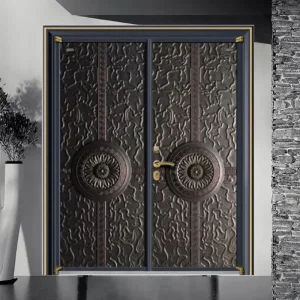
Solid cast aluminum entrance panels utilize advanced sand-casting and CNC 5-axis sculpting to produce deep 3D structural reliefs (6mm to 12mm plate thickness). This process creates seamless armor plates that offer exceptional impact resistance and zero corrosion over decades of exposure.
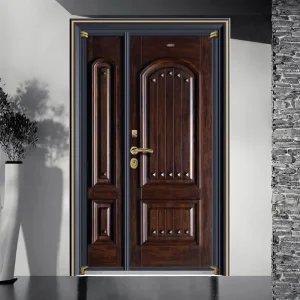
To survive marine and high-UV environments, luxury doors undergo multi-coat PVDF (Fluorocarbon) electrostatic spraying or Italian wood-grain heat transfer. Tested against 3,000 hours of continuous salt-spray exposure (ASTM B117 standard), coatings maintain color fastness and structural film adhesion without chalking.
The global luxury door market has crossed the boundary into hyper-customized, high-performance architectural envelope systems. Manufacturers in China are leading this transition through four primary technological vectors:
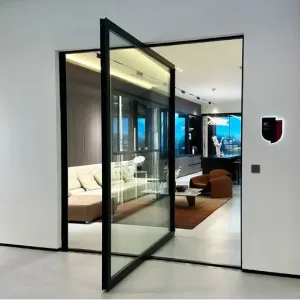
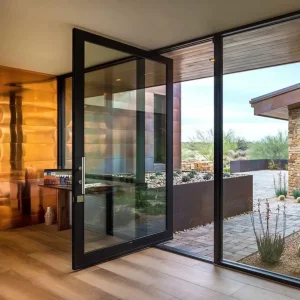
Modern luxury villas favor dramatic, grand-scale entrances. Single-panel pivot doors reaching heights of 4,000mm and widths of 2,000mm are increasingly specified. Supporting these massive 300kg–500kg leaves requires high-load adjustable floor pivots with hydraulic self-closing, soft-stop damping, and 90-degree hold-open functions. DERCHI’s pivot systems incorporate internal stainless-steel reinforcement splines to manage thermal deflection (bowing effect) caused by severe temperature differentials between interior and exterior surfaces.
Building codes in North America (IECC) and Europe (EPBD) strictly limit solar heat gain and thermal conductivity. Leading Chinese factories integrate double and triple-chamber aluminum extrusions joined by 24mm to 34mm PA66GF25 polyamide thermal strips. Filled with expanded polyurethane (PU) or aerogel insulation cores, these door leaves achieve low U-values (down to 1.4 W/m²K), mitigating thermal bridging and preventing condensation build-up in freezing climates.
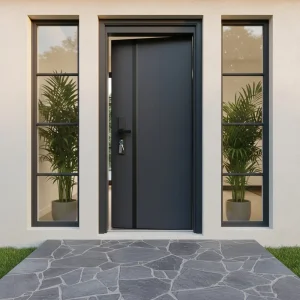
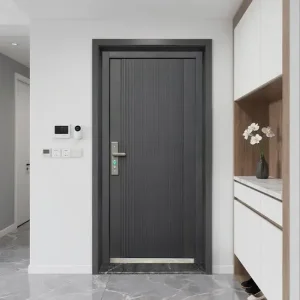
High-net-worth residential projects demand uncompromised security concealed beneath ultra-minimalist designs. Multi-point motorized locking gear—compatible with facial recognition, 3D palm-vein scanners, and smart home automation (KNX, Control4)—is directly milled into the door leaf profile during CNC fabrication. Heavy-duty anti-pry hook bolts and anti-bullet steel core inserts provide up to European RC3/RC4 burglar resistance ratings without compromising sleek aesthetics.
The contemporary aesthetic demands seamless integration between the door leaf, frame, and interior/exterior wall claddings. Concealed hinges, coplanar frame-to-leaf alignments, and integrated LED linear lighting strips built directly into extruded pull handles represent the peak of modern entry door design.
Comprehensive factory specification benchmark comparing key luxury entry door structural configurations manufactured by DERCHI.
| Door System Platform | Structural Profile Material | Thermal & Acoustic Barrier | Max Single Leaf Dimension | Wind Pressure / Water Rating | Security Level Rating |
|---|---|---|---|---|---|
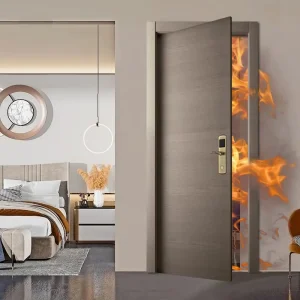
| Cast Aluminum Armour Door | 8mm–12mm Sand-Cast Panel + Galvanized Steel Skeleton | High-Density Polyurethane + Double EPDM Gaskets | 1600mm (W) × 3200mm (H) | 3,000 Pa Wind / 450 Pa Water | Class RC3 / Bulletproof |
| Thermally Broken Pivot Door | 3.0mm Architectural 6063-T5 Extruded Aluminum | 34mm PA66GF25 Strip + Aerogel Infill Core | 2000mm (W) × 4000mm (H) | 3,500 Pa Wind (AS2047 N6) | Multi-Point Motorized |
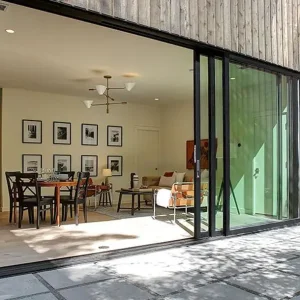
| Structural Glass Entrance Door | Heavy-Duty Outer Frame + 8mm+1.52PVB+8mm Low-E Glass | Double/Triple Argon-Filled Insulating Units | 1800mm (W) × 3600mm (H) | 2,800 Pa Wind / 350 Pa Water | Laminated Security |
| Armored Stainless Steel Entry Door | 1.5mm–2.0mm SUS304 / SUS316 Stainless Steel Skin | Fireproof Rockwool + Honeycomb Composite | 1500mm (W) × 3000mm (H) | 2,500 Pa Wind / Fire Rated 90 Min | Class RC4 / Anti-Pry |
Tailored engineering modifications meeting regional climate pressures, building regulations, and structural demands globally.
High-velocity hurricane zone (HVHZ) requirements demand extreme structural resistance. DERCHI’s engineered entry doors feature reinforced steel substructures, laminated impact glass (SGP interlayers), and marine-grade anodized or PVDF finishes that resist salt-air pitting and wind pressures exceeding 4,000 Pa.
In regions like Dubai, Riyadh, and Qatar, exterior metal surfaces reach temperatures above 75°C. Special double thermal breaks and ceramic-infused reflective coatings isolate thermal transfer, preventing interior expansion stress and maintaining HVAC efficiency in ultra-luxury estates.
Addressing freezing climates requires multi-barrier EPDM weatherstrips and triple-glazed Low-E insulating panels filled with 90% Argon gas. This configuration achieves passive-house level thermal efficiency, preventing frost line migration across the internal frame edge.
Procuring custom architectural entry doors from China requires absolute clarity across drawing approvals, manufacturing quality control, packaging, and logistics. DERCHI maintains a standardized 5-stage B2B procurement protocol:
Our project engineering department translates architectural schedules into fully detailed 2D/3D CAD shop drawings, detailing wall connection profiles, threshold flashing details, anchoring schedules, and clearance tolerances prior to extrusion cutting.
Quality control checkpoints cover five distinct steps: aluminum alloy extrusion hardness testing (Webster Hardness ≥15), coating thickness measurement (Elcometer gauge), hardware cycle dry-runs, water tightness spray chamber tests, and pre-assembly check.
Door units are packed in waterproof protective film, enclosed in EPE shock-absorption foam, and secured inside fully enclosed, fumigation-free plywood crates with internal steel strapping to prevent sea-freight transit movement.
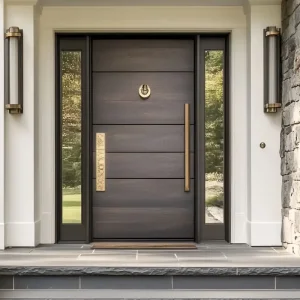
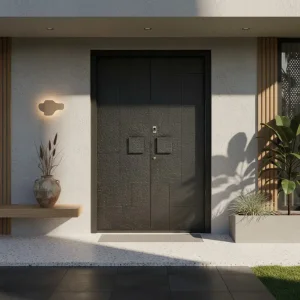
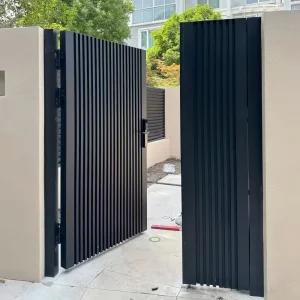
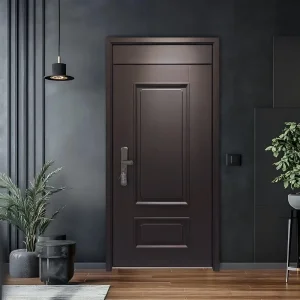
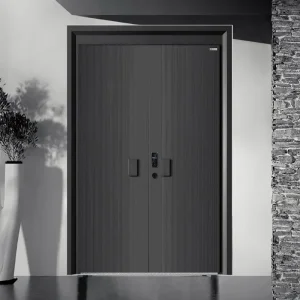
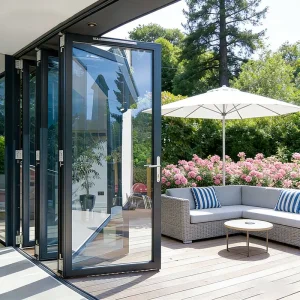
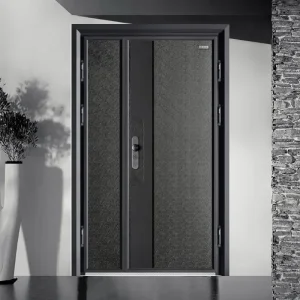
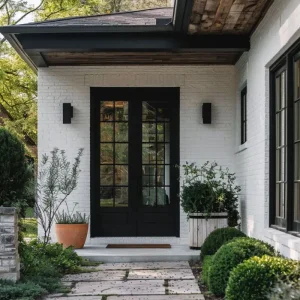
Complete architectural entrance lineup engineered for high-end residential, multi-family, and commercial lobby developments.
Detailed technical answers from DERCHI's senior facade engineers regarding compliance, size limits, lead times, and custom mold creation.
