Explore our primary structural entrance solutions engineered specifically for coastal hurricane resistance, anti-burglary protection, and thermal insulation efficiency.
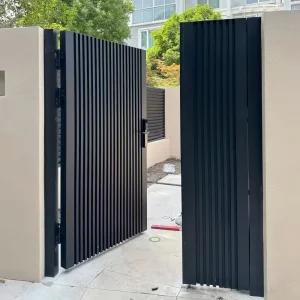
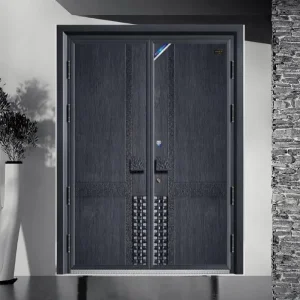
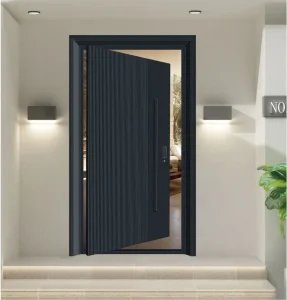
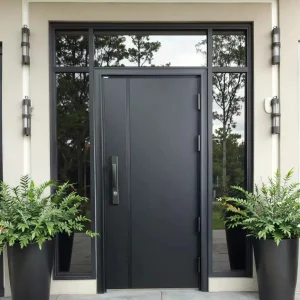
In contemporary architectural engineering, the exterior entrance system serves as the primary barrier against catastrophic environmental forces. Extreme weather events, intensified by changing global climatic cycles, have shifted structural requirements from basic weatherproofing to high-velocity structural impact mitigation. For coastal residential complexes, high-rise luxury developments, and commercial infrastructure located in cyclonic corridors—such as the US Gulf Coast, Florida High Velocity Hurricane Zones (HVHZ), the Caribbean Rim, and Southeast Asia's typhoon belts—a standard front door represents a severe structural vulnerability if not specifically rated for extreme wind load and wind-borne debris impact.
When a severe hurricane or typhoon strikes a building envelope, the dynamic air pressure differential across the building envelope spikes exponentially according to the velocity pressure formula:
Kinetic Wind Load Calculation Physics: $q_z = 0.00256 \times K_z \times K_{zt} \times K_d \times V^2 \times I$
Where $V$ represents maximum wind speed (mph), $K_z$ is the velocity pressure exposure coefficient, and $q_z$ is the dynamic velocity pressure in pounds per square foot (PSF). At wind gusts reaching 170 mph (Category 5 Hurricane), unreinforced entry doors experience static forces exceeding 85 to 105 PSF, alongside kinetic impact from wind-borne missiles travelling at speeds up to 50 feet per second.
If an entry door fails under impact, structural breach allows immediate internal pressurization of the facility. This rapid increase in internal upward and outward pressure frequently causes roof blown-offs and structural wall collapse. Consequently, direct wholesale procurement of high-performance hurricane-resistant front doors manufactured in China has emerged as an essential, cost-effective strategy for global real estate developers, architectural specifiers, and commercial construction firms seeking uncompromised safety compliant with international building codes (ASTM E1886/E1996, Miami-Dade NOA, TAS 201/202/203, and AS2047).
Engineered with SentryGlas® Ionoplast interlayers designed to absorb, dissipate, and rebound kinetic energy from 9-lb 2x4 timber projectiles travelling at 34 mph without breaching the barrier skin.
Tested across 9,000 rapid cycles of full positive and negative pressure variations (+100 PSF / -100 PSF) to simulate the extreme micro-burst vortex winds of Category 5 typhoons.
Combines high-density Polyamide (PA66GF25) thermal struts within heavy-gauge 6063-T6 aluminum extrusion profiles, preventing heat transfer and coastal condensation.
The global construction market for wind-resistant architectural components has experienced a fundamental shift over the past decade. Traditionally dominated by localized European and North American niche fabricators, procurement bottlenecks, escalating material costs, and prolonged lead times (often 20 to 30 weeks) hindered large-scale commercial developments. Modern Chinese manufacturing hubs—most notably in Foshan, Guangdong—have transformed this market by consolidating advanced metal extrusions, specialized glass processing, smart lock integration, and rigorous physical testing within unified mega-factories like DERCHI's 180,000 m² production ecosystem.
By leveraging vertically integrated production chains, Chinese wholesale manufacturers offer significant unit-economic advantages while executing stringent quality control protocols that meet or exceed western standards. Below is a macro-economic breakdown of procurement models comparing regional assembly against consolidated Chinese manufacturing direct-to-site:
| Procurement Metric | Traditional Western Assemblers | Consolidated China OEM Direct (e.g., DERCHI) | B2B Project Impact |
|---|---|---|---|
| Structural Profile Material | Standard gauge aluminum / Softwood core | 6063-T6 / Heavy SUS304 Steel Reinforcement | +45% Tensile Yield Strength |
| Glazing Interlayer Standard | Standard PVB (0.76mm / 1.52mm) | DuPont SentryGlas® (SGP 1.52mm / 2.28mm) | 5x Shear Stiffness / 10x Tear Strength|
| Lead Time (Custom Villas/Projects) | 16 – 26 Weeks | 4 – 6 Weeks (Including CAD sign-off) | 60% Reduction in Project Schedule Risk |
| Factory Acceptance Testing (FAT) | Third-party sample lot sampling | 100% In-house Hydrostatic & Air Infiltration FAT | Near Zero On-site Defect Rates |
| Wholesale Cost Efficiency | High Premiums (Multi-tier distribution) | Direct Wholesale B2B Pricing | 35% – 50% Capital Expenditure Savings |
Furthermore, structural entrance doors are no longer evaluated purely on static wind load resistance. Modern global developers demand multi-attribute performance matrix integration: fire ratings (UL 10C / BS 476), acoustic STC attenuation ratings (exceeding 40 dB), anti-burglar security certification (RC3/RC4 European standards), and seamless integration with building automation systems (smart biometrics, motorized pivots, dynamic electrochromic glass). Factory-direct Chinese suppliers engineered for export are leading this technological convergence.
A hurricane-resistant entry system is a sophisticated structural assembly designed to transmit immense kinetic forces safely into the building's surrounding load-bearing envelope. Below is an engineering breakdown of the core material layers utilized in DERCHI's custom front door manufacturing process:
Utilizing precision primary aluminum billet extrusions heat-treated to T6 temper, providing a minimum yield strength of 170 MPa and ultimate tensile strength of 205 MPa. Wall thickness across structural profile chambers ranges from 3.0mm to 5.0mm, preventing frame distortion under cyclic loading.
Unlike traditional flexible PVB, SGP interlayers are 100 times stiffer and 5 times tougher. In the event of outer tempered glass breakage caused by flying debris, the SGP sheet maintains structural rigidity, preventing glass sag and holding envelope integrity even under massive positive/negative pressure fluctuations.
Custom heavy-duty locks engage grade 304/316 stainless steel hook bolts into structural frame receivers at up to 7 distinct locking points along the perimeter leaf edge. This configuration prevents frame deflection, distributes hurricane wind loads evenly, and eliminates mechanical prying vulnerabilities.
Featuring continuous vulcanized EPDM weather seals with co-extruded dual-durometer memory foam profiles. Designed to resist wind-driven rain water ingress under hydrostatic test pressures exceeding 15 PSF (approx. 750 Pa, equivalent to 80 mph driven rains).
Building codes globally impose strict mandate protocols regarding fenestration products in coastal and severe weather zones. Purchasing from an qualified wholesale supplier requires verifying that the door assemblies carry authentic third-party testing documentation. DERCHI door platforms are subjected to three primary testing series:
Compliant with ASTM E1886 and ASTM E1996 for Windborne Debris Impact in Hurricanes, achieving Missile Level D (Basic Residential/Commercial) and Level E (Enhanced Protection for Essential Facilities like Hospitals and Emergency Centers).
Tested in accredited laboratories to meet AS2047 N6 rating (Ultimate limit state wind pressure exceeding 4,400 Pa), ensuring full compliance for Queensland, Northern Territory, and Western Australia cyclone zones.
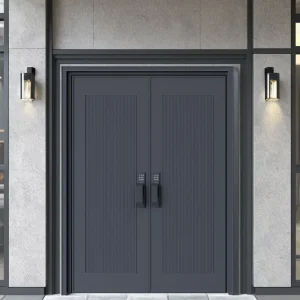
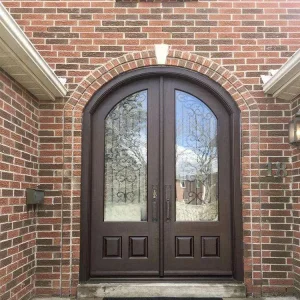
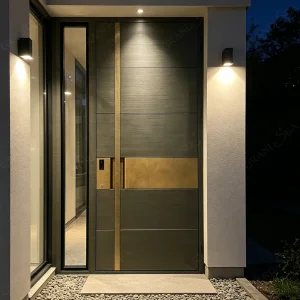
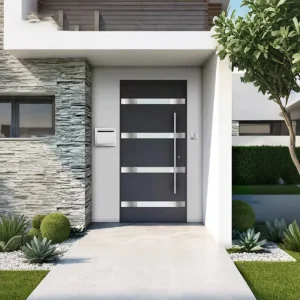
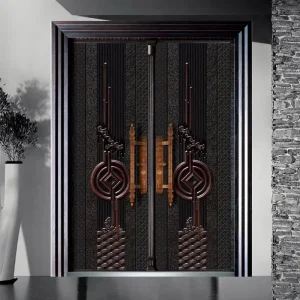
For oceanfront properties facing continuous salt spray, high humidity, and direct Category 4-5 hurricane threats, our Fluorocarbon PVDF coated aluminum pivot doors and cast aluminum double doors deliver ultra-luxurious visual appeal with zero risk of timber warp or steel rust corrosion.
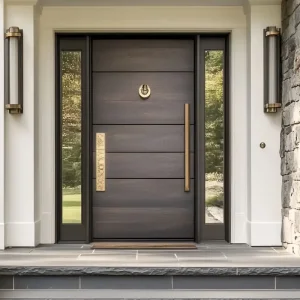
High-traffic public entrances require structural rigidity combined with high operating cycle fatigue resistance. Our heavy-duty floor pivot hardware systems support glass/metal single leaves up to 2,000mm wide by 4,000mm high, rated for 500,000+ open-close operational cycles.
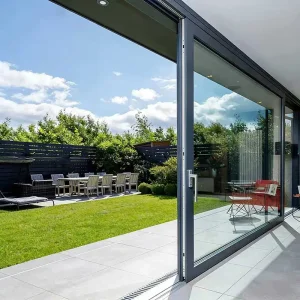
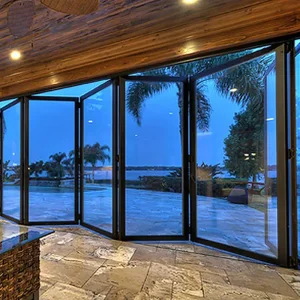
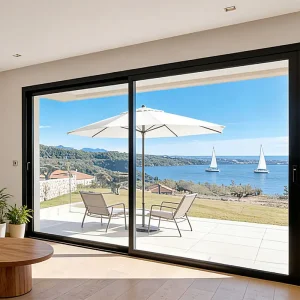
Resort architecture prioritizes seamless indoor-outdoor sightlines. Our thermally broken aluminum impact bi-fold and sliding front door collections feature narrow sightline frames equipped with impact-resistant insulated glass units that reduce HVAC cooling energy costs by up to 30%.
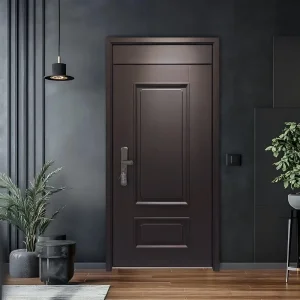
For specialized installations requiring combined explosive blast resistance, bulletproof ballistic protection (UL 752 levels), and hurricane wind defense, our armored steel-wooden and stainless steel double door series provide ultimate peace of mind.
As smart city infrastructure expands and zero-carbon building energy mandates take effect globally, front door engineering is undergoing rapid technological evolution. DERCHI's R&D division is actively driving four core innovation vectors:
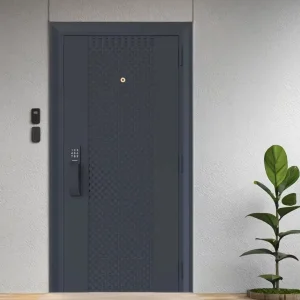
Integrating 3D facial recognition, encrypted smartphone keyless access, and invisible motorized automatic closing actuators directly into thermal break aluminum pivot profiles. Internal wiring channels are shielded inside structural steel cores to resist weather exposure and physical tampering.
Incorporating smart switchable privacy tinting into SGP-laminated hurricane glass units. Simultaneously, integrating silica aerogel thermal insulation strips within profile cavities enables overall door U-values to drop below 0.80 W/(m²·K), matching Passive House efficiency criteria without compromising structural impact strength.
Transitioning primary extrusion raw materials to certified low-carbon aluminum smelted using renewable hydropower. Targeting a 65% lifecycle carbon footprint reduction across all door frame manufacturing processes by 2028.
Embedding micro-fiber optic strain sensors within high-stress pivot hinge points. These sensors continuously report structural frame stress data to building automation systems during hurricane events, providing real-time warnings if envelope structural integrity threshold limits are approached.
Find technical answers regarding structural ratings, customization, logistics, and wholesale procurement terms directly from our senior engineering team.
Complete your architectural procurement schedule with our specialized range of high-security front doors, glass pivot entrances, and soundproof balcony systems.