Explore our engineered collections of cast aluminum, impact glass, hurricane pivot, and stainless steel entrance doors designed for architectural compliance and high thermal efficiency.
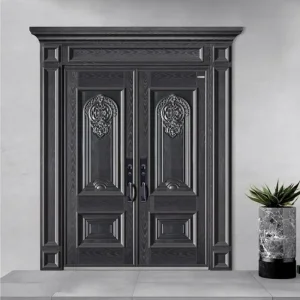
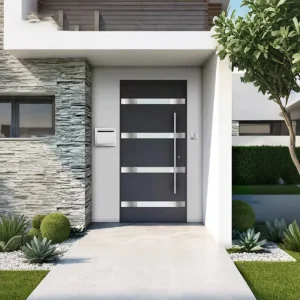
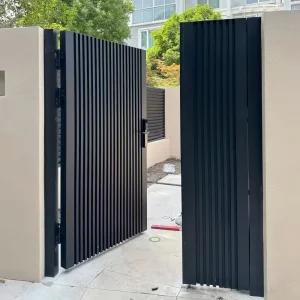
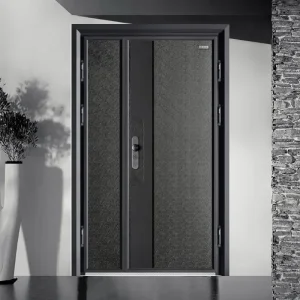
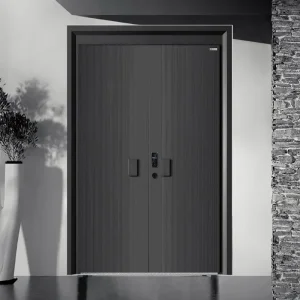
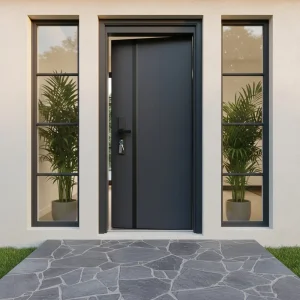
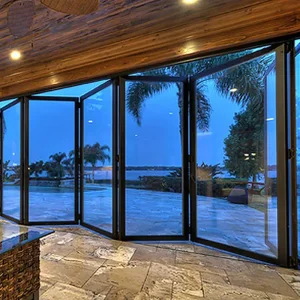
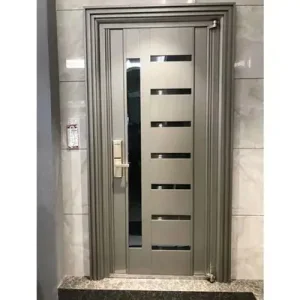
How Foshan's Advanced Glass Entry Door Manufacturing Ecosystem Solves Complex Structural, Thermal, and Aesthetic Challenges for Global Enterprise Procurement.
Modern high-rise commercial lobbies and coastal luxury estates demand entry doors capable of enduring extreme wind pressure without structural deformation. Utilizing heavy-duty 6063-T5/T6 extruded aluminum profiles reinforced with internal steel structural cores, Chinese glass entry door factories engineer systems certified up to AS2047 N6 (3000 Pa water resistance, 4500 Pa wind pressure). Double and triple laminated safety glass assemblies utilizing SentryGlas® (SGP) interlayers ensure zero penetration under violent hurricane force winds.
Glass entry doors have historically presented thermal bridge vulnerabilities within building envelopes. Today’s industrial manufacturing integrates polyamido-thermal break strips (PA66 GF25) ranging from 24mm to 34mm, combined with warm-edge spacers, Low-E argon-filled Insulating Glass Units (IGU), and aerogel core insulation. Achieve U-Factors as low as 1.2 W/(m²·K) to meet stringent North American NFRC standards and European Passive House regulations.
Urban hospitality developments, executive headquarters, and luxury multi-family residences require strict sound attenuation. By combining asymmetric glass thicknesses (e.g., 8mm exterior + 1.52mm Acoustic PVB + 6mm interior) with multi-point pneumatic compression seal gaskets (EPDM rubber), glass entry door systems achieve sound transmission loss ratings of up to 42 dB STC, effectively isolating interior spaces from metropolitan noise pollution.
Inside DERCHI’s 180,000 m² Automated Manufacturing Campus in Foshan, Guangdong: Seamless Vertical Integration from Raw Billet to Crated Export Door.
Unlike regional assembly workshops that rely on third-party profile suppliers, leading Chinese manufacturers maintain internal aluminum billet casting, extrusion dies, heat treatment ovens, and anodizing lines. Primary 6063 aluminum ingots are alloyed under strict spectroscopic analysis, yielding profiles with tensile strength exceeding 205 MPa and Webster hardness above 12 HW. This structural foundation prevents sagging or warping in large pivot leaves reaching up to 2,000mm x 4,000mm.
Precision is the single factor determining whether a 400kg glass pivot door glides effortlesly or binds over time. DERCHI utilizes German-imported 5-axis CNC machining centers capable of milling hinge pockets, smart-lock mortises, and drainage channels within a tolerance of ±0.02mm. Fully automated laser alignment systems verify squareness across 3D planes before assembly.
Glass processing occurs in cleanroom environments with automated washing, robotic butyl sealant extrusion, gas filling (Argon 95%+ purity verification), and dual-seal polysulfide edge bonding. Tempering furnaces feature advanced convection heating to eliminate optical distortion, roller wave, and bow, ensuring crystal-clear architectural views.
A Comprehensive Technical Evaluation Framework for Commercial Developers, General Contractors, and Architectural Procurement Directors.
Procuring glass entry doors for international real estate developments requires navigating a complex matrix of building codes, structural loads, energy conservation standards, and security specifications. The matrix below outlines how Chinese OEM/ODM manufacturing capability aligns directly with global architectural requirements:
| Procurement Pillar | Technical Specification Target | Standard Test Compliance | OEM Factory Engineering Solution |
|---|---|---|---|
| Structural Integrity | Wind Pressure: ≥ 4.5 kPa Deflection Limit: L/175 |
AS2047 (AU), ASTM E330 (US), EN 12210 (EU) | Steel-reinforced heavy profile chamber, solid brass/stainless steel pivot hardware rated to 500kg leaf weight. |
| Thermal Envelope | U-Factor: ≤ 1.4 W/(m²·K) SHGC: 0.22 - 0.35 |
NFRC 100/200, ISO 10077-2, Title 24 Compliant | Multi-chamber PA66 GF25 thermal breaks, triple Low-E silver coating glass, warm edge TPS spacers with argon gas. |
| Water & Air Infiltration | Air Leakage: ≤ 0.5 m³/(h·m) Water Tightness: ≥ 600 Pa |
ASTM E283 / E331, EN 12207 / EN 12208 | Continuous EPDM compression seals, concealed sub-frame drainage paths, drop-down automatic acoustic bottom seals. |
| Forced Entry & Safety | Resistance Class 3 (RC3 / PAS 24) Bullet Resistance: UL 752 Level 3 |
UL 752, EN 1627-1630, BS EN 356 (P6B) | SGP laminated security glass, multi-point hook locks, anti-drill cylinder plates, 304 stainless steel reinforcement. |
| Surface Durability | Salt Spray: > 3,000 Hours AAMA 2605 Powder Coating |
Qualicoat Class 2 / Class 3, AAMA 2605, ISO 9227 | 7-step chromate-free pretreatment followed by PVDF fluorocarbon spraying or anodic oxidation for marine environments. |
From Passive Energy Harvesting to IoT-Integrated Smart Envelopes: Key Technological Trajectories Driving the Industry.
The next frontier in thermal performance involves replacing traditional argon gas gaps with 0.3mm vacuum layers separated by microscopic support pillars. VIG glass entry doors achieve U-values as low as 0.60 W/(m²·K)—matching the insulation performance of solid insulated brick walls while maintaining razor-thin profile sightlines.
Integrating dynamic SPD (Suspended Particle Devices) and Polymer Dispersed Liquid Crystal (PDLC) films allows glass entry doors to transition from fully transparent to completely opaque in under 100 milliseconds via smartphone app, home automation ecosystems, or integrated wall sensors. Automatic solar heat gain adjustment drastically reduces summer HVAC loads.
Future glass entrance systems merge invisible structural design with advanced electronics. Heavy-duty magnetic levitation motor drives concealed within the upper frame allow whisper-quiet touchless opening, activated by 3D facial recognition, palm vein scanning, or encrypted Bluetooth low-energy (BLE) tags.
Bridging the Gap Between Chinese Manufacturing Powerhouses and International Site Execution.
Our dedicated engineering department issues comprehensive shop drawings within 48 hours of schedule receipt. Detailed cross-sections, head/sill jamb attachment details, glass dead-load calculations, and REVIT BIM blocks ensure seamless architectural integration prior to factory sign-off.
Every product series is backed by verified laboratory test reports from accredited institutions (Intertek, SGS, TUV). Complete documentation sets include CE Declaration of Performance (DoP), AS2047 test certificates, NFRC energy rating labels, and ISO 9001 quality audits.
Glass and heavy pivot frames demand zero-risk packaging logistics. Products are wrapped in 100-micron anti-scratch film, edge-protected with EPE shock absorption foam, packed into 5-layer corrugated cartons, and fully enclosed in fumigation-free ISPM-15 compliant plywood crates with internal steel strapping.
Comparing Structural Component Materials, Glazing Configurations, and Mechanical Hinges.
While standard tempered glass provides impact safety by shattering into tiny dull cubes, high-end architectural entrance glass utilizes SGP (SentryGlas® Interlayer) Laminated Glass. SGP interlayers are 5 times stiffer and up to 10 times stronger than standard PVB films. If broken, the glass panel remains standing under wind load, preventing intrusion and envelope collapse during major storm events.
For oversized entry leaves exceeding 1,200mm in width or 300kg in weight, traditional side hinges create immense rotational shear on door jambs. Heavy-duty bottom floor pivots distribute 95% of the leaf weight directly into the structural slab. Stainless steel hydraulic floor springs provide adjustable two-speed closing controls, 90-degree hold-open functions, and soft-closing dampening.
Direct Answers from Senior Door Engineers and Export Procurement Managers.
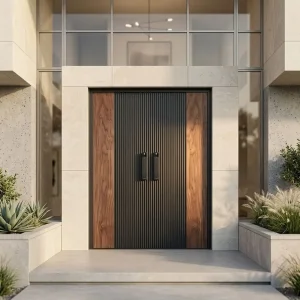
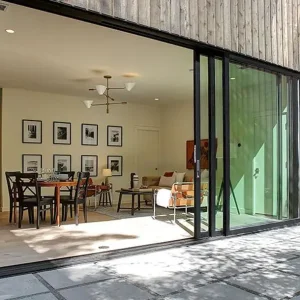
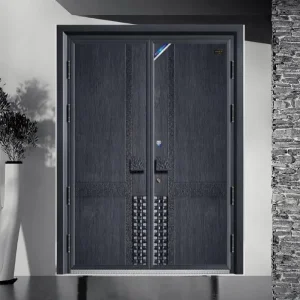
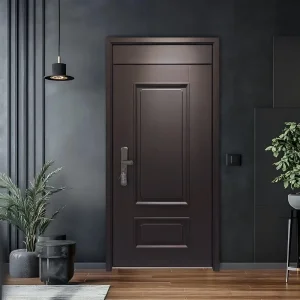
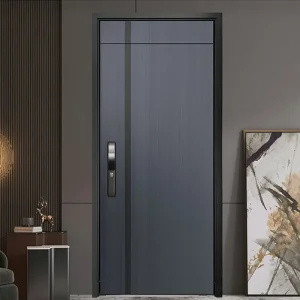
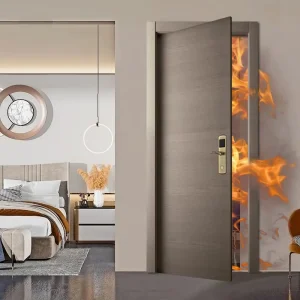
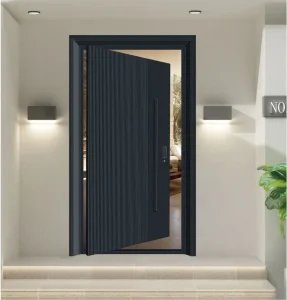
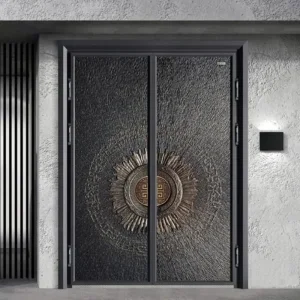
From minimalist aluminum pivot systems to bulletproof cast aluminum doors, discover our full engineering portfolio built in Foshan, China.
Full transparency protocol matching DERCHI’s corporate footprint, contact information, export credentials, and Schemas.
Entity: DERCHI Doors and Windows (Guangdong Deji Youpin Doors and Windows)
Factory Address: Building 19, Shenke Chuangzhi Park, No. 6 Xingye East Road, Shishan Town, Nanhai District, Foshan City, Guangdong, China.
Direct Sales Hotline: +86-15878811461 | Email: [email protected]
Export Markets Served: United States, Canada, Australia, United Kingdom, Philippines, United Arab Emirates, Saudi Arabia, Germany, and 60+ countries worldwide.
• ISO 9001:2015: Quality Management System Certification for extrusion, assembly, and glass glazing.
• AS2047 / NFRC Tested: Australian and North American certified performance metrics for acoustic, air, water, and thermal indices.
• CE Mark & UL Reference: Verified structural fire-resistance and safety performance for international building codes.
