Direct factory production models incorporating precision CNC machining, tempered glass processing, and heavy-duty concealed stainless steel patch fittings.
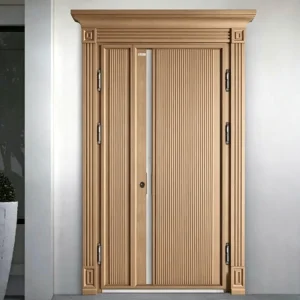
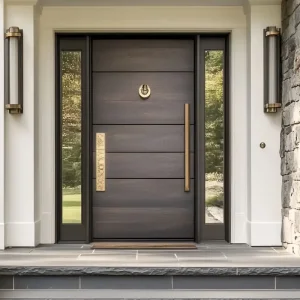
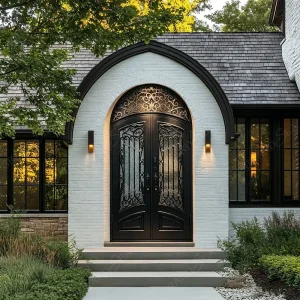
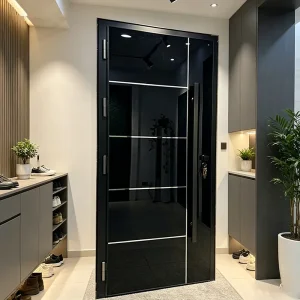
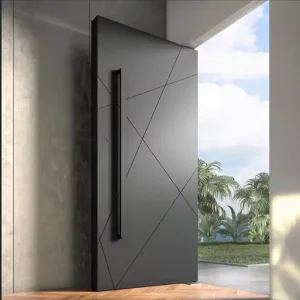
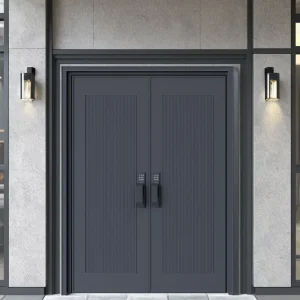
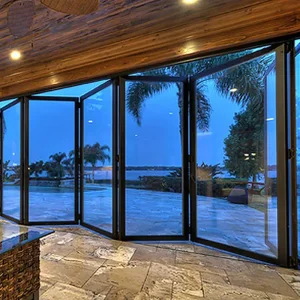
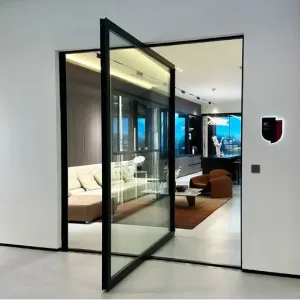
Comprehensive engineering insights into modern frameless glass entry systems: structural load balancing, glass composition dynamics, and long-term mechanical reliability.
Frameless glass entry doors represent the pinnacle of modern architectural minimalism, eliminating traditional perimeter metal mullions in favor of continuous glass surfaces. However, achieving structural safety without frames requires rigorous mathematical modeling of glass deflection. In high-rise commercial grand entrances and luxury residential gates, doors must withstand extreme horizontal wind loads (up to 4.5 kPa) without experiencing structural fatigue or glass edge binding. By deploying heat-strengthened low-iron toughened glass coupled with SGP (SentryGlas® Plus) ionoplast interlayers, Chinese manufacturers achieve stiffness structural ratings up to 5 times greater than standard PVB interlayers.
The mechanical heart of a frameless glass entry door is its concealed floor pivot or overhead closer assembly. Standard hinges are replaced by precision CNC-machined SUS316 stainless steel patch fittings, top pivots, and hydraulic floor springs rated for opening cycles exceeding 500,000 movements. Modern Chinese suppliers integrate adjustable oil-pressure damping valves that provide dual-stage speed control, anti-slam resistance under sudden gusts, and hold-open lock states at 90 degrees, offering seamless operation for high-traffic commercial environments.
Historically, frameless entry doors were constrained to mild climates due to perimeter air filtration and low thermal resistance. China's top-tier manufacturers have overcome this barrier through multi-layered double glazed (IGU) structural glass panels featuring warm-edge spacer bars, argon gas filling, and dual-layer low-emissivity (Low-E) coatings. When paired with high-performance clear silicone weather-seals and magnetic sweep gaskets at the header and sill, these frameless entry systems achieve thermal transmittance values (U-factors) down to 1.6 W/(m²·K) and sound transmission class (STC) acoustic attenuation up to 42 dB.
In Foshan and regional Chinese production hubs, frameless entry door manufacturing utilizes fully automated Italian ceramic-print CNC cutting beds, waterjet cutout machinery for patch hardware notches, and force-convection horizontal tempering furnaces. Glass edges undergo diamond flat-polishing and arrissing to prevent stress concentrations. Every door leaf undergoes SOST (Heat Soak Testing) to eliminate spontaneous explosion risks caused by nickel sulfide (NiS) inclusions, meeting strict European EN 14179 standards.
| Glass Build-Up / System | Structural Interlayer | Max Single Leaf Size | Wind Load Rating | U-Factor (W/m²K) | Primary Commercial Use |
|---|---|---|---|---|---|
| 12mm - 19mm Monolithic Toughened | N/A (Fully Tempered) | 1600mm × 3200mm | 2.4 kPa (DP50) | 5.7 W/m²K | Interior Entrances, Boutique Retail |
| 8mm + 1.52SGP + 8mm Structural Laminated | SentryGlas® Ionoplast (1.52mm) | 2000mm × 4000mm | 4.5 kPa (DP90) | 4.8 W/m²K | Hurricane Zones, High-Rise Lobbies |
| 6mm Low-E + 12Argon + 6mm Laminated IGU | 0.76PVB + Warm Edge Spacer | 1800mm × 3600mm | 3.2 kPa (DP65) | 1.6 W/m²K | Cold-Climate Flagship Buildings |
| Smart Electrochromic PDLC Laminated | PDLC Smart Film + EVA | 1500mm × 3000mm | 2.8 kPa (DP55) | 2.2 W/m²K | Executive Boardrooms, Luxury Villas |
Analyzing structural glass adoption across key geographic zones: regulatory drivers, architectural specifications, and supply chain logistics.
Driven by strict ASTM C1048 safety standards and NFRC energy ratings, North American procurement teams mandate frameless entries equipped with heavy-duty structural glass fittings, panic bar integration, and ADA-compliant low-profile thresholds. Demand for custom oversized pivot doors in coastal residential and tech headquarters is expanding at a 7.4% CAGR.
EU building regulations focus heavily on thermal efficiency (EN 14351-1) and pendulum impact safety testing (EN 12600). Chinese suppliers serving Europe provide low-E double-glazed insulated frameless panels engineered with thermal-break patch hardware and high acoustic dampening to comply with strict urban energy efficiency mandates.
High solar heat gain coefficient (SHGC) protection and extreme ambient temperature stability are critical in the GCC region. Glass systems specify spectrally selective solar-control coatings combined with dust-sealed perimeter gaskets, ensuring structural resilience against thermal stress fractures under desert climate cycles.
Export-ready manufacturing protocols verified by international testing agencies and certified structural calculations.
To streamline local building permit approvals, premier Chinese suppliers issue direct test reports covering key performance metrics: ASTM E330 (Structural Performance by Uniform Static Air Pressure), AS2047 / AS1288 (Australian Window & Glazing Standards), and SGCC (Safety Glazing Certification Council) marks. Every production batch of tempered frameless glass undergoes optical distortion checking, surface compression stress measurement (>90 MPa), and dimensional tolerance verification within ±0.5mm.
Enterprise buyers receive full BIM / CAD shop drawing services, complete hardware load schedule calculations, structural silicone depth engineering, and step-by-step installation guides tailored for local site teams. Dedicated structural engineers provide signed calculations for wind pressure deflection limits (L/175 or L/240), ensuring frictionless sign-offs by municipal building inspectors.
Frameless entry systems engineered for high-visibility commercial spaces, luxury hospitality, and high-end residential architecture.
Oversized double-leaf frameless glass pivot doors create uninterrupted structural transparency in corporate main foyers. Equipped with automated floor-spring actuators, access control card readers, and electromagnetic locking devices, these doors support heavy foot traffic while providing enterprise-grade security.
Retail environments require maximum visual clarity to showcase interior merchandise. Utilizing ultra-clear low-iron glass (iron oxide content <0.015%) and slim-line brushed stainless steel top-and-bottom rails, frameless entry doors maximize light transmission without color distortion.
For modern luxury residential projects, grand entry pivot doors reaching up to 4 meters high blend indoor and outdoor spaces seamlessly. Options include integrated smart electrochromic glass for instant privacy at the push of a button or custom vertical pull handles with biometric fingerprint sensors.
Pioneering smart structural glass technology, advanced vacuum insulation, and zero-carbon door manufacturing processes.
The next frontier for thermal efficiency in frameless glass entries is Vacuum Insulated Glass. By creating a 0.1mm micro-vacuum cavity between two glass panes held apart by microscopic ceramic pillars, VIG delivers thermal insulation U-factors under 0.60 W/(m²·K)—equivalent to a solid brick wall—while maintaining a profile thin enough to fit standard frameless patch fittings.
Next-generation hardware design isolates interior stainless steel pivot mechanisms from exterior cold bridging using high-strength polyamide thermal breaks within the top and bottom rails. This advancement eliminates condensation risks on the internal hardware in freezing climates while preserving true frameless aesthetics.
Future frameless glass systems incorporate wireless inductive power transfer loops directly embedded within the glass laminates. This powers integrated facial recognition cameras, biometric glass touch sensors, and dynamic privacy glass without visible wiring or external power cords disrupting the clean perimeter look.
Integrating transparent cadmium telluride (CdTe) or perovskite solar cells into the entry door glass structure allows grand entrance facades to generate clean electricity from ambient daylight, turning large structural doors into active energy-producing assets for net-zero buildings.
Explore our broader portfolio of hurricane-impact, fire-rated, anti-theft, and custom pivot entrance systems engineered for export projects worldwide.
In-depth answers addressing structural calculations, hardware safety factors, weatherproofing, and international export logistics.
Frameless glass entry doors prevent water penetration through a combination of concealed drop-down bottom seal mechanisms, perimeter clear polycarbonate fin gaskets, and architectural trench drain channels installed beneath the sill threshold. For exterior openings exposed to direct rainfall, dual-lip magnetic sweep seals combined with an exterior sloped threshold divert water away from the door base while maintaining a flush, barrier-free floor transition.
For oversized frameless entry leaves exceeding 2.5 meters in height, monolithic glass is typically replaced by SGP laminated safety glass (e.g., 8mm Toughened + 1.52mm SGP + 8mm Toughened) or double-glazed insulated laminated units (e.g., 6mm Low-E + 12mm Argon + 6mm Toughened Laminated). SGP ionoplast interlayers provide structural rigidity, ensuring the leaf maintains zero optical bow and stays securely in place even if the glass experiences extreme mechanical impact.
Concealed hydraulic floor springs require a recessed cement box cutout in the finished slab floor, typically measuring 270mm (L) × 120mm (W) × 55mm (D). The floor box must be cast in solid concrete with non-shrink structural grout and aligned with laser precision relative to the top pivot axis. For post-tensioned slabs or radiant heating floors, shallow-depth floor pivots (depth <40mm) or heavy-duty top-offset header closers can be specified to prevent slab penetration.
Every frameless glass leaf is protected with high-density EPE foam corner caps, vacuum-sealed in protective polythene film, and enclosed inside fully sealed, fumigation-free plywood crates with internal rubber dampening pads. Glass panels are loaded vertically on heavy-duty A-frame shipping racks with steel banding and anti-vibration rubber sheets, keeping transit damage rates below 0.1% across international sea routes.
Yes. Smart access controls can be integrated using wireless electric strike locks in the transom header, fail-safe shear locks, or concealed magnetic locks capable of up to 1,200 kg holding force. Power cables and signal wires pass discreetly through header channels or side patch fittings, allowing integration with keypads, RFID card scanners, and building management systems (BMS).
Our manufacturing output carries comprehensive verification packages including ISO 9001 factory audits, SGCC / ANSI Z97.1 certification for North America, CE / EN 12150 test evidence for Europe, and AS/NZS 2208 compliance for Australia and New Zealand. Every project shipment includes full material traceability certificates for glass, interlayer films, and hardware alloys.
