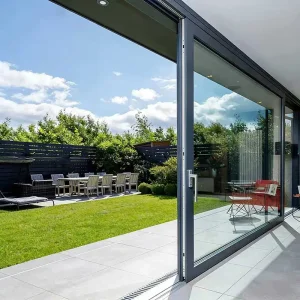
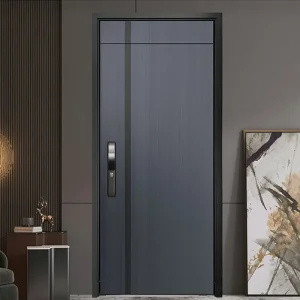
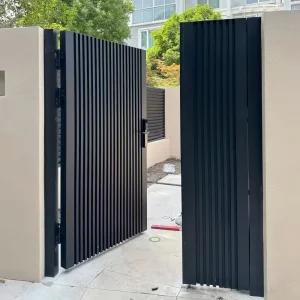
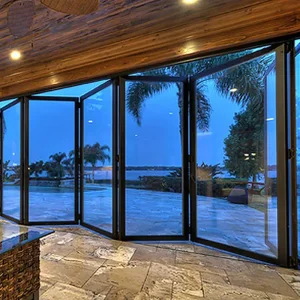
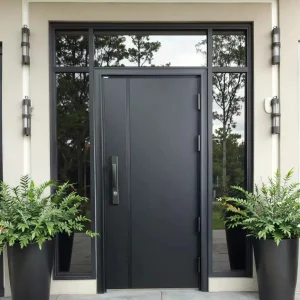
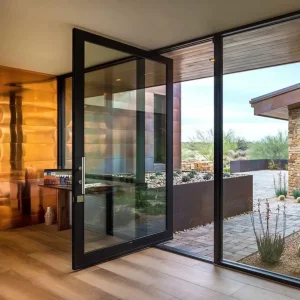
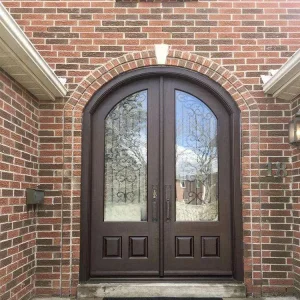
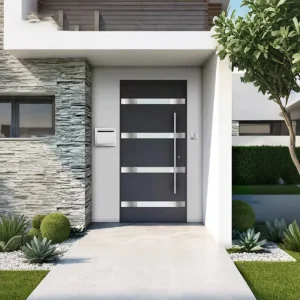
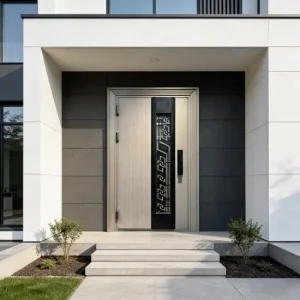
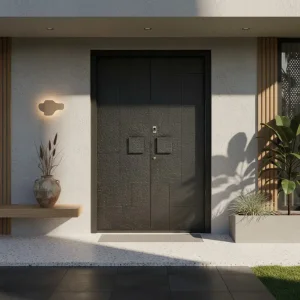
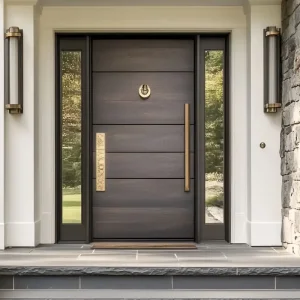
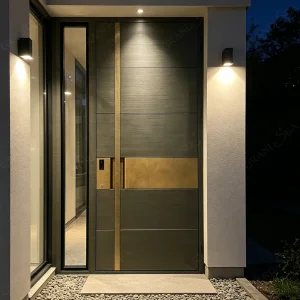
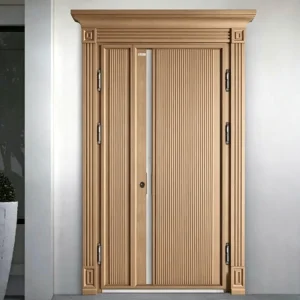
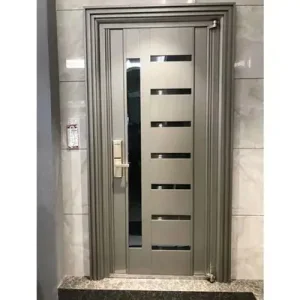
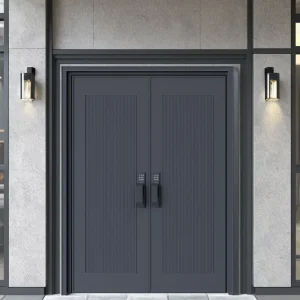
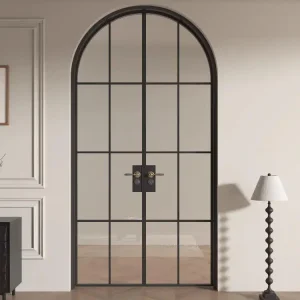
Precision-engineered entrance solutions tested to CE, ISO9001, and AS2047 international standards.
Commercial real estate developers, architectural specifiers, and industrial facility managers globally are facing unprecedented pressure to reduce operational carbon footprints. The entrance door—historically viewed primarily through the lens of structural security and aesthetics—is now recognized as a critical vector in thermal envelope insulation performance.
Regulatory frameworks such as North America's IECC & ASHRAE 90.1, the European Union's EPBD Directive, and Australia's NCC Energy Efficiency Standards require entrance door assemblies to deliver ultra-low thermal transmittance (U-Factors ≤ 1.4 W/m²K). OEM manufacturers must incorporate continuous polyamide thermal breaks, multi-cavity chamber profiles, and low-emissivity structural glazing to comply.
Modern commercial hubs and high-end residential estates demand dual-benefit entrance systems. OEM custom doors must combine thermal insulation with high-wind load resistance (e.g., AS2047 N6 rating, ASTM E1886/E1996 hurricane impact standards), anti-prying multi-point locking hardware, and fire-rated integrity without sacrificing aesthetic design language.
Building owners are shifting from capital expenditure (CapEx) minimization to total cost of ownership (TCO) optimization. Energy-efficient entry doors prevent thermal bridging, lower HVAC energy loads by up to 18% in high-traffic portals, reduce condensation-related structural decay, and extend the functional operational lifecycle of commercial entrances to 25+ years.
China’s Foshan door and window manufacturing hub represents the world's most concentrated, vertically integrated supply chain ecosystem. For international B2B importers, contractors, and brand distributors, sourcing OEM energy-efficient entrance doors from specialized Foshan factories yields unparalleled advantages in structural precision, material customization, and economies of scale.
Unlike Western assembly plants that rely on fragmented third-party profile extruders and hardware brokers, top-tier Chinese OEM factories like DERCHI Doors and Windows control the full manufacturing chain:
Scale production in Foshan combines heavy industrial automation with strict quality control checkpoints, drastically cutting lead times while eliminating human error:
Comprehensive benchmark comparison of custom OEM entry door platforms engineered by Chinese factories for export projects.
| Door Material Platform | Core Structural Build-Up | Thermal U-Factor W/(m²·K) | Acoustic Rating (STC / Soundproof) | Wind Load / Water Tightness | Ideal Architectural Application |
|---|---|---|---|---|---|
| Thermally Broken Aluminum | 6063-T5 aluminum, PA66GF25 insulation strip, PU foam cavity core | 1.4 – 1.8 | 35 – 42 dB | Up to AS2047 N6 (3000 Pa wind / 600 Pa water) | Contemporary villas, modern commercial facades, high-end residential main entrances. |
| Heavy-Duty Cast Aluminum | 6–12mm solid sand-cast aluminum relief panel bonded to thermal aluminum frame | 1.8 – 2.4 | 32 – 38 dB | 2400 Pa structural wind load, high impact resistance | Luxury estate main gates, classical villa entryways, high-security residential entrances. |
| Insulated Architectural Glass | 6+12Argon+6 to 8+1.52PVB+8 triple-glazed Low-E tempered safety glass | 1.2 – 1.6 | 38 – 45 dB | 2800 Pa wind load, certified impact glazing | Commercial office lobbies, hotel entrances, modern glass pivot entrance portals. |
| Stainless Steel Security (304/316) | 1.2–2.0mm SUS304 skin, fireproof rockwool or aluminum honeycomb core | 2.0 – 2.6 | 30 – 36 dB | Maximum forced-entry anti-prying level (Class 4 security) | Commercial back-of-house, extreme climate zones, multi-family apartment security entrances. |
Entry door requirements vary significantly across climate zones and structural typologies. Chinese OEM manufacturers customize profile extrusions, sealing gaskets, and glass specs to meet regional site demands.
In sub-zero regions, exterior entrances are prone to severe heat loss, interior frame frost, and gasket stiffness failure. OEM custom engineering utilizes multi-cavity thermal break profiles filled with ultra-low density polyurethane or aerogel insulation. Combined with triple-pane Low-E argon glass and triple-layer EPDM weatherstripping, frame condensation is entirely eliminated while maintaining comfortable interior temperatures.
Coastal applications demand resistance to wind-borne debris, torrential rain penetration, and severe salt-spray corrosion. OEM doors destined for tropical zones feature heavy-wall 6063-T5 aluminum profiles (2.0mm+ thickness), laminated impact-resistant glass (SGP interlayer), and Marine-Grade PVDF coatings. Concealed drainage channels with anti-backflow valves ensure zero water infiltration under hurricane pressures.
Commercial portals experience thousands of continuous open-close cycles daily. Custom OEM commercial pivot entrance doors utilize heavy-duty hydraulic floor springs rated for 500,000+ cycles and door leaf weights up to 500kg. Automatic drop-down threshold seals activate upon closure, sealing air gaps while ensuring full ADA barrier-free compliance when open.
Architectural residential designs favor oversized pivot doors (up to 2000mm width x 4000mm height) with seamless glass or 3D cast aluminum surfaces. OEM factories integrate smart biometric access (facial recognition, fingerprint scanners, hidden keypad systems) connected directly to smart home automation systems (KNX, Crestron) without thermal bridging.
The entrance door industry is rapidly transforming into a high-tech building envelope sector. Leading OEM manufacturers in China are pioneering critical innovations:
Replacing traditional double glazing with 8.3mm Vacuum Insulated Glass brings U-factors down to an astonishing 0.4 – 0.6 W/(m²·K)—equivalent to a solid insulated brick wall. VIG eliminates heavy triple-pane weight, allowing slimmer aluminum frames and smoother pivot operation.
Integrating silica aerogel nanoporous blankets into multi-chamber profile cavities cuts conductive heat transfer by over 40% compared to standard polyurethane foam, achieving ultra-slim thermal break profiles for ultra-modern minimal sightline designs.
Next-generation OEM doors feature fully integrated, hidden electronic multi-point lock actuators powered by low-voltage wiring transferred through concealed pivot hinges. Supports biometric recognition, encrypted RFID, and remote smartphone control.
How professional overseas procurement managers, developers, and architects streamline OEM door sourcing from China with zero friction.
The project team submits door schedules and elevation drawings. OEM factory engineers produce detailed 2D CAD shop drawings and 3D BIM blocks detailing cross-sections, glass build-ups, and anchoring points for client sign-off.
Custom prototype doors undergo internal laboratory testing for air tightness (ASTM E283), water penetration (ASTM E331), and structural load (ASTM E330) before mass extrusions begin.
Quality controllers inspect profile coating thickness (powder: 60-80µm; PVDF: >40µm), thermal strip shear strength, glass seal continuity, and hardware locking alignment at 5 distinct assembly checkpoints.
Door leaves are wrapped in protective polyethylene film, fitted with heavy-duty EPE foam corner protectors, sealed in 5-layer cartons, and secured inside fumigation-free plywood crates for zero ocean transport damage.
Located in Foshan, Guangdong, DERCHI (Guangdong Deji Youpin Doors and Windows) operates an expansive 180,000 square meter modern manufacturing base housing over 600 skilled technicians and engineers.
Holding more than 100 patents and international certifications (including CE, ISO9001, AS2047 N6 rating), DERCHI provides one-stop OEM/ODM solutions for architectural window and entry door projects across 60+ countries worldwide.
Expert answers to common technical, compliance, and ordering questions from international buyers.
Explore additional energy-efficient pivot, swing, sliding, and security entrance door models.