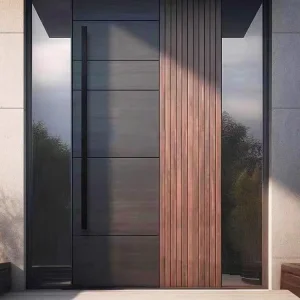
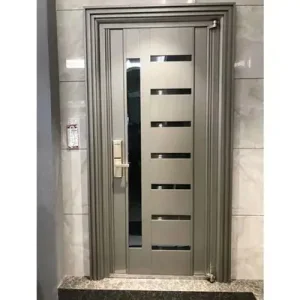
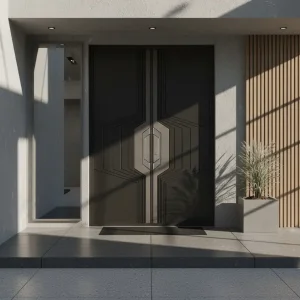
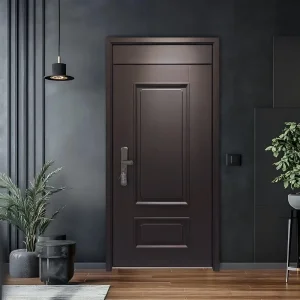
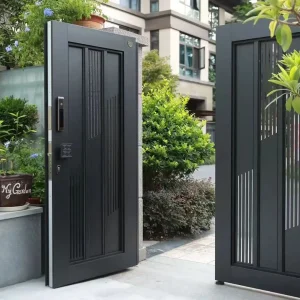
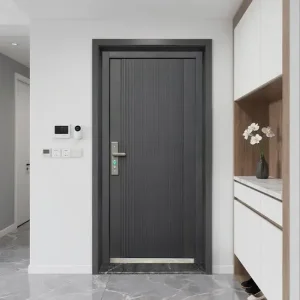
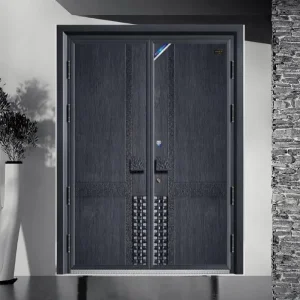
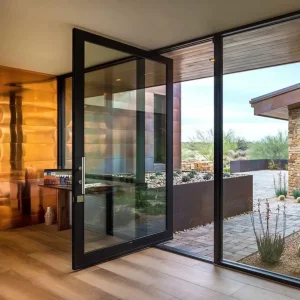
Explore our flagship certified exterior entrance door collections engineered for hurricane resistance, thermal efficiency, and high-security architectural applications.
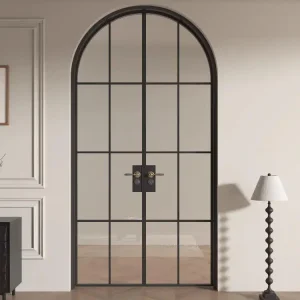
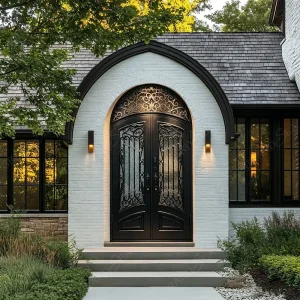
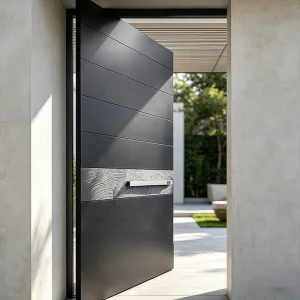
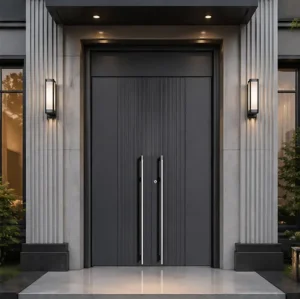
In modern architectural design, entry doors have evolved from static access barriers into multi-functional envelope components required to deliver exceptional thermal resistance, dynamic structural performance, forced-entry security, and striking aesthetic integration. As global building energy codes tighten—such as Europe's Energy Performance of Buildings Directive (EPBD) and North America's IECC requirements—the specification of exterior entrance systems has shifted overwhelmingly toward high-precision thermal break aluminum alloy profiles integrated with engineered structural glass.
China has established itself as the world's leading epicenter for architectural aluminum manufacturing, with Foshan taking center stage as the industrial nexus. A specialized manufacturer like DERCHI combines vertically integrated extrusion metallurgy with advanced CNC milling, automated insulated glass unit (IGU) fabrication, and hand-finished craftsmanship to deliver architectural entrance solutions that strictly comply with international standards including ASTM, EN, AS2047, and NFRC.
Global architectural firms, real estate developers, and commercial general contractors increasingly source custom aluminum glass entry doors directly from tier-one Chinese manufacturers due to unparalleled supply chain advantages. Foshan's manufacturing ecosystem provides distinct structural benefits:
High-density architectural aluminum extrusions featuring profile wall thicknesses of 2.0mm to 3.0mm, preventing warping, bow deflection, and sag on oversized pivot doors.
25% glass-fiber reinforced polyamide thermal break strips effectively eliminate thermal bridging between indoor and outdoor profile faces, lowering door U-values drastically.
Laminated structural glass incorporating SentryGlas® interlayers engineered to withstand Florida HVHZ missile impact tests and 3,000 Pa cyclic wind loads.
Rigorous comparative performance data designed for architectural specification writers, structural engineers, and commercial procurement managers.
| System Architecture | Structural Alloy / Skin | Thermal Barrier / Core | Max Leaf Dim. (W×H) | Thermal U-Factor | Acoustic Rating | Key Standard Compliance |
|---|---|---|---|---|---|---|
| Thermal Break Glass Pivot Door | 6063-T6 Aluminum (3.0mm wall) | PA66-GF25 34mm Strip + Aerogel | 2,000 × 4,000 mm | 1.4 – 1.8 W/m²K | 38 – 42 dB (STC 40) | AS2047 N6, NFRC, CE EN14351 |
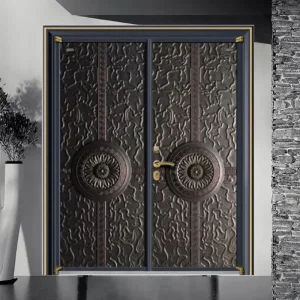
| Cast Aluminum Armour Door | 8mm Cast Aluminum Panel + Subframe | Polyurethane Rigid Foam (55kg/m³) | 1,600 × 3,000 mm | 1.6 – 2.0 W/m²K | 36 – 40 dB | BS EN 1627 RC3/RC4 Security |
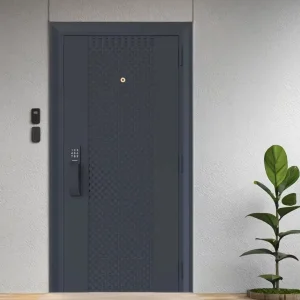
| Stainless Steel Security Entry | SUS304 / SUS316 (1.5–2.0mm) | High-Density Rockwool Core | 1,500 × 2,800 mm | 2.0 – 2.4 W/m²K | 35 – 38 dB | UL 10C 90-Min Fire Rated |
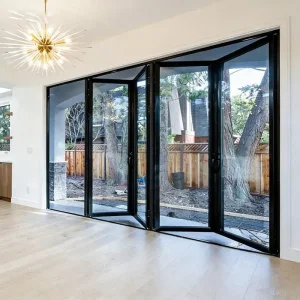
| Bi-Fold Glass Entrance System | 6063-T5 Aluminum (2.2mm wall) | Multi-Cavity PA66 Thermal Break | 1,000 × 3,200 mm/panel | 1.5 – 1.9 W/m²K | 34 – 38 dB | Florida HVHZ Impact Approved |
Designing high-end custom aluminum glass entry doors requires balancing structural mechanics with thermodynamics. Large-format pivot doors and oversized hinged doors experience immense gravity loads, thermal contraction/expansion stresses, and dynamic wind loading.
Aluminum is inherently a high-conductivity metal (k ≈ 200 W/m·K). To render it suitable for harsh climate zones, modern extrusion designs incorporate dual or triple polyamide (PA66-GF25) strips creating an isolated thermal chamber. DERCHI entrance systems introduce high-density expanded polyurethane (PU) or aerogel infill within profile cavities to restrict convection currents inside the frame. Furthermore, continuous co-extruded EPDM (Ethylene Propylene Diene Monomer) triple weatherstripping ensures air infiltration resistance below 0.05 cfm/ft² in accordance with ASTM E283 standards.
The glass pane of an entrance door is not merely decorative; it functions as a primary structural element. We specify engineered insulated glass units (IGUs) incorporating:
A high-performance door system is only as reliable as its load-bearing hardware. DERCHI integrates German-engineered floor pivots and concealed hydraulic door closers capable of handling leaf weights up to 800 kg. Floor pivots utilize hardened stainless steel pins and sealed roller bearings capable of enduring over 1,000,000 operating cycles without vertical drift or leaf deflection. Multi-point motorized locking mechanisms automatically deploy hardened steel deadbolts into the frame header and sill upon closure, interfacing smoothly with modern smart home automation, biometric sensors, and RFID control systems.
Navigating global building codes is essential for overseas procurement teams. A reputable manufacturer must provide verifiable third-party lab testing and compliance documentation:
Compliance with NFRC 100/200 thermal rating standards (U-Factor, SHGC, Visible Transmittance) and ASTM E330 structural performance testing for Florida HVHZ hurricane resistance.
Certified under AS2047 and AS1170 for wind pressure (up to N6 / 4400 Pa ultimate strength), water penetration (up to 600 Pa), and BAL-40 / BAL-FZ bushfire attack protection.
Compliant with EN 14351-1 for exterior pedestrian doorsets, featuring EN 1627 anti-burglary resistance class RC2/RC3/RC4 ratings and CE marked documentation.
Tailored entry door configurations designed to thrive under extreme environmental pressures and specific project topologies across the globe.
Challenge: Salt spray corrosion, high coastal wind pressure, and humid air intrusion.
Solution: AAMA 2605 compliant PVDF fluorocarbon coatings on 6063-T6 aluminum combined with SGP hurricane glass and 316 marine-grade stainless steel hardware.
Challenge: High daily foot traffic, strict energy retention goals, emergency egress compliance.
Solution: Heavy-duty oversized aluminum glass pivot doors equipped with Dormakaba heavy-traffic pivots, automated access controls, and panic exit hardware.
Challenge: Severe heat loss, interior frost formation, profile thermal deformation.
Solution: Multi-chamber thermal break profiles with 34mm PA66 strips, triple Low-E insulated glass filled with 90% Argon gas, delivering U-factors < 0.18 BTU/hr·ft²·°F.
Detailed technical and commercial answers from our senior engineering team to assist architects, builders, and importers.
Select from our bespoke architectural range engineered for high structural load capacities, custom metal finishes, and advanced security specs.