Architectural front doors manufactured in Foshan, China, delivering certified thermal break protection, high wind-load resistance, and customizable luxury aesthetic options.
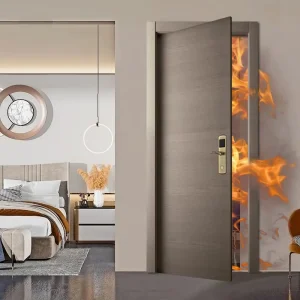
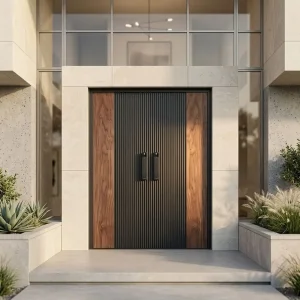
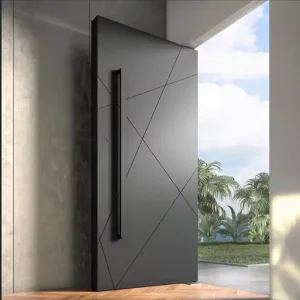
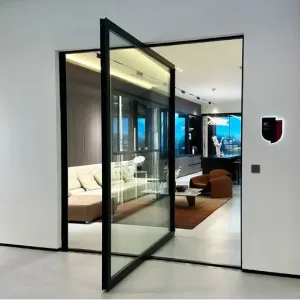
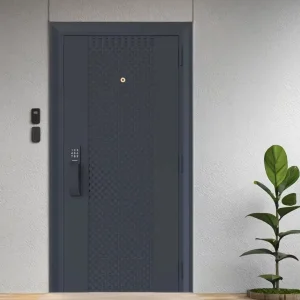
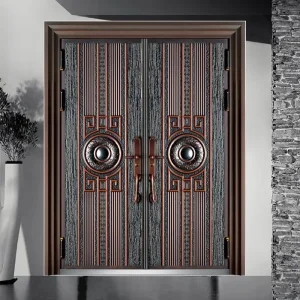
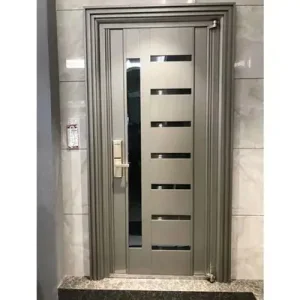
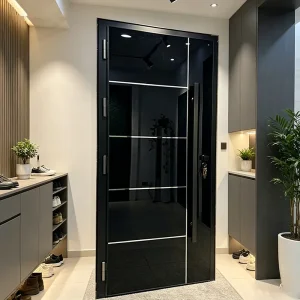
The global architectural envelope sector is undergoing a paradigm shift. Modern entrance systems are no longer passive wooden or basic steel barriers; they have transformed into highly engineered structural systems that integrate energy efficiency, automated access, advanced metallurgy, and bold visual geometry.
Traditional non-thermal aluminum frames allowed significant thermal bridging, resulting in condensation and energy loss. Premier Chinese factories now utilize multi-chambered 6063-T5 aluminum extrusions combined with low-conductivity polyamide glass-fiber reinforced strips (PA66GF25). This layout drops frame U-values below 1.6 W/(m²·K), meeting ultra-strict Passive House and NFRC energy conservation codes.
Contemporary luxury residential and commercial developments demand imposing entrance openings. Standard hinges cannot sustain panel weights exceeding 250 kg. The industry has migrated toward heavy-duty bottom floor pivots rated for up to 500 kg–800 kg leaf capacities. Internal steel tension rods prevent long-term profile deflection across leaves reaching up to 2,000 mm in width and 4,000 mm in height.
Mechanical keys are giving way to integrated smart access hubs. Modern aluminum entrance doors seamlessly incorporate hidden 3D facial recognition, biometric fingerprint scanners, keypad panels, and motorized multi-point lock systems. Wiring channels are precut and concealed inside the structural extrusion profiles during factory assembly for plug-and-play field installation.
Commercial developers, general contractors, and door distributors require rigorous compliance documentation before issuing Purchase Orders. Sourcing from a leading China aluminum entry door factory requires understanding regional building code validation.
For US and Canadian building envelope projects, entry doors must comply with thermal performance ratings (NFRC 100/200 testing for U-Factor and Solar Heat Gain Coefficient) and structural air/water penetration limits (ASTM E283, ASTM E330, ASTM E331). In coastal cyclone regions such as Florida, Florida Building Code (FBC) impact compliance requires heavy-gauge structural glazing and high-velocity hurricane zone (HVHZ) multi-point latching.
The Australian standard AS2047 mandates mandatory evaluation of air infiltration, water penetration resistance (typically up to 600 Pa or higher for N6 ratings), ultimate limit state (ULS) wind pressures up to 3,000 Pa, and deflection limits. Aluminum extrusions must meet AS3715 for architectural powder coating film thickness and corrosion durability.
Detailed 2D CAD cross-sections and 3D BIM models generated per architectural door schedule for client sign-off.
Primary 6063-T5 aluminum ingot verification, anodizing film depth check, and AkzoNobel powder coating cross-hatch adhesion testing.
Sample leaf undergoes pressurized chamber testing for air leakage and rain penetration prior to mass extrusion cutting.
EPE foam edge guards, shrink film, 5-layer heavy cardboard, and ISPM-15 fumigation-free wooden crate enclosures.
Foshan, Guangdong stands as the global nerve center for architectural aluminum manufacturing. The integration of Industry 4.0 automation, comprehensive localized raw material supply chains, and advanced metallurgy provides global buyers with unmatched quality control and cost efficiencies.
Utilizing 5-axis German-built CNC machining centers, automated cutting, notch milling, corner crimping, and lock-pocket routing are performed under digital control. This eliminates human assembly error, ensuring frame squareness tolerances within ±0.5 mm on oversized panels.
Fully automated vertical fluorocarbon (PVDF) spray coating lines and vacuum heat-transfer wood grain systems allow custom finishing to match any RAL color requirement. Coatings are formulated to resist UV degradation, salt spray oxidation, and chalking for over 25 years.
Demand dynamics vary across international regional markets. Premium aluminum entrance door factories tailor structural designs to meet specific commercial and residential application profiles globally.
Architects in coastal California, Florida, and urban centers prioritize ultra-wide glass pivot doors and thermal breaks. Sidelight integration, dark matte black/bronze anodized finishes, and motor-assisted smart lock options dominate project specifications.
Strict European energy performance directives demand extreme U-values (<1.2 W/m²K). Triple-pane Low-E argon-filled glazing combined with multi-chamber polyamides are standard for both residential modern builds and heritage facade refurbishments.
In UAE, Saudi Arabia, and Qatar, main entrance gates face extreme ambient heat (50°C+) and corrosive marine air. Heavy-duty cast aluminum main doors with PVDF powder coatings prevent surface blistering and structural thermal bowing.
Direct technical comparison across primary door manufacturing platforms to assist architects and procurement heads in selecting optimal entrance configurations.
| Door Platform System | Structural Core Build-Up | Thermal Transmittance (U-Value) | Wind Load Resistance Rating | Acoustic Isolation (Rw) | Primary Sourcing Target |
|---|---|---|---|---|---|
| Thermally Broken Aluminum | 6063-T5 Profile + PA66GF25 Insulation Strip | 1.4 – 1.8 W/(m²·K) | Up to 3,000 Pa (AS2047 N6 / ASTM E330) | 35 – 42 dB | Modern Villa Entrances, High-End Residential |
| Sand-Cast Aluminum Gate | 6mm – 12mm Solid Cast Panel Relief | 2.0 – 2.4 W/(m²·K) | Up to 2,500 Pa Structural Pressure | 30 – 35 dB | Classical Villa Gates, Luxury Private Estates |
| Structural Glass Pivot System | Reinforced Perimeter Frame + 30mm IGUs | 1.2 – 1.6 W/(m²·K) | Up to 2,800 Pa Wind Resistance | 38 – 44 dB | Hotel Lobbies, Executive Corporate Fronts |
| Stainless Steel (SUS304/316) | 1.5mm Stainless Skin + Fire-Rated Rockwool | 2.2 – 2.8 W/(m²·K) | Highest Anti-Prying / Impact Class | 32 – 38 dB | High-Security Bank Facilities & Commercial Backs |
Near ocean environments, salt fog causes rapid oxidation of standard hardware and inferior aluminum finishes. Modern Foshan export production specifies SUS316 stainless steel hardware, fluorocarbon (PVDF) multi-coat finishes, and dual-compound EPDM gaskets. This configuration successfully passes 3,000-hour neutral salt spray (NSS) chamber validation.
In typhoon-prone regions (such as Florida, the Caribbean, and coastal Southeast Asia), door assemblies must withstand cyclic pressure loading. Heavy-wall 3.0mm aluminum extrusions coupled with structural silicone structural glazing and multi-point perimeter hook locks ensure zero water ingress during severe storm events.
Aluminum is widely recognized as a premier green building material due to its infinite recyclability without structural property degradation. China's top factories integrate sustainable manufacturing protocols to assist projects in achieving LEED and BREEAM certifications.
Recycling aluminum profiles requires only 5% of the energy needed for primary aluminum production from bauxite. In-factory scrap closed-loop recycling reintroduces clean cutting waste back into high-grade extrusion billets.
Surface treatments utilize zero-VOC, heavy-metal-free architectural powder coatings that eliminate toxic off-gassing, complying with REACH and RoHS environmental standards for indoor air quality.
Unlike wood, which rots, or vinyl, which degrades under UV radiation, structural aluminum entry doors maintain dimensional stability and mechanical strength across more than five decades of heavy daily use.
Direct answers to crucial technical and commercial questions raised by global project managers, architects, and door importers.
Explore high-security stainless steel, hurricane-rated sliding systems, and luxury thermal break pivot entrance assemblies.
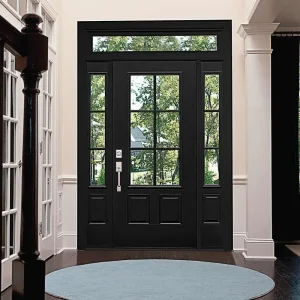
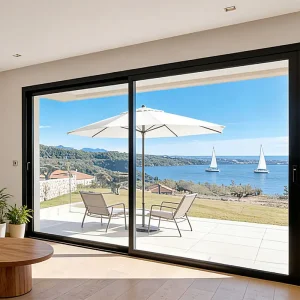
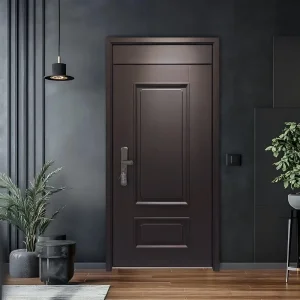
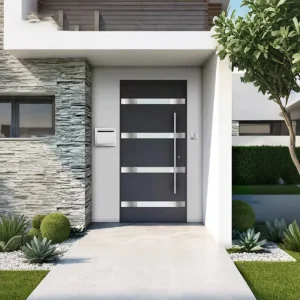
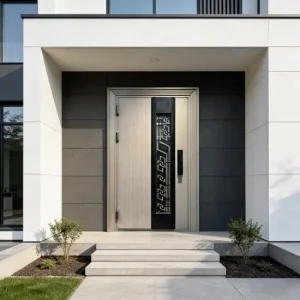
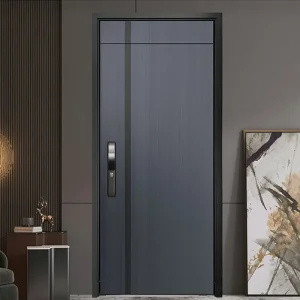
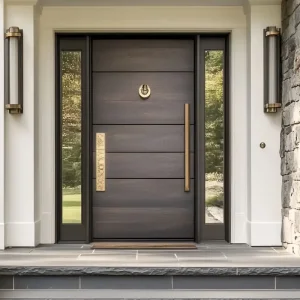
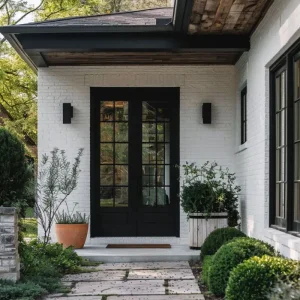
When partnering with a China aluminum entry door factory, enterprise buyers gain access to advanced material science, extensive customization capabilities, and optimized cost structures. Ensuring structural compliance, rigorous QC protocols, and early shop drawing alignment guarantees seamless project delivery across global construction markets.
