Choosing Modern Double Entry Doors means balancing curb appeal with daily performance. A pair of tall doors can make a modest entrance feel generous, especially when morning light reaches the foyer through clear or textured glass. Yet the right choice depends on more than appearance. Measure the opening, check the porch clearance, and consider how each door will swing around furniture, steps, and nearby walls. Small details matter. Measure twice.
Architect Frank Lloyd Wright captured the broader architectural value of interior space: “The space within becomes the reality of the building.” That idea helps explain why an entry should feel welcoming from both sides. Industry data offers another useful perspective. Remodeling magazine’s 2024 Cost vs. Value Report estimated that a steel entry-door replacement recouped 188.1% of its cost at resale, based on its U.S. project averages. This figure concerns a single steel entry-door project, not a guaranteed return for double doors. Local labor, materials, and market conditions can change the result.
This guide will help you compare materials, glass options, security features, weather seals, and hardware without treating style as the only measure. A steel pair may offer strong value, while fiberglass can better mimic painted or stained wood. Solid wood brings warmth, but needs attentive maintenance. There is no perfect door. The aim is a pair that fits the opening, suits the home, and closes cleanly in January as well as July.
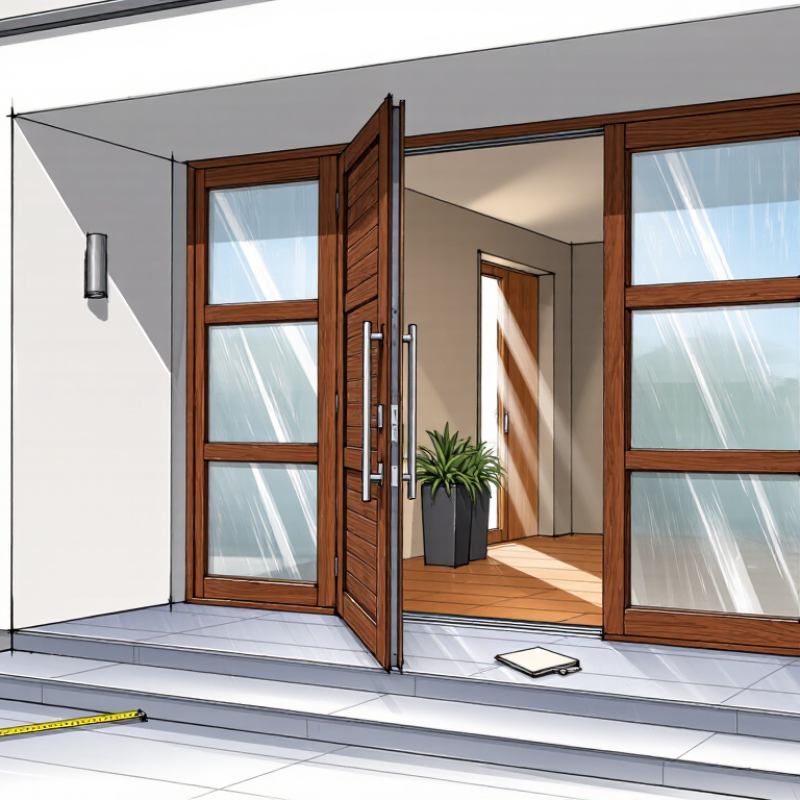
Start with the opening you actually have. Measure the rough opening, wall depth, and clear space on both sides. Double doors need room for two leaves to swing without hitting a stair, cabinet, or parked car. Check whether you need one active leaf for daily use and a second leaf that opens for moving furniture. Small detail, big difference.
Set performance requirements before choosing glass or finishes. The U.S. Department of Energy reports that windows account for about 25%–30% of residential heating and cooling energy use. That figure applies to windows, not entry doors, but it matters when a design includes glazed door panels or sidelights. Compare whole-unit ratings, and check the National Fenestration Rating Council label for U-factor and solar heat gain coefficient. Ask how the frame, seals, and meeting stile perform together. A beautiful center seam can still leak air.
Next, define exposure and security needs. Note whether the entry faces strong wind, driving rain, direct sun, or a noisy street. Ask for tested performance ratings appropriate to the site, plus details on multipoint locking, hinge reinforcement, and threshold drainage. Consider glass privacy, too: clear panels may brighten a dim hall, but reveal more than expected at night. I would leave room for doubt here; ratings help compare products, yet installation quality can change the result. Keep the requirements written down.
Modern double entry doors should be compared by their complete construction, not just the visible surface. Steel doors often offer strong security and low maintenance, though dents and damaged coatings can expose the metal to corrosion. Fiberglass resists moisture and can imitate wood grain, but quality varies with the skin, core, and frame. Solid wood brings natural detail and repairability. It also needs more protection from sun and rain.
Look closely at the meeting stile, where the two door panels close together. Continuous weatherstripping, a firm astragal, and an adjustable threshold help limit drafts and water entry. Ask for documented performance testing under the applicable NAFS standard, which evaluates air leakage, water penetration, and structural performance. Hardware matters, too. Heavy panels need sturdy hinges and accurate alignment. Small gaps become problems.
The 2024 Cost vs. Value report by Zonda and Remodeling reported a national average cost of $2,355 for a steel entry-door replacement, with an estimated $4,430 in resale value. That is a cost comparison, not a lifespan test, and it does not specifically measure double doors. Still, it shows why purchase price alone can mislead. Check the warranty, finish, core, and installation details. I would not assume a heavier door is automatically more durable. Seal quality can matter more.
Compare typical material performance for durability, surface-damage resistance, and ease of maintenance.
Ratings are generalized comparative estimates on a 1–5 scale, not standardized test results. Actual performance depends on construction, finish, installation, and climate. For any material, look for a well-sealed frame, quality weatherstripping, and sturdy hardware; these details also affect a double entry door’s long-term performance.
Modern double entry doors should feel balanced, not merely grand. Choose a style that relates to your home’s lines, roof, and nearby windows. Flat panels suit clean facades, while raised panels add depth to traditional exteriors. Start with the opening. A striking door can still look awkward when its trim competes with the entry.
Measure width and height at several points; older openings may not be perfectly square. Measure twice. Confirm the finished frame dimensions, not just the door slab size, and allow room for hardware and installation. Consider door swing, hallway clearance, and nearby furniture before settling on a configuration. A wider pair can improve access, but it may overwhelm a narrow facade. This detail gets missed.
Glass changes privacy, daylight, and appearance. Clear panes brighten a dim foyer; frosted or textured glass softens views from the street. For strong afternoon sun, choose glazing suited to your climate and ask about insulation performance, safety ratings, and maintenance. Small panes can create a classic rhythm, while large, uninterrupted glass feels lighter. Still, the prettiest option is not always the practical one. View samples beside the exterior in morning and evening light; color can shift more than expected.
For modern double entry doors, security starts at the meeting point between the two panels. Check that the inactive door locks firmly at the top and bottom, and that the active door has a reinforced strike plate and a deadbolt. Ask for documented forced-entry testing, not just a “secure” label. A heavy door can still be vulnerable if its frame shifts or its hinges use short screws. Small details matter.
Energy performance needs careful reading. The U.S. Department of Energy’s Energy Saver guidance estimates that windows account for 25–30% of residential heating and cooling energy loss; that figure is not a measurement for double doors, but it shows why glazed panels deserve attention. Compare NFRC-rated U-factors, and ask for tested air-leakage results for the complete door assembly. Lower U-factors generally mean less heat transfer. For weather resistance, look for performance testing to applicable NAFS standards and ratings suited to local wind and rain exposure. Check the corners. A continuous sill seal, compressed weatherstripping, and a properly flashed frame help keep drafts and driven rain outside. Still, installation can undermine a good rating, so inspect the threshold after the first hard rain.
Modern double entry doors make a strong entrance, but their size demands careful planning. Measure the opening at several points, since older walls may not be perfectly square. Check the floor for level and confirm there is room for both doors to swing without hitting furniture, steps, or a nearby wall. A small measuring mistake can become an expensive fitting problem.
Before installation, discuss the frame, threshold, weather seals, and adjustment needs with a qualified installer. The two door leaves should meet evenly, with secure locking points and hardware suited to frequent use. Choose handles and hinges that feel comfortable and operate smoothly; heavy doors can strain poorly matched fittings. Ask how the doors should be adjusted after seasonal changes. I would not assume the first fit will stay perfect.
Tips: Keep the manufacturer’s care instructions. Wipe tracks and thresholds clean, inspect seals for gaps, and tighten loose screws with the correct tool. Use a gentle cleaner on finished surfaces, and avoid forcing a sticking door. If it continues to drag or will not latch, have the alignment checked before the problem worsens.
| How to Choose Modern Double Entry Doors? — Plan Installation, Hardware, and Ongoing Maintenance | |||
|---|---|---|---|
| Planning Area | What to Check | Practical Guidance | Before You Commit |
| Opening size | Measure the existing frame opening, wall thickness, and finished floor height. | Double-door configurations commonly use two leaves of equal or unequal width. Overall sizes vary; confirm the exact unit dimensions and required rough opening with the manufacturer. | Measure width and height at multiple points. Do not assume the nominal door size equals the rough-opening size. |
| Door swing and clearance | Check the swing direction, porch space, nearby walls, steps, and interior circulation. | Inswing doors need clear interior floor space; outswing doors need exterior clearance and weather-rated components. Local requirements may limit the permitted swing. | Confirm the handing and swing before ordering, and check applicable building and egress requirements. |
| Material and finish | Compare wood, fiberglass, and steel options for appearance, exposure, insulation, and upkeep. | Wood generally needs more frequent finish monitoring. Fiberglass and steel can reduce routine finish work, but all materials need suitable weather protection and care. | Ask about the complete door system, including frame, glazing, finish, and warranty conditions. |
| Energy performance | Review insulation ratings, glazing, weatherstripping, and the threshold seal. | Look for product-specific energy-performance information. Low-emissivity glazing and well-sealed weatherstripping can help reduce heat transfer and drafts. | Compare ratings for the full assembly where available, not just the glass or door leaf. |
| Installation and water management | Inspect the sill area, flashing details, drainage path, and connection between frame and wall. | A properly prepared opening and correctly installed flashing help direct water away from the building. Follow the unit’s installation instructions and local code. | Use an experienced installer for structural changes or uncertain conditions. Confirm who is responsible for flashing and air sealing. |
| Hinges and alignment | Check hinge capacity, fasteners, frame anchoring, and the door leaves’ alignment. | Heavy leaves place greater demands on hinges and the frame. Both leaves should close smoothly without rubbing, binding, or uneven gaps. | Choose hardware compatible with the door’s weight and construction; have loose fasteners or persistent sagging corrected promptly. |
| Locks and inactive leaf | Plan the primary lock, any multipoint system, and the top and bottom bolts on the inactive leaf. | Double doors often use flush bolts to secure the inactive leaf. Lock and bolt arrangements differ, so confirm compatibility with the frame and threshold. | Test operation with both leaves closed. Ensure the bolts engage correctly and the primary lock aligns without forcing the door. |
| Handles and access | Consider handle height, grip comfort, accessibility, and coordination with the chosen lock. | Lever handles can be easier to operate than knobs for many users. Check local accessibility requirements for the project type. | Verify backset, spindle, and lock compatibility before purchasing separate hardware. |
| Weather seals and threshold | Look for continuous perimeter weatherstripping and a threshold that seals evenly. | Worn or compressed seals can allow drafts and water entry. The threshold should not obstruct intended access or create an avoidable trip hazard. | Check that both leaves compress the seals evenly and that the bottom gap is consistent. |
| Routine maintenance | Inspect the finish, seals, hinges, locks, bolts, and threshold periodically. | Clean with products appropriate for the door material. Lubricate moving hardware only as directed by its manufacturer, and replace damaged or hardened weatherstripping. | After severe weather and seasonal changes, check for water entry, loose hardware, sticking, or changes in alignment. |
It depends on your climate and maintenance preferences. Steel can offer strong security and low upkeep, but dents may damage its coating. Fiberglass resists moisture, while solid wood offers natural detail and can be repaired. Wood needs more protection from sun and rain.
Check the center meeting stile, where the doors close. Continuous weatherstripping, a firm astragal, and an adjustable threshold can help limit air and water entry. Small gaps matter.
Review the skin, core, frame, finish, warranty, and installation details. Ask for documented performance testing for air leakage, water penetration, and structural performance. A heavier door is not automatically more durable; seal quality may matter more.
Not necessarily. A 2024 industry report estimated an average steel entry-door replacement cost of $2,355 and resale value of $4,430. That comparison does not measure lifespan or specifically cover double doors, so it is only one clue.
Measure the opening’s width and height at several points. Older openings may be uneven. Confirm the finished frame dimensions, not only the door slabs, and leave room for hardware and installation. Measure twice.
Check hallway clearance, nearby furniture, and the home’s exterior proportions. A wider pair may improve access, but it can overwhelm a narrow facade. This is easy to miss.
Clear panes bring more light into a dim foyer. Frosted or textured glass softens views from the street. Ask about insulation performance, safety ratings, and upkeep, especially in strong afternoon sun.
Compare samples beside the exterior in morning and evening light. Colors can shift noticeably. Flat panels often suit clean facades, while raised panels add depth; still, appearance alone cannot settle the choice.
Choosing Modern Double Entry Doors starts with defining your needs, including the entrance’s dimensions, everyday use, preferred appearance, and budget. Compare available materials and construction methods to understand how they affect durability, maintenance, and long-term performance. Then consider the door style, overall size, and glass options, balancing the amount of natural light and privacy you want with the look of your home.
Before making a final choice, evaluate security features, energy efficiency, and resistance to wind, moisture, and changing temperatures. Accurate measurements and careful planning for installation are essential, as is selecting compatible hardware such as handles, locks, and hinges. Consider how the doors will be maintained over time, including routine cleaning and occasional inspections. By weighing these factors together, you can choose an entryway that suits your home, works reliably, and remains attractive for years.

