Choosing the best Aluminum Entry Door in 2026 means looking beyond a finish that catches the eye. The right door should suit your climate, opening, security needs, and daily routine. A north-facing entrance exposed to wind and rain has different demands from a sheltered porch. Check the frame’s thermal break, the glass specification, hardware quality, weather seals, and installation details. Small gaps matter. So does the threshold beneath your shoes.
Architect Ludwig Mies van der Rohe is often associated with the line, “God is in the details.” It is a useful reminder here: a well-built door can still disappoint if it is poorly measured or installed. Ask suppliers for performance documentation, warranty terms, and clear information about finishes and maintenance. Compare complete door systems, not just panel prices. One detail is easy to overlook: a dark finish may absorb more heat in direct sun, so ask how the chosen product performs in your conditions. Not every premium option is necessary. Nor is the cheapest quote automatically a bargain. This guide will help you weigh materials, glazing, security features, energy performance, appearance, and installation before choosing an Aluminum Entry Door for 2026. A little uncertainty is normal; the best choice depends on your home, not a trend.
Define Your Entryway Needs and Measure the Opening
Before comparing aluminum entry doors, define what your entryway needs to do each day. Note whether the entrance faces harsh sun, driving rain, or a busy walkway. Check how much daylight you want, and whether privacy or a clear view matters more. Small details matter. A door that looks right online may feel awkward when its swing blocks a coat rack or clips a nearby wall.
Measure the opening at the top, middle, and bottom, recording the narrowest width. Measure the height on both sides and in the center. Use a tape measure, and write down each number rather than trusting memory. Measure twice. Separate the door slab size from the rough opening, which includes space for the frame and fitting adjustments. If trim hides the edges, remove it only if you can do so safely; otherwise, ask an installer to verify the opening before ordering.
Also note the threshold height, floor changes, and direction of swing. A small step can affect accessibility, while a tight porch may limit how far the door opens. Check for signs of an uneven frame, such as gaps or a door that sticks. It is tempting to treat one measurement as definitive, but older homes can be out of square. I may be overcautious, yet confirming the dimensions with a qualified installer is cheaper than discovering a mismatch after delivery.
Compare Aluminum Door Types, Frames, and Thermal Ratings
Aluminum entry doors suit clean, narrow sightlines, but their frames conduct heat readily. A hinged door usually seals tightly and works well for busy entrances. Sliding and pivot doors create wider openings, though their seals and hardware need careful inspection. Ask whether the frame has a continuous thermal break, often a polyamide strip separating exterior and interior aluminum. Small details matter.
Compare the complete assembly, not just the glass. The National Fenestration Rating Council’s certified ratings report whole-product U-factor and solar heat gain coefficient (SHGC). U-factor measures heat flow; lower values indicate better insulation. For example, a door rated U-0.30 transfers less heat than one rated U-0.40, all else equal. SHGC describes admitted solar heat, which may help in cold, sunny locations but add cooling load in hot ones. Not just glass.
Check the NFRC label or Certified Products Directory for the exact size and configuration you are buying. A glazed door’s frame, edge seals, and threshold affect performance. The U.S. Department of Energy’s Building America Solution Center also stresses proper air sealing and installation; a strong rating cannot compensate for a draft around the jamb. I would compare rated assemblies, then examine the sill and weatherstripping in person. Ratings are useful, but they do not tell the whole story.
Evaluate Security, Weather Resistance, and Maintenance
How to Choose the Best Aluminum Entry Door in 2026
Choose an aluminum entry door by checking its frame, lock, and weather details—not appearance alone. A rigid frame can help resist forced movement, but security also depends on reinforced lock areas, well-fitted hinges, and a solid strike plate. If the door includes glass, ask how the glazing is secured. Feel the sample, if possible. A sleek finish can hide a flimsy frame.
Weather resistance depends on more than aluminum. Look for effective perimeter seals, a threshold that sheds water, and a thermal break that limits heat transfer. Ask for documented performance ratings appropriate to your local climate, and confirm the installer will seal the frame-to-wall joint correctly. Even a well-made door can leak when fitted poorly. Maintenance is usually simple: wash the surface with mild soap, clear threshold drains, and inspect seals for cracks. Salt and grit deserve extra attention near the coast. One detail buyers sometimes overlook is how easily replacement weatherstripping can be sourced years later.
Tips: Before ordering, measure the opening twice and check which way the door swings. Ask who handles adjustments after installation. Keep the care instructions; guessing with abrasive cleaners can dull the finish.
Match Design Options to Your Home’s Style
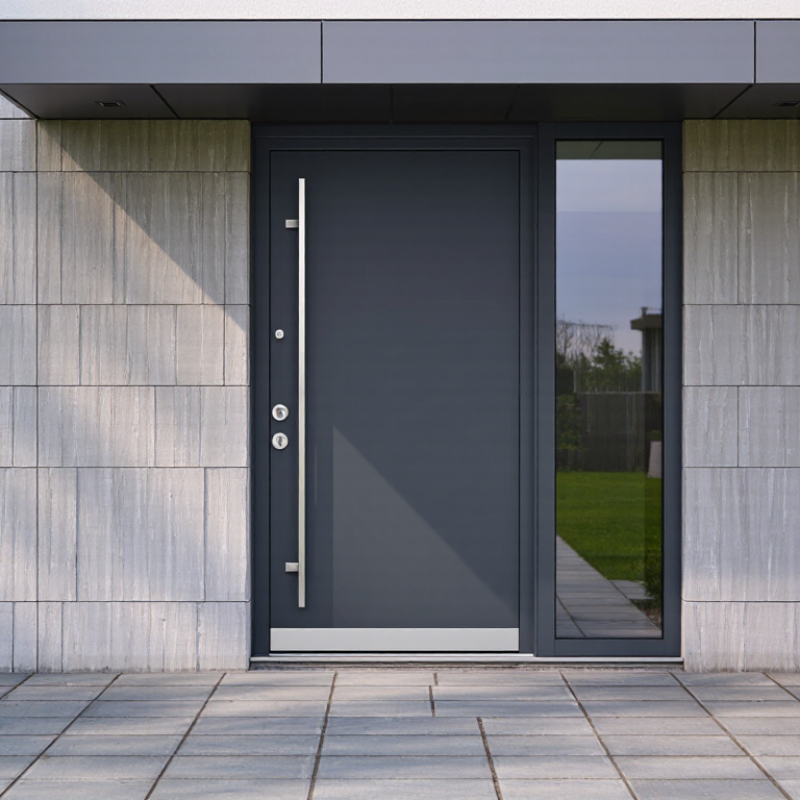
An aluminum entry door can look modern without making the whole house feel stark. Start with the lines already present: window frames, porch columns, roof edges, and trim. A flat panel suits many contemporary homes, while narrow vertical grooves can echo the proportions of older doors. Scale matters. A very wide frame may overwhelm a small entry, even when the finish looks right in a showroom.
Color and glass shape the impression. Charcoal or black often sharpens pale siding and brick, but can feel heavy beside dark stone. Warm bronze or muted gray may blend more gently. Clear glass brings daylight into a dim hall; frosted or patterned glass softens views from outside. Keep it restrained. Too many glass divisions can compete with nearby window grids, though matching every detail is not always necessary.
Hardware deserves the same care as the panel. A long pull handle tends to suit a simple, contemporary facade, while a smaller lever can feel more at home on a traditional exterior. Compare finish samples outdoors, where changing daylight can shift how colors appear. Also check the door’s proportions against the porch and sidelights before ordering. A sample can look perfect on a screen and oddly cold beside real brick. That mismatch is easy to overlook.
How to Choose the Best Aluminum Entry Door in 2026 - Match Design Options to Your Home’s Style
| Home Style |
Suitable Door Design |
Glazing and Details |
Finish Direction |
Practical Selection Notes |
| Modern or contemporary |
Flat, clean-lined slab with a slim frame and minimal visible ornament |
Large glazed panels or narrow vertical sidelights; choose safety glazing where required by local code |
Matte black, charcoal, or a muted neutral |
Check the door’s thermal-break construction and whole-unit energy data, especially in climates with hot summers or cold winters. |
| Mid-century modern |
Simple geometric layout with balanced proportions and restrained detailing |
Vertical glass panels or a carefully proportioned glazed section; privacy glass can soften views while admitting daylight |
Warm bronze, dark gray, or a color that complements the home’s exterior palette |
Use glazing placement to bring daylight into the entry while maintaining the level of privacy the household needs. |
| Traditional or colonial |
Symmetrical design with raised-panel styling or a divided-light appearance |
Small panes, sidelights, or a transom can reinforce a formal entry; confirm whether grilles are decorative or divide the glass |
Classic white, deep green, or a dark neutral suited to the trim |
Compare the full frame and hardware proportions with existing trim so the entry looks balanced rather than overly modern. |
| Craftsman |
Substantial-looking frame with straightforward lines and visible, purposeful detailing |
Rectangular glass panels near the top of the door, sometimes paired with sidelights |
Earthy tones or a finish that coordinates with natural materials |
Consider privacy, daylight, and the appearance of the surrounding casing together when selecting glass area. |
| Farmhouse or transitional |
Simple panel design that combines traditional proportions with uncluttered detailing |
Optional clear or obscured glass in the upper portion; keep grille patterns consistent with nearby windows |
White, black, or a subdued color coordinated with siding and trim |
Choose hardware and glazing details that suit the home’s overall look without making the entrance visually busy. |
| Coastal |
Light, streamlined design with a welcoming glazed area |
Insulating glass can provide daylight; select privacy glazing if the entry faces a street or neighboring home |
Light neutrals or a restrained coastal accent color |
For exposed locations, ask about the door system’s suitability for local wind, rain, and corrosion conditions. |
Before ordering: Verify the rough opening, handing, threshold, weather sealing, security hardware, applicable safety-glazing rules, and local energy or wind-load requirements. Performance depends on the complete door assembly, installation, and climate—not appearance alone.
Check Installation, Warranty, and Total Cost Before Buying
How to Choose the Best Aluminum Entry Door in 2026
Before comparing prices, ask how the door will be installed. A well-made door can still leak or stick if the frame is out of square. Check whether the quote includes removal of the old door, flashing, weather sealing, threshold adjustment, and interior trim. Ask who handles each task, and request the installation scope in writing. Measure twice. Every opening is a little different.
Review the warranty closely, not just its length. Check what it covers on the frame, finish, glass, and hardware, and whether labor is included if repairs are needed. Look for exclusions involving installation, moisture, or routine maintenance. Ask whether the warranty transfers to a future owner. The wording can be easy to skim, and I would not treat a long term as proof of broad coverage.
Compare the total installed cost, including delivery, removal, disposal, locks, tax, and any repairs to the surrounding opening. Ask for separate material and labor amounts, so changes are easier to understand. A lower quote may leave out finishing work or use a different threshold. Small details matter. If two estimates differ, ask each installer to price the same scope; otherwise, the comparison may be neat on paper but not very useful.
How to Choose an Aluminum Entry Door in 2026
Example installed-cost budget (USD). These figures are an illustrative planning scenario, not a market average or a contractor quote.
Before buying: Get itemized quotes that specify removal, installation, sealing, and hardware. Compare written warranty terms for the door, finish, and installation, and ask what is excluded. Actual costs and coverage vary by door, project, and location.
FAQS
Think about sun, driving rain, foot traffic, daylight, and privacy. A busy walkway may make frosted glass more practical.
Measure the width at the top, middle, and bottom. Record the narrowest number, then check the height on both sides and in the center. Measure twice.
No. The rough opening includes space for the frame and fitting adjustments. Confirm the size with an installer if the trim hides the edges.
Older openings may be uneven or out of square. Look for gaps or sticking, and verify dimensions before ordering. I might be overly cautious, but a mismatch is frustrating.
Compare its lines with your window frames, porch columns, roof edges, and trim. Vertical grooves can suit older homes; flat panels often feel at home on contemporary ones.
Clear glass brings light into a dim hall. Frosted or patterned glass softens outside views. Privacy matters.
Daylight can shift how a finish appears beside brick, stone, or siding. Check a sample outside; a screen can be misleading.
Match the handle’s scale to the facade, and check whether the door could hit a coat rack or wall. A tight porch may limit its opening.
Conclusion
Choosing the right Aluminum Entry Door in 2026 starts with understanding how you use your entryway and accurately measuring the opening. Compare door styles, frame construction, and thermal ratings to find an option that suits your climate and energy-efficiency goals. Consider security features, resistance to rain and temperature changes, and the upkeep required to keep the door working well over time.
A door should also complement your home’s architecture, so weigh available colors, finishes, glazing, and hardware against your preferred style. Before buying, confirm the installation requirements, what the warranty covers, and the full project cost, including any adjustments or finishing work. Looking at these factors together can help you choose a door that fits your home, budget, and everyday needs.

