Bifold Driveway Gates can make a tight entrance feel easier to use. Their leaves fold back in sections, so they need less room to swing than many traditional gates. That can matter when a parked car sits close to the entrance or a short driveway meets a busy road. A clear opening. Less obstruction.
The right design depends on more than appearance. Measure the entrance width, check the ground for slopes, and note where vehicles turn. A gate that looks elegant in a photograph may catch on uneven paving or leave too little room for a wide vehicle. Materials matter, too: steel offers a solid feel, while aluminium can reduce the load on hinges and supports. Ask an experienced installer to assess the posts, drainage, and operating space before choosing a system. Small site details can change the answer.
A named expert quotation should be checked against a reliable source. No verified quotation was provided here, so attributing invented words to an industry professional would be misleading. That caution is worth keeping. A useful guide should explain the trade-offs, not promise that one gate suits every property. When correctly specified and maintained, Bifold Driveway Gates can combine practical access with a neat, considered entrance—though the best choice still depends on the site.
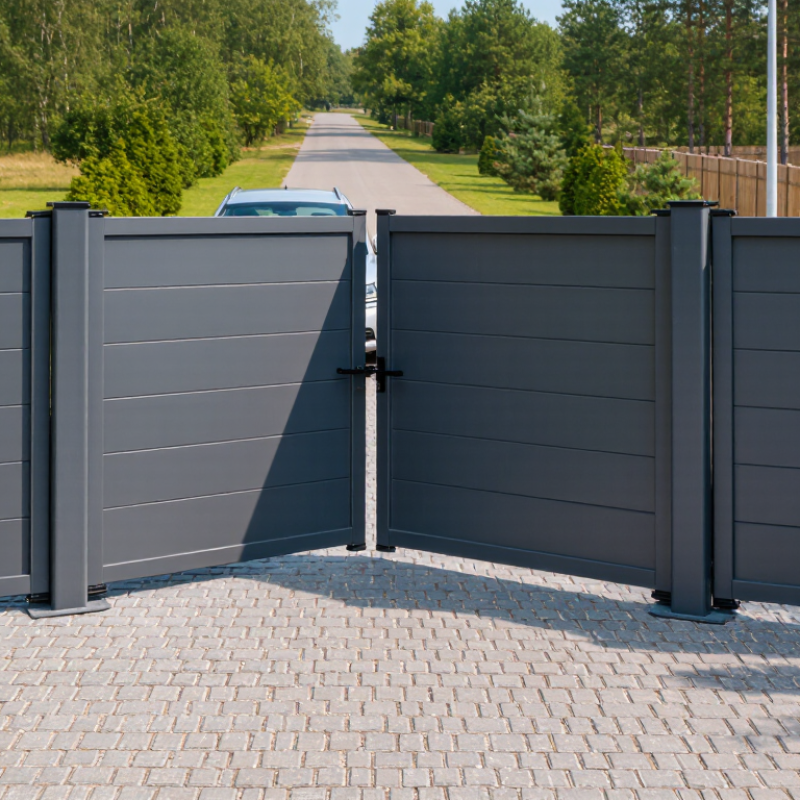
A bifold driveway gate uses hinged panels that fold back as it opens, rather than swinging as one wide leaf. Many designs split into two pairs, reducing the space needed beside the driveway. A motor and linkage move the panels in sequence; some gates operate manually. The exact motion depends on the hinge layout and operator. In practice, small details matter: a sloped drive, uneven paving, or a post that is slightly out of plumb can make panels bind or leave uneven gaps. Not every driveway suits this design.
For automated gates, the U.S. Consumer Product Safety Commission has reported 32 deaths and 51 injuries involving automatic gates since 1985. Those figures cover automatic gates generally, not bifold gates alone, but they show why safe operation deserves attention. A qualified installer should check the operator, hinges, pinch points, and protective sensors, then test the gate through its full cycle. ASTM F2200 and UL 325 provide relevant design and operator-safety requirements. Keep the folding path clear. A sensor that is poorly positioned can miss an obstacle, and maintenance is easy to postpone. That last point is worth reconsidering before choosing automation.
How it works: A bifold gate uses hinged panels that fold toward the sides as the gate opens, rather than swinging as one full-length panel. The chart shows a conceptual opening sequence, not measured operating times or a guaranteed opening rate. Actual movement depends on the gate design, installation, and controls.
A bifold driveway gate uses linked panels that fold back as the entrance opens. Unlike a single swing gate, it needs less room to arc across a driveway. That can help when a parked car sits close to the entrance or a short path meets a garage wall. The folded panels still need somewhere to rest, so measure the space beside each post.
On a narrow property, that smaller swing can keep more of the driveway usable. It may also reduce the chance of a gate leaf crossing a pedestrian path. However, the exact clearance depends on panel width, hinges, posts, and the opening mechanism. A site check can reveal awkward details, such as a sloping drive or a drain near the gate line. I have seen plans look neat on paper, then feel cramped in daily use. It is worth checking the open position in person.
Tips: Measure both the entrance and the space where panels fold. Check ground levels and nearby walls. Ask an experienced installer to confirm clearances and operating requirements before choosing a layout. Small differences matter.
A bifold driveway gate opens by folding its panels toward the sides, rather than swinging across the full entrance. That can help on short driveways where a parked car, wall, or narrow turning area limits movement. The opening action is quick. With a suitable operator and safety sensors, residents can enter without leaving the vehicle, which is especially useful during heavy rain or after dark.
Security depends on more than the gate itself. A well-fitted frame, secure hinges, and a properly maintained locking system can make casual access more difficult. Choose a design that allows a clear view of the entrance, or pair it with lighting and a camera. Visibility matters. It can help you check who is outside before opening the gate, though no gate replaces sensible access habits or regular checks.
Before installation, measure the clear opening and note where the folded panels will sit. Uneven ground, nearby drains, and exposed wiring can affect how smoothly the gate operates. This detail is easy to overlook. Ask an experienced installer to assess the site, explain the safety features, and recommend maintenance intervals. Even a dependable gate may need hinge adjustments over time, particularly after frequent use or harsh weather.
Bifold gates fold back in sections, making them useful where a long swing gate would meet a parked car, sloping drive, or narrow verge. Their compact movement also suits urban homes with limited frontage. For a cottage, timber-faced panels can echo a porch or boundary fence; a contemporary property may suit slim, powder-coated aluminum with open slats. Openings matter. Measure the clear width and headroom before choosing a design, since folded panels still occupy space beside the entrance.
Material affects both appearance and upkeep. Aluminum is relatively light and resists rust, while steel offers a more solid feel and can support larger panels, though damaged coatings need attention. The American Galvanizers Association’s atmospheric-corrosion guidance places galvanized-steel coating life at roughly 50–100 years in rural exposure and 20–40 years in more corrosive urban or industrial conditions. These are estimates, not promises; coating thickness and local exposure change results. Timber brings warmth, but rain and sun can cause movement and fading. That trade-off is easy to underestimate.
For windy sites, consider partially open infill rather than a broad, solid face. It can reduce wind loading, though it also gives less privacy. A simple vertical pattern may fit a traditional home, while horizontal rails can make a low frontage feel wider. Look closely at hinges, drainage, and the folded-panel position, not just the finish. Small details count. A beautiful gate that blocks a path when open is still a poor fit.
Choosing a bifold driveway gate starts with measuring the opening and the space beside it. Unlike a single swinging gate, its panels fold together, which can reduce the arc needed to open. But the folded panels still need room near the posts. Measure twice. Check the driveway slope, too; a raised edge or uneven paving can interrupt movement. Make sure the opening comfortably fits your widest vehicle, including mirrors.
Consider the gate’s weight, material, and exposure to weather. Steel can feel sturdy, while aluminum is generally lighter; either option needs suitable hinges and a sound frame. Look closely at joints and drainage points, where water and grit may collect. If you want automation, confirm that the motor suits the gate’s weight and daily use. Ask an experienced installer about safety sensors, manual release, maintenance intervals, and what happens during a power cut. Small details matter.
Tips: Mark the gate’s full folded position on the ground with tape before ordering. Test the route with a car. Think about it. Also note where pedestrians enter, where snow or leaves gather, and whether the gate might block a path when open. A plan can look neat on paper and still feel awkward every day.
| Factor | What to Know About Bifold Gates | What to Check Before Choosing | Practical Consideration |
|---|---|---|---|
| Opening space | The gate leaves fold as they open, so they generally need less forward swing space than a conventional swing gate. | Measure the driveway, the area beside the opening, and the space needed for the folded leaves and operating hardware. | A useful option where a swinging leaf could obstruct a path, parking area, or nearby road. Folding leaves still require clearance. |
| Driveway layout | Bifold systems can be configured to open in different directions, depending on the design and site. | Confirm the opening direction, post positions, vehicle turning path, and whether the gate will open inward or outward. | Sloping ground, walls, and limited side clearance can affect installation and operation. |
| Access speed | Powered bifold gates can open without requiring the full sweep of a wide swing gate; actual operating time varies by system and settings. | Ask for the specified opening time and check how the system behaves during a power outage. | Consider traffic frequency, vehicle waiting space, and whether manual release is accessible. |
| Safety | Powered gates have moving parts and must be selected, installed, and maintained to reduce risks of impact, crushing, or trapping. | Discuss risk assessment, suitable safety devices, access controls, and applicable local requirements with a qualified installer. | Safety needs depend on the site, gate design, users, and local regulations; no single accessory suits every installation. |
| Ground and drainage | The hinges, supports, and any guide or track components need a stable, suitably level installation area. | Check the driveway slope, surface condition, drainage, and whether the proposed system needs a ground track. | Poor drainage, uneven surfaces, or debris near moving components may affect reliability and increase maintenance needs. |
| Material and finish | Steel, aluminium, timber, and combined constructions differ in weight, appearance, upkeep, and resistance to weather. | Compare the gate’s structural suitability, finish, corrosion protection, and cleaning or repainting requirements. | Material choice should reflect local weather, desired appearance, and the capacity of the posts and operating equipment. |
| Automation and access control | Options may include remote controls, keypads, intercoms, or other access devices, depending on the system. | Check compatibility, power supply, cable routes, user access needs, and the manual-release method. | Choose controls that suit residents and visitors while keeping access secure and practical. |
| Maintenance | Hinges, pivots, fasteners, and powered components need periodic inspection; maintenance requirements vary by design and use. | Request the maintenance schedule and confirm which tasks should be performed by a qualified technician. | Regular checks can help identify wear, loose fittings, or operating problems before they become more serious. |
| Cost and installation | The total cost depends on dimensions, materials, automation, site preparation, and installation requirements. | Compare itemised quotes covering the gate, posts, groundwork, electrical work, safety equipment, and aftercare. | A site survey helps identify constraints that may not be apparent from measurements alone. |
| Privacy and appearance | Panel style, spacing, height, and finish affect visibility, airflow, and how the gate fits the property. | Check local planning rules, boundary conditions, sightlines near the entrance, and any restrictions on gate height or outward opening. | More solid infill can provide greater screening but may increase wind loading; the design should be suitable for the site. |
Note: Suitability, clearances, operating times, safety provisions, and installation requirements depend on the specific gate system and property. Confirm them with a qualified installer and check applicable local requirements.
Its linked panels fold beside the posts instead of swinging across the driveway. Less swing space is needed. The folded panels still need room.
Measure the entrance and the space beside each post. Mark the panels’ folded position with tape. Measure twice.
It may, but uneven paving or a raised edge can interrupt movement. Check ground levels and nearby drains before choosing a layout.
Measure your widest vehicle, including its mirrors. Test the route through the opening. Paper plans can be misleading.
Steel is sturdy, while aluminum is generally lighter. Both need a suitable frame and hinges. Weather exposure matters, too.
Confirm that the motor suits the gate’s weight and daily use. Ask about safety sensors, manual release, and power-cut operation.
It could. Check where pedestrians enter and where the panels rest when open. A small clearance can matter.
Look for leaves, snow, grit, and water near joints or drainage points. I might still miss something; an in-person site check can help.
Bifold Driveway Gates are made of hinged panels that fold back on themselves as they open, creating a practical entrance for homes and other properties. Because the panels fold rather than swing fully into the driveway, these gates can make better use of limited space and may suit entrances where a wide opening is needed but room for a conventional gate is restricted. Their operation can also allow vehicles to enter and leave smoothly when the gate is properly planned and installed.
These gates can help define an entrance and control access, while features such as a suitable locking system and reliable operation support everyday security. They are available in different designs and materials, allowing property owners to consider appearance, durability, upkeep, and how the gate complements its surroundings. Before choosing one, assess the available space, driveway layout, expected frequency of use, installation requirements, and ongoing maintenance. Comparing these factors can help determine whether a bifold gate is a convenient, attractive, and suitable option for the property.
