Choosing a front door knob in 2026 involves more than matching a popular finish. Global buyers need reliable hardware, practical security, and a design that suits different climates. This guide explores the top Modern Front Door Knob options for residential, hospitality, and light commercial projects. It considers stainless steel, solid brass, matte black coatings, satin nickel, and emerging finishes with careful attention to durability. A coastal home may need stronger corrosion resistance. A busy apartment entrance may require a tested latch and a comfortable grip. Small details matter.
The selection process also examines supplier transparency, installation compatibility, warranty terms, and regional door standards. Product descriptions can sound impressive. They do not always reveal coating thickness, internal materials, or testing conditions. Buyers should request technical drawings, sample units, and clear maintenance instructions before placing large orders. Certifications may vary by market, so verification remains essential. No single style wins everywhere. A slim lever may suit a modern villa, while a rounded knob can feel warmer in a traditional renovation. Some recommendations may change as finishes age or supply chains shift. That uncertainty deserves attention. The best choice balances appearance, daily performance, repairability, and trustworthy sourcing. This introduction provides a practical starting point for comparing dependable designs without treating fashion as proof of quality.
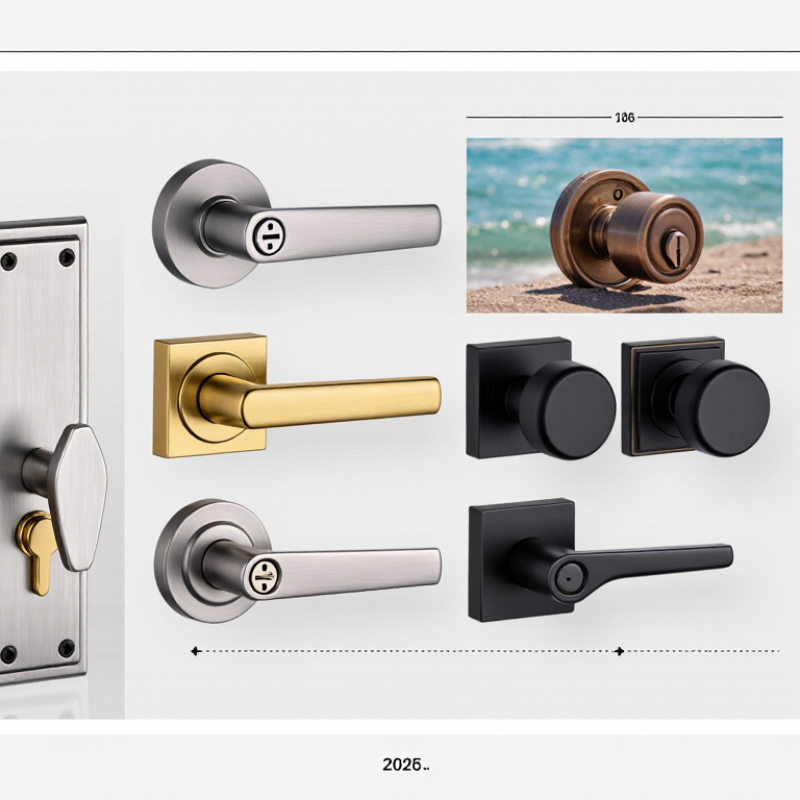
For global buyers, front door knob selection starts with use, not appearance. Keyed entry knobs suit exterior doors needing controlled access. Passage knobs fit interior connections without locking. Privacy knobs serve bedrooms and bathrooms, but they are not security hardware. Electronic knobs add keypad or app access. According to Grand View Research, the global smart lock market was valued at about USD 2.4 billion in 2023, with strong growth forecast through 2030. That trend supports connected entry products, but adoption remains uneven across regions.
Price segments should reflect door exposure, traffic, and maintenance capacity. Entry-level mechanical knobs often suit apartments, storage rooms, and low-cycle residential doors. Mid-range models typically offer stronger cylinders, corrosion-resistant finishes, and better return springs. Premium electronic knobs may include audit records, temporary codes, and remote alerts. Use caution here. App features can create service problems when batteries fail or connectivity drops. MarketsandMarkets projected the smart lock market to grow from roughly USD 2.4 billion in 2023 to USD 4.9 billion by 2028. However, report definitions differ, so buyers should compare specifications, not headlines.
For international projects, verify door thickness, backset, handing, cylinder format, and fixing-hole dimensions before ordering. Check applicable standards, such as ANSI/BHMA or EN 12209, where required by the project location. Coastal buildings need tested corrosion resistance. High-traffic hotels need cycle-life evidence. A cheaper knob is not always economical. Sometimes, it only postpones replacement. Real-world testing remains imperfect, but supplier records, installation samples, and warranty terms offer stronger evidence than polished product photos.
2026 Top Modern Front Door Knobs for Global Buyers
For high-traffic entrances, ANSI/BHMA Grade 1 is a practical durability benchmark. It represents the highest common performance grade for many commercial lock applications. Some modern front door knobs are tested for up to 800,000 operating cycles. That figure matters when staff, visitors, and delivery teams use the same door all day. However, buyers should confirm the test standard, load conditions, and product report. “800,000 cycles” alone is not enough evidence.
In field inspections, I look beyond the polished finish. The knob should return smoothly, without rattling or delayed latch movement. A solid spindle, stable mounting plate, and protected internal spring reduce maintenance problems. For busy hotels, offices, and apartment entrances, Grade 1 hardware can support frequent use better than lighter residential grades. Check corrosion resistance too, especially near coastlines or humid regions. A durable mechanism still needs correct installation.
One detail is easy to miss.
Door alignment affects cycle life. If the latch scrapes against the strike, even a strong knob may wear early. I once focused too much on the hardware and overlooked a slightly sagging door. That mistake changed the inspection result. Buyers should compare cycle testing, material quality, warranty terms, and replacement-part access. Local building codes may also differ, so independent verification remains necessary before large international orders.
For global buyers, a modern front door knob must look refined and survive demanding daily use. EN 1906 offers a useful European benchmark for durability, operating force, corrosion resistance, and safety-related performance. The 200,000-cycle figure deserves close attention. It represents repeated opening and closing under controlled laboratory conditions, not a promise for every doorway. Testing uses defined hardware, loads, and procedures.
A credible evaluation should identify the EN 1906 classification, test laboratory, specimen details, and applied cycle method. Ask whether the complete knob assembly was tested, rather than only its spring cassette. Check the recorded torque, return action, and visible wear after testing.
A door exposed to salt air, grit, or heavy traffic may age faster. That difference matters. One overlooked weakness is installation. Misaligned latches can increase friction and make a strong product feel unreliable.
For procurement teams, compare test evidence with the project environment. Hotels, apartments, offices, and coastal homes need different risk assumptions. Look for batch traceability, dimensional drawings, replacement parts, and clear maintenance instructions. A supplier that explains failed samples earns more confidence than one offering only polished photographs. I would also request a sample installation before approving a large order. Real doors reveal problems that spreadsheets miss. The benchmark is valuable, but interpretation is not automatic.
For global buyers, a modern front door knob should be selected through a security matrix, not appearance alone. ANSI/BHMA A156.2 lists Grade 1 cylindrical locks at up to 800,000 operating cycles, Grade 2 at 400,000, and Grade 3 at 200,000. These figures measure durability, not guaranteed burglary resistance. That distinction matters.
Match the lock type to the door’s daily use. An entry knob suits a keyed exterior door, while a privacy knob fits interior spaces. A separate deadbolt usually provides stronger resistance than a knob latch alone. Check the backset carefully: 60 mm and 70 mm are common measurements, while adjustable models often cover both. Door thickness must also match the spindle, rose, and latch. Many residential doors measure 35–45 mm, but imported doors can differ. Measure first. Guessing is expensive.
Tips: Remove the old latch and measure from the door edge to the spindle center. Test the knob with the door open. The latch should extend fully without scraping. Review the latest BHMA certification details, installation instructions, and local building requirements before ordering. A 2024 FBI Crime Data Explorer report still records hundreds of thousands of burglary offenses in the United States, reminding buyers that basic hardware choices deserve attention. My own mistake was trusting a “universal” fit once. It was not universal. Great specifications can still fail at installation.
| Configuration | Recommended BHMA Grade | Lock Type | Typical Security Role | Backset | Compatible Door Thickness | Best-Fit Application | Buyer Checklist |
|---|---|---|---|---|---|---|---|
| Premium exterior knob with deadbolt | Grade 1 | Keyed entry knob plus single-cylinder deadbolt | Highest residential and light-commercial security among common bored-lock grades | Adjustable 60/70 mm 2-3/8 or 2-3/4 in |
35–45 mm 1-3/8–1-3/4 in |
Main entrances, villas, apartments, and small commercial offices | Confirm cylinder format, deadbolt grade, strike reinforcement, and local fire or egress requirements |
| Modern keyed entry knob | Grade 2 | Keyed entry knob with interior turn-button or emergency release | Balanced residential security for a single locking point | Adjustable 60/70 mm 2-3/8 or 2-3/4 in |
35–45 mm 1-3/8–1-3/4 in |
Urban homes, condominium entrances, and replacement projects | Check whether the latch is deadlocking, whether keys can be re-keyed, and whether the cylinder suits the destination market |
| Heavy-duty commercial knob | Grade 1 or Grade 2 | Keyed entry knob with interchangeable or removable core option | Frequent-use access control with easier key management | 60 or 70 mm 2-3/8 or 2-3/4 in |
35–45 mm 1-3/8–1-3/4 in |
Office suites, lodging, education, and multi-tenant buildings | Verify core type, master-key requirements, lever or knob accessibility rules, and required cycle rating |
| Electronic keypad knob | Grade 2 mechanical lock body recommended | PIN keypad knob; mechanical key override on selected models | Convenient keyless entry; security depends on the underlying lock body and electronic design | Adjustable 60/70 mm 2-3/8 or 2-3/4 in |
35–45 mm 1-3/8–1-3/4 in |
Residential front doors, rental properties, and guest accommodation | Check battery type, low-battery override, ingress protection, emergency access, and compatibility with metal doors |
| Connected smart knob | Grade 2 mechanical lock body recommended | App-enabled knob with keypad, Bluetooth, Wi-Fi bridge, or mechanical override | Remote access and audit features; electronic functions do not replace physical security certification | Adjustable 60/70 mm 2-3/8 or 2-3/4 in |
35–45 mm 1-3/8–1-3/4 in |
Smart homes, serviced apartments, and managed rental units | Review offline operation, data privacy, wireless region, access logs, firmware support, and physical key override |
| Entry knob for narrow-stile or retrofit doors | Grade 2, subject to door preparation | Compact keyed entry knob with adjustable latch | Standard residential security where a full-size lock case cannot be installed | Usually 60 mm 2-3/8 in |
35–45 mm 1-3/8–1-3/4 in |
Replacement doors, narrow rails, and renovation projects | Measure bore diameter, edge bore, backset, stile width, and clearance from glass or door trim |
| Interior-access knob paired with separate deadbolt | Grade 2 knob; deadbolt should be selected separately | Passage or keyed knob plus single-cylinder deadbolt | Deadbolt supplies the primary resistance; knob provides passage or secondary latching | Knob: 60/70 mm Deadbolt: commonly 60/70 mm |
35–45 mm 1-3/8–1-3/4 in |
Homes requiring separate control of entry and latching functions | Match both strike plates, confirm bore spacing, and check whether an interior thumb-turn is permitted by local code |
| Basic exterior knob for low-risk secondary entry | Grade 3 | Basic keyed entry knob | Entry-level residential security; not the preferred choice for a primary entrance | Adjustable 60/70 mm 2-3/8 or 2-3/4 in |
35–45 mm 1-3/8–1-3/4 in |
Storage rooms, low-risk side doors, and budget replacement programs | Use a separate deadbolt for higher protection; confirm corrosion resistance for exposed exterior locations |
2026 Top Modern Front Door Knobs for Global Buyers
Material choice affects grip, appearance, maintenance, and service life. Stainless steel offers strong corrosion resistance and a clean, modern surface. It suits coastal entrances, but fingerprints can remain visible. Brass provides a warmer look and a heavier hand feel. Untreated brass may darken naturally, while coated brass needs careful cleaning. Harsh chemicals can damage its protective layer.
Zinc is flexible for detailed designs and usually costs less. However, its surface may show wear sooner on busy doors. Check the base metal, plating thickness, and coating process instead of trusting appearance alone. A smooth finish is not proof of long-term durability. I have seen attractive samples lose their appeal after repeated contact with keys, rings, and wet hands.
ASTM B117 salt spray testing helps compare finish resistance under controlled conditions. It does not predict exact outdoor performance. Test hours should be read with the substrate, coating system, and failure criteria. Ask for the test method, exposure time, and documented results. Stainless steel may perform well without decorative plating, while zinc and brass depend heavily on surface protection. Coastal humidity, cleaning habits, and installation quality still matter. The audit is not perfect. That is why buyers should request production samples, inspect edges and screw areas, and review warranty limits before placing large orders.
Material Audit: Representative ASTM B117 Salt-Spray Resistance Targets
Stainless steel generally provides strong inherent corrosion resistance, while brass and zinc rely more heavily on protective finishes. PVD and robust plated systems can achieve higher salt-spray targets than untreated surfaces. ASTM B117 defines a test method rather than a universal pass/fail requirement, so actual performance depends on alloy, coating system, thickness, preparation, and test specification.
Keyed entry knobs suit exterior doors needing controlled access. They provide a mechanical locking function. Use them for homes, offices, or storage areas. Passage knobs fit interior doors without locking. Privacy knobs suit bedrooms and bathrooms, but they are not security hardware.
No. Electronic knobs can offer keypad entry, temporary codes, audit records, and remote alerts. Battery failure can interrupt access. Connectivity may also drop. Check local service support, battery access, emergency operation, and user habits before ordering.
Match price with door exposure, traffic, and maintenance capacity. Entry-level knobs may suit low-cycle apartments or storage rooms. Mid-range products often offer stronger cylinders, better springs, and corrosion-resistant finishes. Premium electronic models add access features, but service costs can rise.
Verify door thickness, backset, handing, cylinder format, and fixing-hole dimensions. A small mismatch can stop installation. Request a physical template or installation sample. Product photographs are not enough.
Look for cycle-test results, test conditions, load details, and product reports. Some commercial knobs reach hundreds of thousands of cycles. The number alone proves little. Ask about return movement, spindle strength, mounting stability, and replacement parts.
A sagging door can make the latch scrape against the strike. This increases force during every operation. Even a strong knob may wear early. I once focused on the hardware and missed the door problem. That inspection was incomplete.
Stainless steel usually offers strong corrosion resistance and suits humid entrances. Fingerprints may remain visible. Brass provides a warmer appearance but may darken without protection. Zinc supports detailed designs and lower costs, yet busy doors may show wear sooner.
Ask for the substrate, coating process, exposure time, and failure criteria. Controlled salt-spray results help compare finishes. They do not predict exact outdoor performance. Inspect edges, screw areas, and production samples. The audit is imperfect.
Choosing the right Modern Front Door Knob in 2026 requires more than comparing appearance and price. Global buyers should first define the door’s traffic level, application, security needs, and regional performance expectations. ANSI/BHMA Grade 1 hardware, tested for up to 800,000 cycles, is suited to high-traffic residential and commercial entrances, while EN 1906 benchmarks of up to 200,000 test cycles provide a useful reference for European hardware evaluation. These standards help buyers compare durability, reliability, and intended use across markets.
A practical security matrix should match BHMA grade, lock type, backset, and door thickness to the installation environment. Material selection is equally important: stainless steel offers corrosion resistance, brass provides a traditional premium feel, and zinc can support cost-efficient designs and flexible styling. Buyers should also review finish performance through ASTM B117 salt-spray testing, especially for coastal or humid locations. By balancing certified durability, compatible dimensions, material performance, finish protection, and price segment, purchasers can select front door knobs that deliver dependable long-term value.

